
Luxury Yacht Interior Guide for Bespoke Design Success
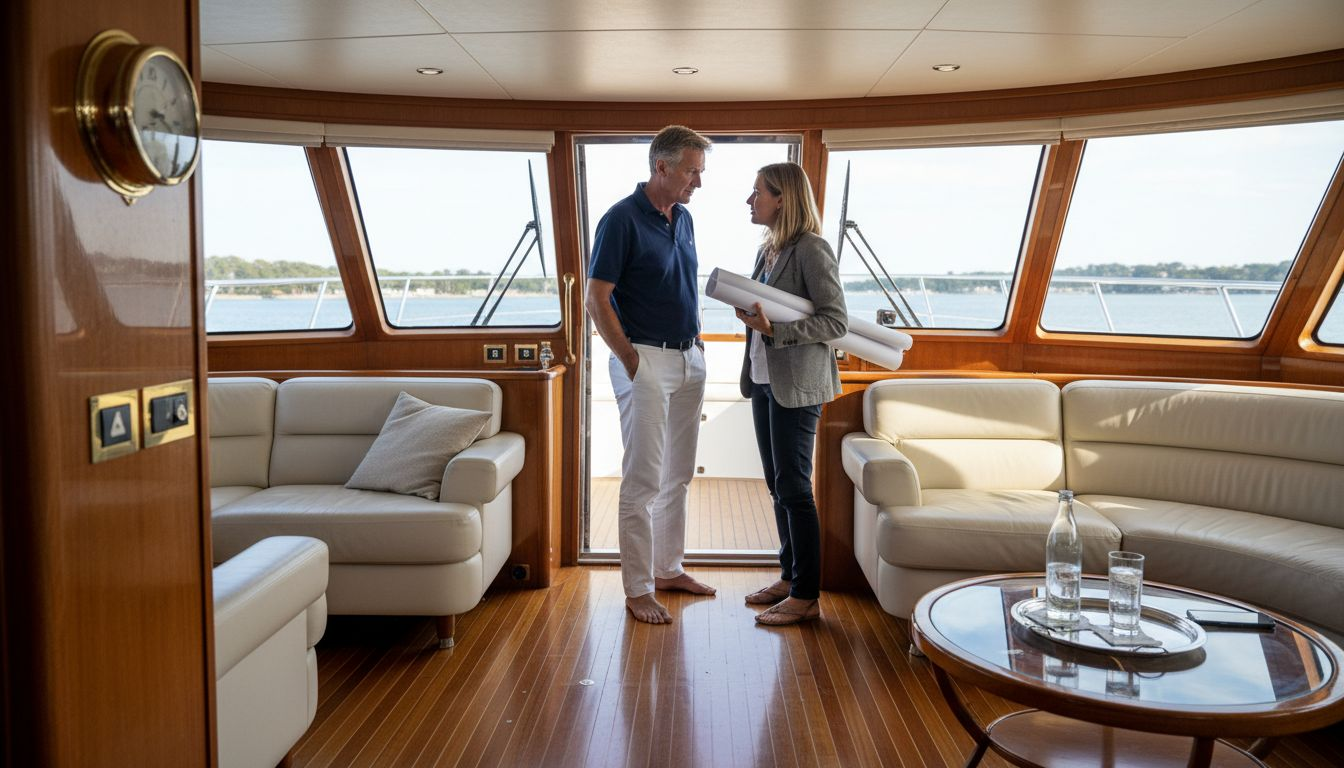
Choosing the perfect interior for a bespoke yacht over 50 meters is never just about style—it is about curating an experience that reflects your individuality and enhances every journey, whether you are cruising through the Greek Islands, entertaining guests in Saint-Tropez, or escaping for quiet nights on the Pacific. For discerning owners and luxury industry professionals, every detail matters, from defining your vision and requirements to integrating innovative features that elevate daily life at sea. Here you will discover how tailored design transforms a yacht into your true private residence on the water.
Table of Contents
Quick Summary
Key Point | Explanation |
1. Clarify Your Vision Clearly | Understanding the purpose of your yacht shapes all design decisions and ensures it reflects your lifestyle and preferences. |
2. Choose High-Quality Materials | Selecting durable materials not only enhances aesthetics but also affects longevity and maintenance, ensuring luxury is truly enduring. |
3. Maximize Space with Functionality | Innovative storage solutions and furniture design improve the flow and usability of yacht spaces, optimizing comfort without compromising luxury. |
4. Customize for Comfort and Ambiance | Tailoring lighting, climate control, and acoustics to personal preferences transforms a yacht into a welcoming sanctuary suited to your lifestyle. |
5. Thoroughly Verify Quality Onsite | Conducting detailed inspections ensures all systems function as intended, addressing potential issues before final delivery and enhancing overall satisfaction. |
Step 1: Define your vision and requirements
Before you start sketching layouts or selecting materials, you need to get crystal clear on what you actually want your yacht to become. This step determines everything that follows, from spatial planning to material choices to technological integration. Think of it as laying the foundation for a building—get this wrong, and no amount of polish fixes the problems later.
Start by honestly answering what your yacht means to you. Will it be a family escape where multiple generations gather for summers in the Mediterranean? A floating office for conducting business while crossing oceans? A social hub where you entertain clients and friends? A private sanctuary for solo adventures? Your primary use case shapes every decision moving forward. Consider how many people typically join you onboard, whether guests vary in age or mobility needs, and how long you typically stay aboard at a time. Someone who spends two weeks annually has vastly different requirements than an owner who lives aboard for months. The beauty of bespoke yacht design is that your interior can be architected specifically around your actual lifestyle rather than forcing yourself into a generic template.
Beyond use cases, think about the emotional atmosphere you want to experience. Understanding how yacht layout flows directly affects how you and your guests feel moving through spaces. Do you want formal entertainment areas that impress, or casual zones where people naturally gather? Should the master suite feel like a luxury resort cabin or your personal sanctuary? Are you drawn to minimalist Scandinavian aesthetics, warm traditional elegance, cutting-edge contemporary design, or something uniquely personal that blends influences? These aren’t superficial questions—they establish the visual and sensory character of every room.
Your technical requirements matter equally. How much time will the yacht spend in tropical waters versus cooler climates, and does that affect material durability or climate control needs? Do you need advanced automation systems, or do you prefer simpler mechanical solutions? What about lighting, audio and video systems, wine cellars, gyms, spa areas, or specialized work zones? Are there accessibility requirements for elderly family members? How important is sustainability and energy efficiency to your operation? Some owners prioritize zero-noise mechanical systems for ultimate tranquility, while others want state-of-the-art tech throughout. Document your technology preferences now so your design team can integrate them seamlessly rather than retrofitting later.
Also consider practical constraints and opportunities. What’s your budget range for the interior project? Are you renovating an existing vessel or designing a new build? If existing, what structural elements cannot change? What’s your timeline for completion? Are there specific suppliers or craftspeople you want to work with? Do you have a preferred naval architecture or design firm already in mind? Being upfront about constraints actually liberates the design process because your team stops proposing impossible solutions and focuses creative energy on what’s genuinely achievable.
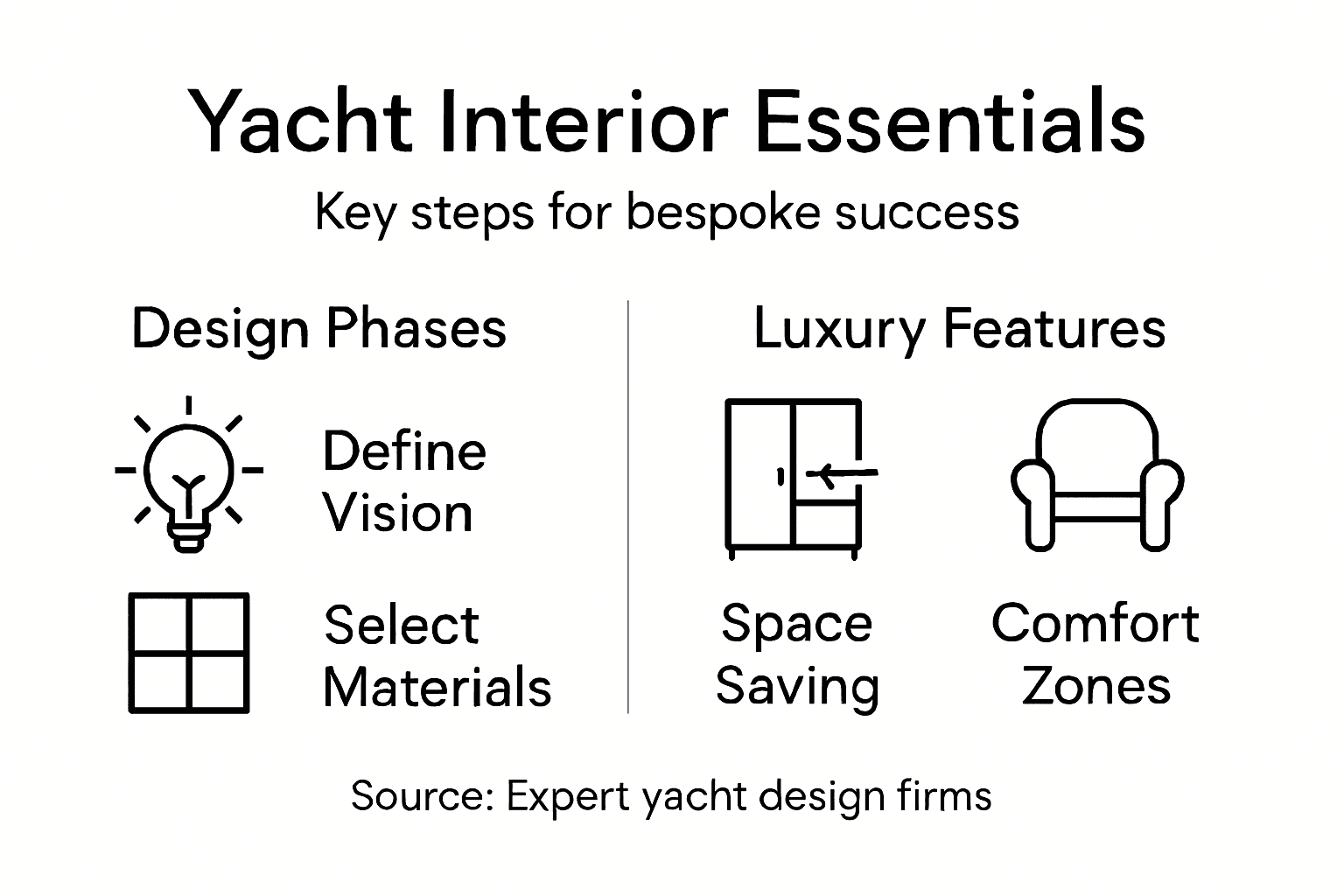
Pro tip: _Create a detailed lifestyle questionnaire and share it with your design team before any meetings. Include photos of interiors you love, descriptions of how you spend time aboard, and specific activities you want each space to support. This single document prevents miscommunication and accelerates the design process by weeks.
Step 2: Select premium materials and finishes
Now that you’ve defined your vision, it’s time to choose the materials that will bring it to life while standing up to years of demanding marine conditions. This step separates genuinely luxurious yachts from those that merely look expensive initially before showing wear. Material selection determines not just aesthetics but durability, maintenance requirements, and how your interior ages over time.
Start with wood selections, which form the visual backbone of most luxury yacht interiors. Teak remains the industry standard for structural elements and exterior facing because it naturally resists salt water, sun damage, and rot without requiring special treatments. Mahogany delivers that warm, traditional richness many owners seek for cabinetry and wall paneling, though it requires more protective coatings in marine environments. Wenge offers contemporary drama with its deep chocolate coloring, while lighter woods like ash and oak provide modern minimalism. The key is understanding that premium exotic woods for yacht interiors aren’t chosen purely for appearance; each species has specific marine properties that affect longevity and maintenance. Ask your designer which woods are appropriate for wet areas like bathrooms and galleys versus dry cabins where aesthetics can take priority over moisture resistance.
Fabrication and upholstery materials require equally strategic thinking. High-performance silks and technical fabrics designed for marine use outperform standard textiles by resisting fading, moisture absorption, and mildew growth. If you envision linen or cotton, specify solution-dyed varieties treated with marine-grade finishes that won’t degrade in salty, humid conditions. Leather works beautifully in air-conditioned cabins but can deteriorate rapidly in exposed areas without proper sealing and maintenance protocols. Consider how each fabric will actually perform in your specific cruising regions. Will you spend months in tropical humidity where breathable, quick-drying materials make sense? Or do you prioritize the sumptuous feel of natural fibers knowing you’ll maintain them carefully? This isn’t about choosing wrong, but aligning material properties with your actual usage patterns and willingness to maintain them.
Accent materials deserve equal attention. Precious metals like polished stainless steel, brushed brass, and custom bronze hardware add sophistication while providing functional durability. Semi-precious stones such as marble, granite, and engineered quartz transform galley countertops and bathroom vanities into jewelry-like focal points. The mistake many owners make is treating accent materials as afterthoughts rather than integral design elements. A poorly chosen hardware finish or counter material can undermine months of careful design work. Request samples of everything in your actual lighting conditions. Materials look dramatically different under warm incandescent cabin lighting versus cool LED daylight. Spend time with samples in the spaces where they’ll actually live before committing to full installation.
Customization transforms materials from standard selections into expressions of your personal taste. Work with your designer to source unique wood veneers, commission custom fabric colorways from mills, or specify hardware finishes that don’t come standard. This level of personalization is what distinguishes bespoke design from catalog solutions. Yes, it costs more and takes longer to source, but you’re creating something that reflects your identity rather than defaulting to what’s readily available.
Timing matters significantly here. If you’re designing a new build, you’ll typically select materials during the early design phases so fabrication can happen in proper sequence. For renovations, material selection often depends on what can be removed and replaced within your timeline and budget. Discuss realistic sourcing timelines with your team because some exotic materials require months of lead time.
Here’s a summary of how different yacht interior material choices impact performance and design longevity:
Material Type | Marine Performance | Maintenance Needs | Design Impact |
Teak | High saltwater resistance | Low, natural durability | Classic maritime look |
Mahogany | Moderate durability | Frequent protective coatings | Warm, traditional elegance |
Wenge | Water-resistant | Occasional maintenance | Contemporary dramatic effect |
Ash/Oak | Moderate resilience | Needs sealing in wet areas | Modern, light ambiance |
Treated Silk | Fade and mold resistant | Easy cleaning | Luxurious, tailored appearance |
Marine Leather | Prone outdoors, durable indoors | Regular sealing outdoors | Refined, supple texture |
Stainless Steel | Corrosion resistant | Minimal, polishing | Sleek, modern accents |
Marble/Quartz | Resistant to heat | Sealing, stain removal | High-end focal points |
Pro tip: _Request material samples delivered to your yacht and live with them for at least a week in actual cabin conditions before finalizing selections. What looks stunning in a showroom often reveals its true character when exposed to your specific lighting, humidity, and how you actually interact with these surfaces daily.
Step 3: Integrate innovative space-saving features
Yacht interiors operate under spatial constraints that land-based design never faces. This step transforms those limitations into opportunities by strategically embedding clever storage, multifunctional furniture, and flexible layouts that maximize usable space without compromising luxury or comfort. Smart space planning determines whether your yacht feels spacious and elegant or cramped and cluttered regardless of actual square footage.
Start by mapping every functional zone and identifying what activities happen where. Your master suite needs storage for seasonal wardrobes plus daily essentials. The galley requires prep surfaces, cooking equipment, and substantial pantry capacity despite minimal footprint. Guest cabins should feel welcoming without eating up precious deck space with bulky furniture. Social areas need to accommodate gatherings while transforming into intimate settings when necessary. Once you understand the actual demands on each space, you can design storage and furniture solutions that address real needs rather than hoping generic elements will somehow work. This is where clever storage integrated into furniture and floors becomes transformative. Rather than adding cabinets that jut into rooms, smart design embeds storage within seat bases, underneath steps, inside wall panels, and within structural elements that would exist anyway.
Retractable and modular furniture pieces deserve serious consideration in your planning. A dining table that slides away or compresses when not needed reclaims valuable floor space instantly. Seating that converts from individual chairs into lounge configurations adapts to different entertaining modes without requiring separate pieces. Wall-mounted fold-down surfaces provide work or dining functionality that disappears when not in use. Beds with integrated drawers underneath utilize dead space efficiently. The key is ensuring these flexible elements actually work with your lifestyle. If you entertain frequently with formal dinners, a permanently extended dining table makes more sense than wrestling with a retractable system constantly. Conversely, if you cruise solo or with a partner occasionally hosting guests, that same retractable setup might be perfect. Match the innovation to your actual patterns rather than pursuing clever mechanisms for their own sake.
Open floor plans with clear sightlines make smaller spaces feel substantially larger. Rather than compartmentalizing cabins with solid walls, consider partial bulkheads, glass panels, or open layouts that allow visual continuity. This doesn’t mean removing privacy where you need it, but rather eliminating unnecessary walls that segment spaces unnecessarily. Carefully designed efficient circulation and multifunctional space planning creates logical flow between social and private areas without awkward corridors or dead zones. Work with your designer to trace actual movement patterns throughout your yacht. Where do guests naturally congregate? Which routes get used daily for crew and owner movement? Are there bottlenecks that could be eliminated? The best space-saving solutions aren’t obvious add-ons but rather fundamental layout decisions that enhance both function and perception.
Hidden storage compartments and modular systems adapt to different cruising scenarios. A cabin designed for a couple can accommodate guests if sleeping arrangements are flexible and efficient. Storage systems that organize galley essentials without visible clutter maintain that luxury feel even in compact quarters. Lighting design amplifies spatial perception significantly. Recessed fixtures, cove lighting, and strategic accent lighting make spaces feel more expansive than their actual dimensions. Mirrors strategically placed multiply visual space without taking physical area. High ceilings with angled bulkheads feel more generous than lower conventional headroom even when square footage is identical.
The integration phase requires close collaboration between your design team and the shipyard actually building or renovating the vessel. Theoretical clever solutions sometimes encounter structural realities that demand compromise. Building in flexibility now prevents expensive redesigns later. Discuss how storage systems will be accessed during construction, how electrical and mechanical systems will route through clever storage compartments, and whether modular elements can be factory assembled or must be site fabricated.
Pro tip: _Prioritize the spaces where you spend the most time when allocating premium square footage and innovative features. A stunning master suite or favorite social cabin justifies space investment far more than optimizing rarely used guest cabins. Every clever feature should serve your genuine lifestyle rather than simply showcasing design ingenuity.
Compare the benefits of smart space-saving solutions for yacht interiors:
Feature | Benefit for Owners | Ideal Use Case |
Embedded Storage | Maximizes usable area | Seasonal wardrobes, galley |
Modular Furniture | Adapts to guest needs | Social/guest cabins |
Fold-down Surfaces | Flexible function, less clutter | Workspace, dining, compact rooms |
Open Floor Layouts | Enhances visual spaciousness | Social and gathering areas |
Step 4: Design for customized comfort and ambiance
Comfort and ambiance transform a yacht from a functional vessel into a personal sanctuary where you genuinely want to spend time. This step focuses on tailoring every sensory element—light, temperature, sound, and furnishing ergonomics—to match your preferences and lifestyle. The difference between a yacht that feels like home and one that feels like a luxury hotel lies entirely in these customization details.
Start with lighting, which dramatically influences both comfort and mood. Standard yacht lighting often uses bright overhead fixtures that feel institutional rather than welcoming. Instead, envision layered lighting schemes adjusted to different moods that let you transform spaces throughout the day and evening. Your master suite might feature bright task lighting for morning routines, warm ambient lighting for evening relaxation, and accent lighting that highlights architectural details. Social areas benefit from adjustable options that work for energetic entertaining or intimate conversations. Consider dimmable LED systems that shift color temperature from cooler daylight tones during the day to warmer amber tones in evening hours, which aligns with your body’s natural rhythms. Accent lighting around artwork, architectural features, or cabinetry adds sophistication and visual depth without requiring excessive brightness. The key is building flexibility into your electrical design so you can adjust lighting to match your actual mood and activity, not defaulting to whatever came standard from the shipyard.
Climate control extends far beyond simply maintaining a comfortable temperature. High-efficiency HVAC systems maintain consistent conditions throughout your vessel while minimizing noise and energy consumption. However, comfort also involves humidity control, air circulation patterns that don’t create drafts, and zoned temperature settings so the master suite feels different from social areas if you prefer. Some owners love sleeping in cool, crisp air while keeping social spaces warmer. Others prefer consistent temperatures throughout. Your HVAC design should accommodate these preferences without constant manual adjustment. Acoustic treatments integrated into mechanical systems prevent engine noise, water sounds, and mechanical vibration from disrupting your sense of tranquility. The quieter your yacht feels, the more luxurious it actually becomes regardless of other design elements.
Furniture ergonomics deserve serious attention because you’ll spend considerable time seated, sleeping, and moving through these spaces. Custom furnishings crafted specifically for your body proportions and preferences create comfort that off-the-shelf yacht furniture simply cannot match. Does your ideal seating angle match standard lounge configurations? Do you prefer firm mattresses or softer ones? Should dining seating accommodate cushions or remain more formal? These seem like minor details until you’re aboard for two weeks realizing the furniture doesn’t actually suit how you sit or sleep. Work with your designer to specify seating depth, back angles, cushion firmness, and mattress construction based on your actual preferences rather than default specifications. Bespoke pieces cost more upfront but deliver comfort that validates the investment immediately.
Sound design and acoustic optimization create an environment that feels peaceful rather than hollow or echoey. Hard surfaces in yacht interiors naturally reflect sound, but strategic soft furnishings, textured wall treatments, and acoustic panels absorb sound without making spaces feel dead. Integrate high-quality audio systems that deliver exceptional sound for entertainment while allowing you to control volume and intensity. Thoughtfully designed sound environments shouldn’t impose your music on crew spaces, and crew activities shouldn’t introduce noise into your private areas. Zoning audio systems ensures ambiance without intrusion.
Natural light integration should be maximized wherever possible. Large windows, skylights, and strategically positioned portholes connect you to the water and sky, creating a sense of openness and reducing that submarine-like feeling some yacht interiors inadvertently create. However, balance this with thoughtful window treatments that provide privacy and light control without blocking the views you invested in.
Pro tip: _Spend at least 48 hours aboard a comparable yacht or similar interior design mockup before finalizing comfort specifications like seating depth, mattress firmness, lighting intensity, and temperature preferences. What seems perfect in a showroom or on sketches often reveals itself as impractical once you actually live with it, and changing these elements after construction costs significantly more than getting them right initially.
Step 5: Verify quality and functionality onsite
You’re nearing the finish line. The design work is complete, materials are installed, and systems are integrated. Now comes the critical step of verifying that everything actually works as intended and meets your exacting specifications. This onsite verification phase separates exceptional yachts from disappointing ones because theoretical perfection often encounters real-world realities that require adjustment.
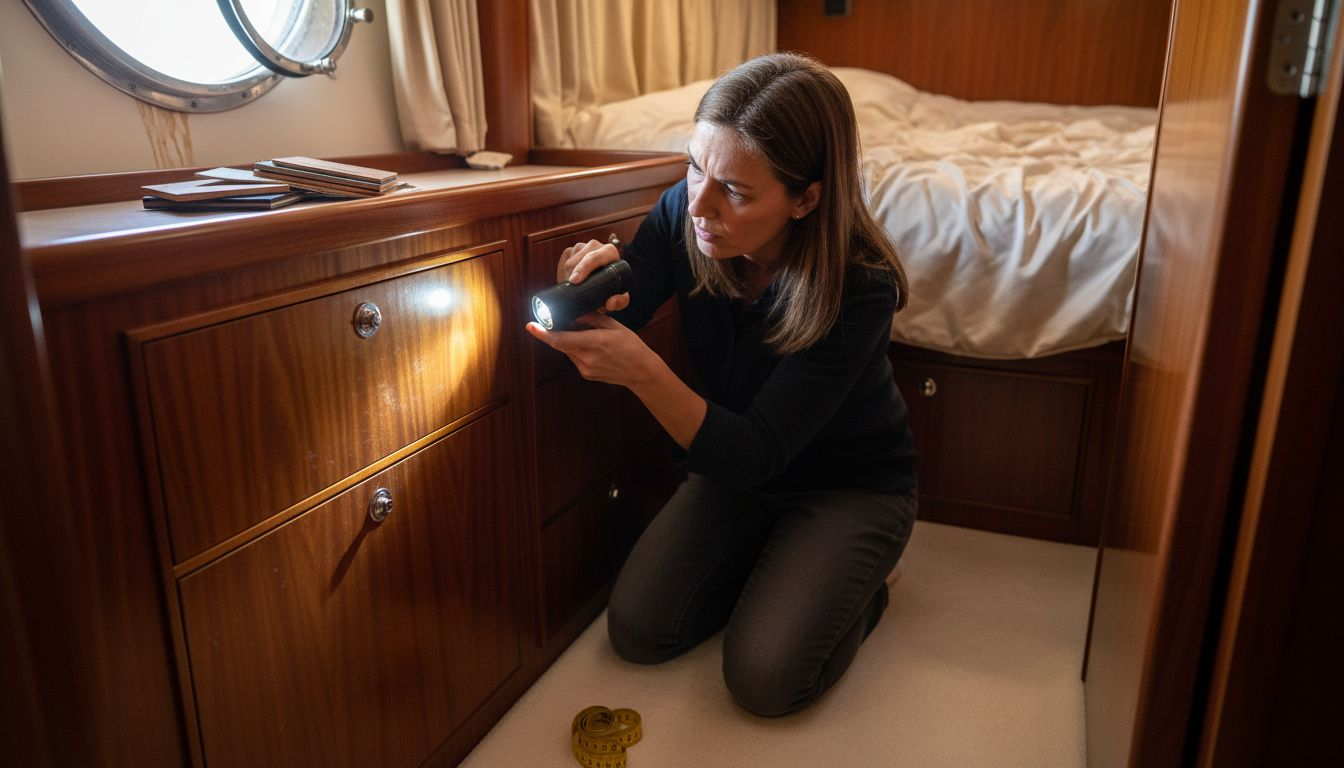
Begin with a comprehensive material and finish inspection before moving toward functional testing. Walk through every space with your designer and a representative from the shipyard, examining wood grain alignment, fabric seams, paint consistency, and how finishes transition between surfaces. Look at cabinetry doors to ensure they open and close smoothly without binding or gaps that suggest structural settling or installation misalignment. Check that veneer patterns match your specifications and that grain flow creates the intended visual impact rather than appearing random or poorly planned. Inspect hardware for finish consistency, secure attachment, and smooth operation. Run your hand along surfaces feeling for rough spots, uneven transitions, or quality issues invisible to casual viewing. This tactile inspection catches problems photographs and virtual walkthroughs completely miss. Pay particular attention to areas where different materials meet because these transitions either enhance the design or reveal installation shortcuts. Ensure that luxury fabrics are properly tensioned without wrinkles or sagging that suggests inadequate backing or improper installation.
Functional testing of space-saving furniture, climate control, and entertainment systems must happen systematically and repeatedly. Test every retractable mechanism multiple times to confirm smooth operation and proper alignment when extended and retracted. Operate all climate control zones, verifying that temperature and humidity settings respond properly and that airflow patterns match expectations without unexpected drafts or dead zones. Check that your HVAC system maintains desired conditions during realistic usage scenarios like when cooking, entertaining, or with multiple crew members aboard. Run entertainment systems through their complete range, testing audio quality in different spaces, confirming video displays function properly, and verifying that wireless connectivity and control systems operate reliably. Lighting should be tested at different times of day to evaluate how natural and artificial light combine, ensuring accent lighting delivers the intended ambiance rather than appearing garish or insufficient. Test dimming functionality across all controlled zones to confirm smooth operation without flickering or color shifting.
Technology integration requires particular attention because complex systems often interact in unexpected ways. Verify that your yacht’s electrical systems support all powered devices simultaneously without capacity issues. Test automation sequences to ensure they operate as programmed without glitching or creating safety hazards. Confirm that backup systems function properly if primary systems fail. Press buttons, flip switches, adjust thermostats, and operate every controllable element personally rather than relying on crew demonstrations. You’ll catch operation inefficiencies and usability issues that seem insignificant until you’ve spent time actually using them.
Safety systems deserve dedicated testing time. Ensure that ventilation operates properly in all enclosed spaces, preventing dangerous gas accumulation. Verify that fire suppression systems are installed and accessible. Test communication systems between different yacht zones. Confirm that emergency exits and safety equipment are properly positioned and unobstructed.
Close collaboration between you, your designer, and shipyard representatives during these inspections ensures alignment on what “complete” actually means. Create a punch list documenting any discrepancies or adjustments needed. Establish clear timelines for corrections before you take delivery. Some issues might require reworking that takes additional time, and you want this handled in the shipyard’s controlled environment rather than attempting fixes while you’re aboard.
Document everything through photographs and video recordings. If issues arise later, visual evidence of the condition at handover protects both you and the shipyard by establishing what was actually delivered versus what might be normal wear developing afterward.
Pro tip: _Schedule your onsite verification inspections over several days rather than attempting everything in a single marathon session. Fresh eyes catch details that fatigue obscures, and spacing inspections allows time for the shipyard to address issues between your visits without rushing corrections that introduce new problems.
Elevate Your Yacht’s Interior to Unmatched Luxury with Opalinski Design House
Designing a bespoke yacht interior requires navigating challenges like spatial constraints, selecting premium materials, and integrating innovative comfort and technology to transform your vision into a seamless reality. This article outlines how crucial it is to balance luxury, durability, and smart space usage—all core to creating a yacht interior that truly feels like a personal sanctuary rather than a generic vessel.
At Opalinski Design House, we specialize in turning these complex requirements into cutting-edge, tailor-made solutions. Our expertise in high-end yacht design and patented innovations such as fold-down bulkhead transoms redefine how space and function coexist. From ergonomic furniture carefully crafted for your lifestyle to sustainable materials that withstand marine conditions, our team brings your unique vision to life with precision and creativity.
Discover how our commitment to quality, personalized service, and industry-leading technology can transform your yacht interior into a masterpiece that stands the test of time.
Ready to embark on your bespoke yacht design journey and overcome the challenges highlighted in the luxury yacht interior guide Have your dream interior expertly crafted with the leaders in innovative design Contact us today at Opalinski Design House to request a personalized quote and start the transformation. Visit our official website to explore our portfolio and patented design solutions that set new standards in luxury yachting.
Frequently Asked Questions
How do I define my vision for a luxury yacht interior design?
Start by clearly identifying the primary purpose of your yacht, such as family gatherings, business meetings, or personal retreats. Create a lifestyle questionnaire that reflects your preferences and activities, allowing your design team to align their proposals with your specific needs.
What materials should I choose for my yacht’s interior?
Prioritize selections based on durability and aesthetics suited for marine environments. Consider using materials like teak for structural elements and high-performance fabrics that resist fading, moisture, and mildew, ensuring longevity and maintaining luxury appeal.
How can I integrate space-saving features in my yacht design?
Incorporate multifunctional furniture and clever storage solutions into your layout to maximize usable space. For instance, opt for a dining table that can slide away and seating with built-in storage, allowing you to reclaim valuable floor space without sacrificing comfort.
What are key factors to consider for personalized comfort in a yacht interior?
Focus on customizing aspects like lighting, temperature control, and furniture ergonomics to enhance your onboard experience. Test various lighting schemes and select comfortable seating arrangements that suit your style, ensuring every element contributes to a relaxed and inviting atmosphere.
How do I verify the quality and functionality of my yacht interior design?
Conduct a thorough inspection of materials and finishes, followed by systematic functional testing of all systems. Create a punch list of any discrepancies to address with your design and shipyard team before finalizing the project, ensuring that your expectations are fully met.
Recommended
Comments