
7 Inspiring Examples of Naval Architecture Innovations
Choosing the right yacht design features can feel overwhelming when luxury, efficiency, and sustainability are all at stake. You want to enjoy comfort, cutting edge style, and reliable performance, but it can be hard to know which innovations actually deliver. With so many trends on the market, it’s easy to miss out on upgrades that truly enhance your experience and protect your investment.
This list brings you practical solutions that change how you entertain, cruise, and maintain your yacht. You’ll discover proven advances like lightweight composite construction, which can reduce weight by up to 40 percent compared to steel and lower your operating costs. Hybrid propulsion systems and responsive smart glass also offer credible ways to balance luxury with responsibility.
Each feature gives you more control, smarter use of space, and a smoother time on the water. Get ready to explore specific yacht innovations that redefine what’s possible for performance, comfort, and sustainability.
Table of Contents
Quick Summary
Takeaway | Explanation |
1. Fold-Down Transoms Enhance Beach Clubs | They create a spacious area for entertaining, allowing seamless water access and improved guest comfort. |
2. Rotational Transoms Offer Flexibility | They adjust based on conditions, optimizing safety and performance while maximizing guest experience on mega yachts. |
3. Lightweight Composite Hulls Improve Performance | These hulls reduce weight, enhancing speed and fuel efficiency while lowering maintenance needs. |
4. Hybrid Propulsion Systems Support Sustainability | They combine electric and diesel power, reducing emissions and fuel costs, optimizing cruising experiences. |
5. Smart Glass Enhances Comfort and Efficiency | Adjusts opacity for light control, increasing comfort and reducing air conditioning loads on board. |
1. Fold-Down Transoms for Expansive Beach Clubs
Fold-down transoms represent a fundamental shift in how luxury yacht owners approach entertaining and water access. Rather than accepting fixed, rigid stern designs, this innovation allows your transom to lower completely to water level, creating an expansive beach club platform that transforms the stern into a sophisticated social hub. For yacht owners who prioritize entertaining and water lifestyle experiences, this feature eliminates the barrier between your vessel and the sea, enabling seamless access to water sports, swimming, and lounging while maintaining the structural integrity and aesthetic appeal of your yacht.
The beauty of a fold-down transom lies in its dual functionality and intelligent engineering. When fully lowered, the platform dramatically expands your usable outdoor space, creating an entertainment area that rivals beachfront resorts. Your guests can transition naturally from the main deck to the water, wade into shallow areas, or access toys and tenders without navigating steep stairs or climbing ladders. When guests depart or rough seas approach, the transom raises flush with the stern, restoring your yacht’s sleek profile and providing secure storage for water sports equipment. This flexibility means you’re not sacrificing nautical style or seaworthiness for social capability. Many discerning owners are integrating fold-down transoms as part of comprehensive modern yacht styling ideas that balance form and function throughout their vessels.
What makes fold-down transoms particularly valuable for your beach club experience is how they enhance guest comfort and crew operations. Crew members can more easily manage water toys, tender boarding, and maintenance tasks from a platform positioned at water level rather than several feet above it. The expanded platform also allows you to furnish the beach club area with loungers, dining setups, or even a full bar that couldn’t fit on a traditional transom. The mechanical reliability of modern fold-down systems means this feature operates smoothly regardless of whether you’re in calm Mediterranean anchorages or moderate sea states.
Pro tip Position your fold-down transom entertainment setup with shade structures and anti-slip surfaces that remain secure when raised, ensuring both safety and aesthetics whether your platform is deployed or stored.
2. Rotational Transom Solutions for Mega Yachts
Rotational transom technology transforms how mega yachts over 50 meters interact with their environment, offering unprecedented flexibility that static stern designs simply cannot match. Unlike traditional fixed transoms, a rotational transom pivots and adjusts its angle based on sea conditions, guest preferences, and operational needs. This innovation gives you precise control over how your vessel presents itself to the water and how your guests experience the stern deck, making it an essential consideration for owners of large displacement vessels where traditional solutions prove inadequate.
The engineering behind rotational transoms addresses a fundamental challenge facing mega yacht designers. Large yachts require substantial structural support at the stern, yet owners demand maximum functionality and aesthetic appeal. A rotational system allows the transom to adjust its pitch, effectively optimizing the angle for different scenarios without compromising the vessel’s structural integrity. When you’re anchored in calm conditions, your transom can rotate to a more open position that invites water access and creates an inviting entertainment platform. As sea state increases or you transition to cruising mode, the system automatically adjusts to protect equipment and passengers while maintaining visibility and control. Incorporating naval architecture best practices ensures your rotational transom integrates seamlessly with your overall hull design and operational systems.
For mega yacht owners, the practical benefits extend far beyond novelty. Your crew gains enhanced operational efficiency because the rotational system adapts to different tasks automatically. Tender launching becomes safer and more controlled regardless of sea conditions. Water sports platforms adjust to optimize guest access without requiring manual repositioning. The system also improves your yacht’s hydrodynamic efficiency by allowing the transom angle to optimize for different speeds and sea states, potentially reducing fuel consumption during extended cruising. Additionally, your yacht’s aesthetic profile transforms based on operational mode, allowing the vessel to present different visual characteristics when at anchor versus underway. The combination of operational flexibility, safety improvements, and efficiency gains makes rotational transoms particularly valuable for owners of 50 meter plus vessels who demand solutions as sophisticated as their vessels themselves.
Pro tip Work with your naval architect to program multiple transom positions for different scenarios, such as anchor mode for entertainment, sea state mode for rough conditions, and transit mode for optimal hydrodynamic performance.
3. Lightweight Composite Hull Construction Advances
Lightweight composite hull construction represents one of the most significant breakthroughs in modern yacht design, fundamentally changing what high-net-worth owners can expect from their vessels. Rather than relying on traditional steel or aluminum hulls that add substantial weight, composite materials like carbon fiber and fiberglass offer superior strength-to-weight ratios that transform vessel performance. This innovation allows your yacht to achieve higher speeds, improved fuel efficiency, and greater payload capacity while maintaining the structural integrity and durability that luxury vessels demand.
The engineering advantage of composite hulls centers on their exceptional material properties combined with advanced manufacturing techniques. Modern composite construction uses adhesive bonding and laser-welded sandwich panel methods that significantly reduce overall hull weight while maintaining or exceeding structural performance standards. The European RAMSSES project demonstrated this potential by constructing a large offshore vessel hull section from composite materials, achieving up to 40 percent weight savings compared to traditional steel construction. For your yacht, this weight reduction translates directly into tangible benefits. Lighter hulls require less propulsive power, which reduces fuel consumption and operating costs over the vessel’s lifetime. The improved payload capacity means you can add more amenities, larger water toys storage, or extended range capabilities without exceeding displacement targets. Additionally, composite hulls offer superior corrosion resistance compared to metals, dramatically reducing maintenance requirements and extending the vessel’s service life. These materials also require less frequent repainting and do not suffer from galvanic corrosion issues that plague metal hulls in saltwater environments. Understanding sustainable yacht design principles helps you appreciate how composite construction aligns with environmental responsibility while enhancing performance.
From a practical ownership perspective, composite hull construction delivers measurable economic and operational advantages. Your annual fuel costs decrease due to improved efficiency. Maintenance schedules become less intensive and costly. The vessel retains better resale value because composite hulls demonstrate superior longevity with minimal degradation. Adhesive bonding and laser-welded sandwich panels have proven their effectiveness in naval applications, providing corrosion resistance and structural reliability that justify the initial investment. For mega yacht owners focused on operational efficiency and long-term value preservation, composite hull construction offers an increasingly attractive option that combines performance, sustainability, and economic sense.
Pro tip When commissioning a new yacht with composite hull construction, require comprehensive documentation of the lay-up schedule, material specifications, and adhesive systems used, ensuring quality standards match your expectations and protecting your investment for decades.
4. Hybrid Propulsion Systems for Clean Cruising
Hybrid propulsion systems represent a pragmatic balance between environmental responsibility and the performance expectations that define luxury yachting. By combining electric motors with traditional diesel generators, hybrid systems allow your yacht to operate efficiently across diverse cruising scenarios while dramatically reducing emissions and fuel consumption. For discerning yacht owners concerned with sustainability without sacrificing range or capability, hybrid propulsion offers a compelling solution that delivers measurable benefits both operationally and environmentally.
The technology works by intelligently switching between power sources based on operational demands and conditions. During low speed cruising or stationary positioning, electric motors powered by onboard battery banks provide clean, quiet propulsion that produces zero emissions in the moment. Sophisticated control algorithms optimize when the diesel generator activates, running only when necessary to recharge batteries or provide additional power during high speed cruising. This intelligent management delivers up to 22 percent fuel savings compared to conventional diesel-only systems, directly reducing your annual operating costs. The environmental advantage is equally compelling. By minimizing diesel engine runtime, hybrid systems substantially reduce carbon dioxide emissions and harmful pollutants, allowing you to cruise responsibly while maintaining the performance capabilities your yacht demands. Hybrid propulsion systems are increasingly adopted by maritime vessel operators seeking to balance efficiency with operational flexibility, making this technology increasingly mature and reliable for luxury applications.
From a practical ownership perspective, hybrid propulsion transforms your cruising experience in tangible ways. Anchored in a Mediterranean cove or navigating protected island waters, your yacht operates silently on battery power alone, eliminating diesel noise and vibration that traditionally accompanied even low speed maneuvering. Crew efficiency improves because electric motors respond instantly to helm commands without engine startup delays. Your fuel tanks require less frequent refilling, extending your range between refueling stops. Most importantly, the combination of reduced operating costs and environmental stewardship aligns modern luxury yacht ownership with contemporary values. Early collaboration between yacht owners, designers, and component suppliers ensures seamless integration of hybrid systems into your vessel’s architecture, guaranteeing optimal performance and reliability throughout your yacht’s operational life.
Pro tip During the design phase, work with your naval architect to size battery capacity for your typical cruising patterns, ensuring silent electric operation during the anchor scenarios where you spend the most time and where quiet operation matters most.
5. Smart Glass for Comfort and Energy Efficiency
Smart glass technology transforms your yacht’s interior environment from static to dynamically responsive, giving you unprecedented control over natural light, privacy, and thermal comfort. Rather than relying on traditional curtains or fixed tinting, electrochromic and switchable glass systems adjust their opacity electronically at the touch of a button, instantly adapting to changing light conditions and your preferences. For luxury yacht owners seeking sophisticated climate control and customizable ambiance without sacrificing the visual connection to your surroundings, smart glass delivers an elegantly simple solution that enhances both comfort and operational efficiency.
The technology operates through advanced materials that change light transmission properties when electrical voltage is applied. When you want maximum natural illumination during morning coffee on the sundeck, the glass remains transparent. As Mediterranean sun intensifies at midday, you activate the smart glass to block solar heat gain without dimming your view. During evening entertainment, gradual tinting creates intimate ambiance while maintaining outward visibility. Electrochromic glass dynamically adjusts light transmission, revolutionizing how modern yachts manage energy consumption while optimizing occupant comfort. The practical benefits extend beyond comfort. By blocking solar heat before it enters your cabin, smart glass dramatically reduces air conditioning load, translating to measurable fuel savings and lower generator operating hours. Your crew spends less time adjusting traditional shades and curtains, freeing them for more important tasks. The technology also enhances privacy on demand, instantly transforming transparent windows to opaque when you need seclusion without closing heavy curtains that block views when you want them open.
From an ownership perspective, smart glass represents a sophisticated integration of technology and luxury that aligns with contemporary expectations. Marine certified systems like those incorporating PDLC and SPD technologies have been refined specifically for harsh saltwater environments, ensuring reliability throughout your vessel’s operational life. Customizable configurations allow you to program different zones independently, creating personalized environments throughout your yacht. Imagine your master suite automatically adjusting to optimal transparency based on time of day, or guest cabins offering instant privacy at the touch of a button without manual effort. The lightweight nature of smart glass also delivers weight savings compared to traditional heavy curtain systems, contributing to overall vessel efficiency and performance.
Pro tip During your design phase, specify smart glass for cabins and saloons facing the strongest sun exposure, prioritizing these high impact areas first to maximize energy savings and comfort improvements across your most used spaces.
6. Hydrodynamic Hull Forms for Smooth Rides
Hydrodynamic hull design fundamentally determines how your yacht interacts with water, directly influencing ride quality, fuel efficiency, and overall performance across varying sea conditions. Modern hull forms go far beyond traditional shapes, employing advanced computational analysis to optimize the water flow around your vessel’s underwater profile. The result is a yacht that cuts through waves smoothly rather than fighting them, delivering the serene cruising experience that discerning owners expect while maintaining impressive efficiency and speed capabilities.
The engineering behind optimized hydrodynamic hull forms involves complex analysis of how water flows around your yacht’s hull at different speeds and in various sea states. Modern designers use computational fluid dynamics to model calm water resistance, wave performance, and propulsion efficiency simultaneously, then refine hull shapes through precise mathematical techniques. This approach balances competing priorities that would be impossible to optimize manually. A hull optimized purely for calm water speed might perform poorly in waves, creating uncomfortable pitching and rolling. A hull designed only for comfort in rough seas might sacrifice efficiency at cruising speed. Advanced hydrodynamic optimization integrates all these factors, creating a hull form that delivers smooth, comfortable rides while maintaining the speed and efficiency your yacht requires. Hull form optimization increasingly incorporates artificial intelligence techniques to balance multiple performance objectives while meeting contemporary environmental standards and regulatory requirements.
From a practical ownership perspective, a well optimized hydrodynamic hull transforms your cruising experience dramatically. Your yacht maintains consistent speed through moderate seas without the jarring motions that characterize less refined designs. Passengers experience fewer motion related discomforts, spending more time enjoying the experience rather than managing seasickness. Fuel consumption decreases because the hull requires less propulsive power to maintain cruise speeds. Your crew benefits from reduced vibration and motion, making extended cruising less fatiguing. The efficiency gains compound over time. A vessel that burns 15 percent less fuel than a comparable design with a suboptimal hull saves thousands of dollars annually while reducing environmental impact. Modern hydrodynamic design also improves seakeeping characteristics, allowing your yacht to maintain comfort and safety in a broader range of sea conditions. When combined with other innovations like cutting-edge yacht design approaches, optimized hydrodynamic hulls create vessels that deliver measurably superior performance, comfort, and efficiency throughout their operational lives.
Pro tip Request detailed computational fluid dynamics analysis during the design phase, specifically comparing your final hull form against alternative designs to quantify performance gains in calm water, wave conditions, and various sea states before construction begins.
7. Integrated Interior-Exterior Design Harmony
Integrated interior-exterior design represents the pinnacle of sophisticated yacht architecture, where every element works together as a unified whole rather than as disconnected spaces. When your yacht achieves true design harmony, the transition from cabin to deck feels natural and intentional, materials flow seamlessly, color palettes complement each other, and functional layouts support how you actually live aboard. For luxury yacht owners, this holistic approach transforms your vessel from a collection of separate areas into a cohesive living environment that feels purposeful, beautiful, and genuinely livable for extended cruising.
The philosophy behind integrated design rejects the traditional separation between interior and exterior realms. Rather than designing the cabin interiors independently from the deck layout, successful yacht design teams coordinate every decision across both domains simultaneously. This means material selections in the salon inform the choice of exterior furnishings and deck surfaces. The color scheme flowing through your main saloon extends naturally to the beach club platform and upper deck areas. Sight lines from interior spaces factor into exterior furniture placement and railing designs. Functional adjacencies across the interior-exterior boundary receive careful attention during design development, ensuring crew workflows and guest movements feel natural rather than awkward. When you step from your air-conditioned salon onto the deck, the experience feels intentional rather than jarring. The transition happens smoothly, creating what designers call spatial flow. Holistic design approaches optimize usability and spatial flow throughout your entire vessel, ensuring every square meter serves your lifestyle while maintaining aesthetic cohesion.
From a practical ownership perspective, integrated design delivers measurable benefits beyond aesthetics. Your crew operates more efficiently because workflows connect logically between interior and exterior spaces, reducing unnecessary steps and improving operational effectiveness. Guest experience improves dramatically because the layout feels intuitively correct, eliminating confusion about circulation patterns and functional areas. Entertaining becomes more sophisticated because indoor and outdoor gathering spaces connect visually and physically, allowing hosts to manage multiple groups across different zones while maintaining unified oversight. The aesthetic harmony elevates your yacht’s perceived quality and luxury, creating an environment where every detail reinforces intentional design rather than appearing random or disconnected. When combined with understanding the role of interior styling in luxury yachts, integrated design creates vessels that function beautifully while delivering the cohesive luxury experience that defines exceptional ownership.
Pro tip During the design development phase, request that your designer present comprehensive three-dimensional visualizations showing how interior materials, colors, and furnishings connect visually and functionally to your exterior spaces before final selections are approved.
Below is a comprehensive table summarizing the main innovations in modern yacht design as discussed in the article, highlighting their features, benefits, and practical implementations.
Feature | Description | Benefits |
Fold-Down Transoms | Transoms that lower to water level, expanding the stern into a beach club space. | Increases social spaces and ease of water access. |
Rotational Transom Solutions | Adjustable transoms on mega yachts that optimize for sea conditions and operational needs. | Enhances flexibility, safety, and hydrodynamic efficiency. |
Lightweight Composite Hulls | Use of materials like carbon fiber for high-strength, reduced-weight yacht hulls. | Improves speed, fuel efficiency, and corrosion resistance. |
Hybrid Propulsion Systems | Combines electric and diesel power systems for varying cruising scenarios. | Reduces emissions, fuel usage, and operational noise. |
Smart Glass Technology | Modern windows with adjustable light transmission and thermal properties. | Enhances comfort, energy efficiency, and privacy. |
Hydrodynamic Hull Forms | Advanced hull designs that optimize interaction with water for smooth cruising. | Improves ride quality, reduces fuel consumption, and mitigates motion start-stop sensations. |
Integrated Interior-Exterior Design | Holistic yacht design approach ensuring seamless transitions and cohesion between indoor and outdoor spaces. | Enhances aesthetic appeal, operational efficiency, and overall onboard experience. |
Discover How Cutting-Edge Naval Architecture Innovations Can Elevate Your Yacht Experience
Navigating the challenges of modern yacht design requires visionary solutions that address both practical needs and luxury desires. This article highlights crucial innovations like fold-down transoms that expand beach clubs, rotational transoms enhancing mega yacht flexibility, and lightweight composite hull construction improving performance and efficiency. If you are seeking ways to seamlessly blend advanced technology with sophisticated style while optimizing your vessel’s operation and guest comfort these concepts are essential to know.
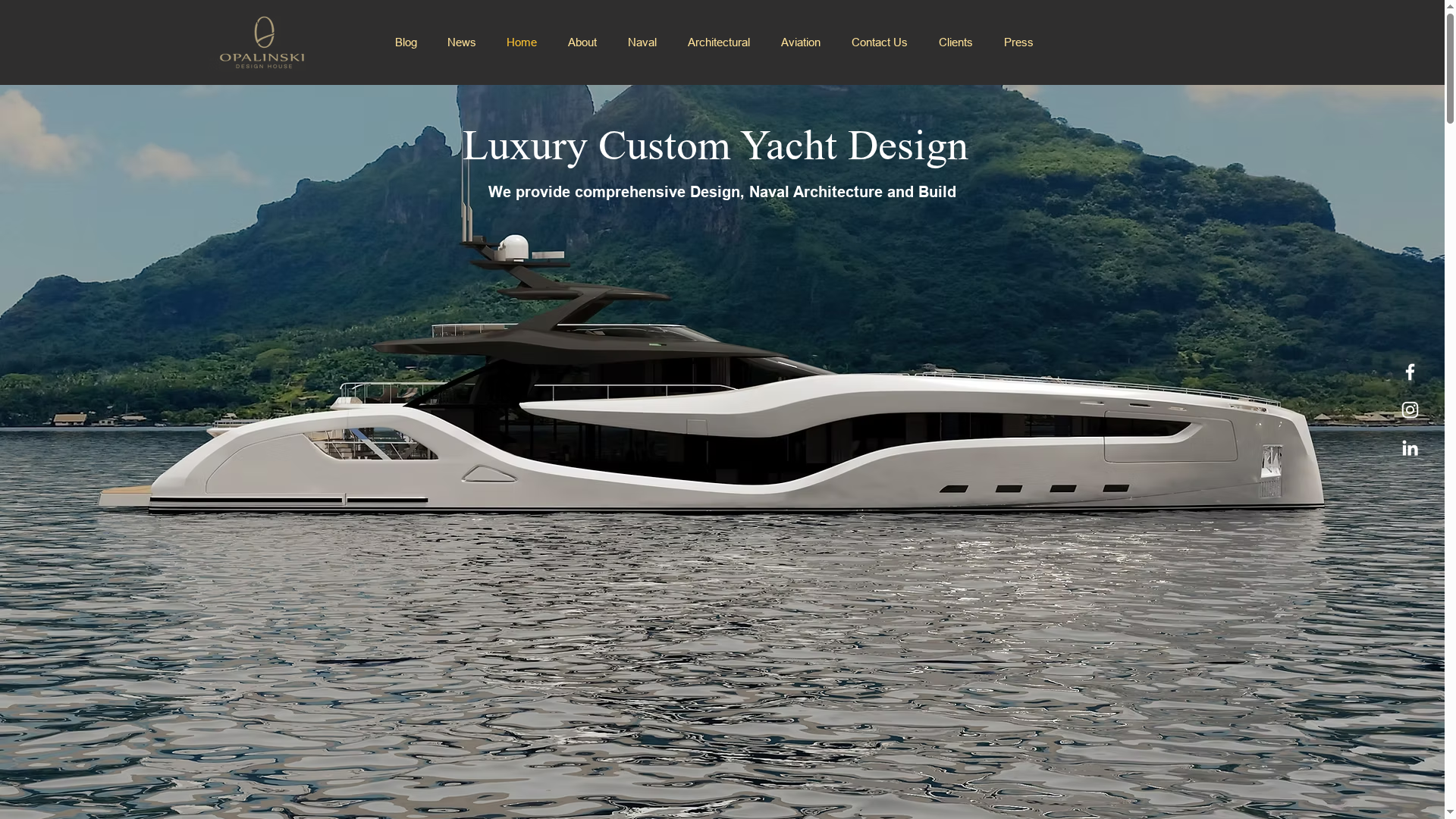
At Opalinski Design House we specialize in transforming these visionary ideas into bespoke realities tailored for discerning yacht owners. Our patented fold-down bulkhead transoms pioneered in 2010 and sophisticated rotational transom solutions for vessels over 50 meters reflect our commitment to innovation and quality that sets industry standards. Experience firsthand how integrated interior-exterior harmony and hydrodynamic optimization bring unmatched comfort and efficiency to your yacht.
Take the next step toward owning a yacht that embodies state-of-the-art naval architecture and timeless luxury. Visit Opalinski Design House to explore our comprehensive yacht design and naval architecture services. Learn how our modern yacht styling ideas and expertise in naval architecture best practices can bring your dream vessel to life. Contact us today to receive a personalized quote and begin your journey toward innovative, sustainable, and elegant yachting excellence.
Frequently Asked Questions
What are fold-down transoms, and how do they enhance the beach club experience on a yacht?
Fold-down transoms transform the stern of a yacht into a low-platform beach club, enabling seamless access to water activities. By lowering to water level, they create a spacious area for entertaining and lounging. Consider integrating this feature for a smoother transition between your yacht and the sea.
How do rotational transom solutions improve operational efficiency for mega yachts?
Rotational transoms adjust their angle based on sea conditions and guest needs, allowing better access and safety during various activities. This adaptability enhances crew operations and guest comfort. Assess your yacht’s design to include these systems for increased flexibility and performance.
What are the benefits of lightweight composite hull construction in naval architecture?
Lightweight composite hulls offer a superior strength-to-weight ratio, resulting in improved speed, fuel efficiency, and reduced maintenance compared to traditional metal hulls. This innovation can lead to significant cost savings and extended vessel lifespan. Evaluate your yacht’s construction materials to optimize performance and sustainability.
How do hybrid propulsion systems contribute to environmentally friendly yachting?
Hybrid propulsion systems combine electric motors and diesel generators, significantly reducing emissions and fuel consumption during different cruising scenarios. Adopting this technology can save up to 22% in fuel costs while enhancing your yacht’s operational efficiency. Explore hybrid options to align your ownership with sustainable practices.
What role does smart glass play in improving energy efficiency on yachts?
Smart glass technology allows for adjustable opacity based on light conditions, which helps control sunlight and thermal comfort while reducing energy consumption for cooling. By integrating smart glass, you can achieve measurable fuel savings and enhance passenger comfort. Specify smart glass for areas with strong sun exposure to maximize benefits.
How can integrated interior-exterior design benefit yacht operations?
Integrated design ensures a seamless flow between indoor and outdoor spaces, improving crew efficiency and guest experience during activities. A cohesive layout enhances usability and aesthetic appeal, making the yacht feel more inviting and functional. Prioritize integrated design concepts during the planning phase to elevate your onboard experience.
Recommended

Comments