
How to Plan Yacht Layout for Luxury and Innovation
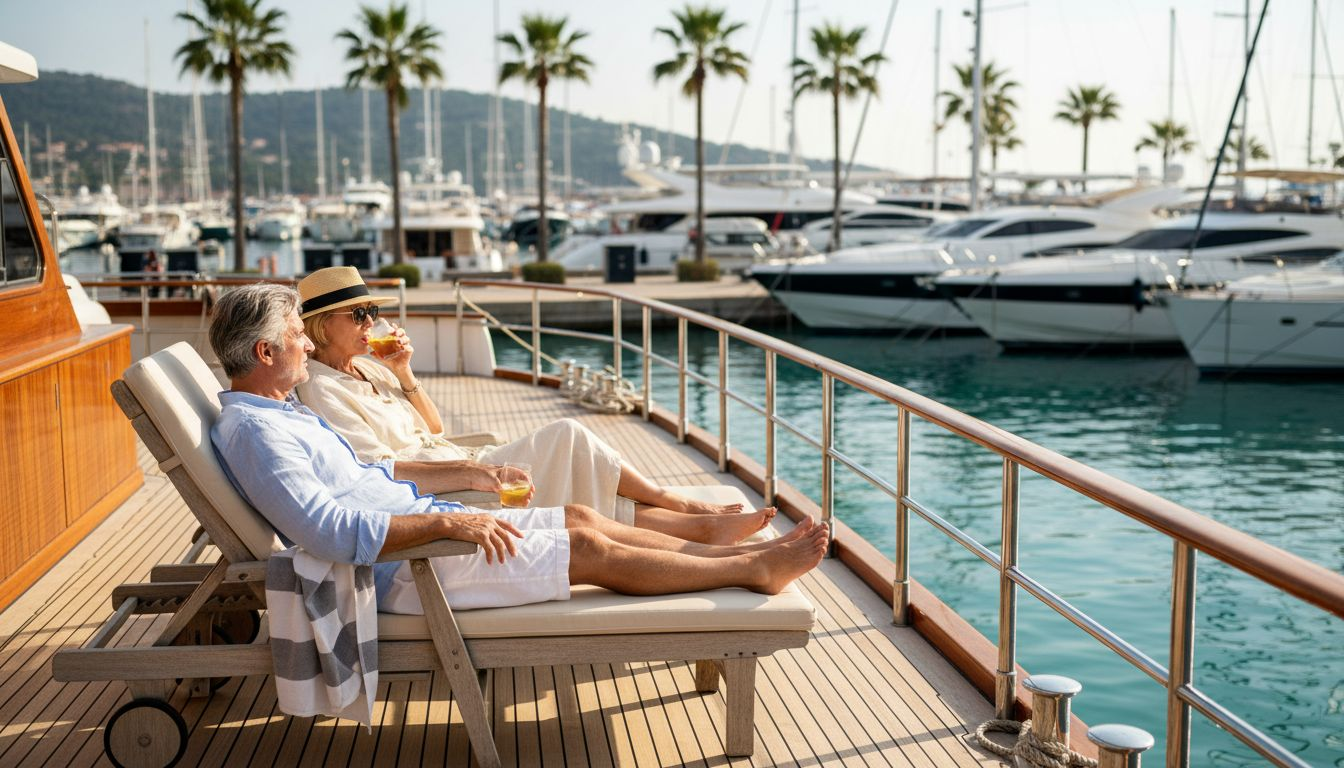
Redesigning a luxury yacht begins with aligning every detail to your personal vision and lifestyle. For high-net-worth yacht owners, a truly bespoke experience goes beyond mere aesthetics, demanding a thoughtful balance of comfort, function, and technological innovation. By focusing on a human-centered approach supported by proven frameworks, you position your vessel as a sanctuary tailored to your exact preferences while embracing sustainability and advanced technology.
Table of Contents
Quick Summary
Key Point | Explanation |
1. Define Owner Lifestyle Needs | Understand how you plan to use your yacht to inform design choices and enhance personal experiences. |
2. Assess Vessel Size and Space | Evaluate desired yacht size to optimize functionality and luxury, considering all areas of use and guest capacity. |
3. Prioritize Comfort and Functionality | Design intuitive layouts that balance comfort with practical use to enhance the onboard experience. |
4. Integrate Advanced Technology | Seamlessly incorporate smart systems that improve comfort and efficiency for a responsive living environment. |
5. Validate Design with Client Walkthroughs | Use virtual models for immersive feedback to ensure design reflects lifestyle needs before final commitment. |
Step 1: Define Owner Lifestyle Requirements
Successfully designing a yacht requires understanding the owner’s unique lifestyle and preferences. This step involves systematically mapping out how you intend to use your vessel, ensuring every design decision aligns with your personal needs and vision.
Critical to yacht design is a human-centered approach that prioritizes your specific requirements. Start by considering these essential lifestyle factors:
Entertainment preferences: Will you host large groups or prefer intimate gatherings?
Recreational activities: Fishing, water sports, sunbathing, or quiet relaxation?
Travel patterns: Coastal cruising, long-distance voyages, or stationary entertainment?
Family dynamics: Number of guests, accessibility needs, age ranges
Professional requirements: Remote work spaces, conference areas, communication capabilities
The goal is transforming your yacht from a mere vessel into a personalized floating sanctuary that reflects your precise lifestyle expectations. Inclusive design principles suggest creating flexible spaces that can adapt to changing needs and preferences.
Your yacht should not just accommodate your lifestyle—it should enhance and celebrate it.
Consider creating a detailed lifestyle profile that captures not just technical requirements, but emotional expectations. What feelings do you want to experience on your yacht? Excitement? Tranquility? Professional productivity?
Pro tip: Collaborate with design professionals who use advanced methodological approaches like the Analytic Hierarchy Process to quantitatively map your lifestyle requirements onto your yacht design.
Step 2: Assess Vessel Size and Onboard Spaces
Precisely evaluating your yacht’s size and interior spatial configuration is crucial for creating a functional and luxurious maritime environment. This step involves strategically analyzing how every square foot of your vessel can be optimized to meet your lifestyle and performance requirements.
Parametric design models demonstrate that vessel size fundamentally determines spatial allocation and functionality. Start by categorizing your potential vessel sizes:
Small Vessels (12-22 meters): Intimate spaces, compact layouts
Medium Vessels (22-40 meters): Enhanced flexibility, multiple functional zones
Large Vessels (40-70 meters): Complex spatial design, multiple deck configurations
Superyachts (70+ meters): Extensive customization possibilities
Consider these critical spatial assessment factors:
Determine Primary Usage: Leisure, business, long-distance travel
Analyze Guest Capacity: Maximum number of overnight guests
Evaluate Equipment Requirements: Specialized areas for work, recreation
Plan Circulation Paths: Ensure smooth movement between spaces
The goal is creating a holistic spatial strategy that balances aesthetic appeal with practical functionality. Regulations and ship arrangement optimization frameworks emphasize the importance of intelligent compartment placement.

Here’s an overview of how different yacht size categories impact onboard experience:
Vessel Size Category | Typical Length (meters) | Design Opportunities | Key Considerations |
Small Vessel | 12-22 | Efficient layouts, cozy atmosphere | Limited space for amenities |
Medium Vessel | 22-40 | Multiple functional zones | Balancing flexibility and comfort |
Large Vessel | 40-70 | Multiple decks, luxury features | Complex spatial planning needed |
Superyacht | 70+ | Full customization, advanced technology | High cost and crew requirements |
Successful yacht design transforms spatial constraints into opportunities for innovation and personalization.
Remember that every square meter matters. Your vessel’s size directly influences comfort, operational efficiency, and potential resale value. Carefully map out potential uses for each area, considering future adaptability and changing lifestyle needs.
Pro tip: Consult naval architects who use advanced parametric modeling to help you visualize and optimize your yacht’s spatial potential before finalizing design commitments.
Step 3: Design Flow for Comfort and Functionality
Crafting a yacht interior that seamlessly blends comfort with functionality requires strategic spatial planning and a deep understanding of human interaction with maritime environments. Your goal is to create an intuitive layout that anticipates needs and enhances the overall onboard experience.
Comfort-driven design frameworks emphasize the critical importance of integrating ergonomic considerations from the earliest design stages. This means thinking beyond aesthetics to create spaces that naturally support your lifestyle and movement patterns.
Key principles for optimal design flow include:
Spatial Connectivity: Create intuitive pathways between functional zones
Multifunctional Areas: Design spaces that adapt to different activities
Visual Continuity: Maintain consistent sightlines and spatial relationships
Ergonomic Considerations: Prioritize human comfort in every design decision
Post-occupancy studies reveal that user satisfaction dramatically depends on how well interior spaces support natural movement and diverse activities. Consider these critical design flow strategies:
Analyze Traffic Patterns: Map expected movement through the vessel
Create Flexible Zones: Design areas that can transform for different purposes
Minimize Obstructions: Ensure clear, comfortable navigation between spaces
Balance Private and Shared Areas: Strategically allocate personal and communal spaces
Exceptional yacht design transforms spatial limitations into opportunities for innovative living.
Remember that comfort is not a luxury—it’s a necessity. Your yacht’s interior should feel like a seamless extension of your lifestyle, with each area thoughtfully designed to support your specific needs and preferences.
Pro tip: Work with naval architects who use advanced ergonomic modeling to simulate and optimize your yacht’s interior flow before finalizing the design.
Step 4: Integrate Advanced Technology Features
Transforming your yacht from a traditional vessel to a cutting-edge technological marvel requires strategic integration of intelligent systems that enhance comfort, efficiency, and user experience. Your goal is to seamlessly blend sophisticated technologies that anticipate and support your lifestyle needs.
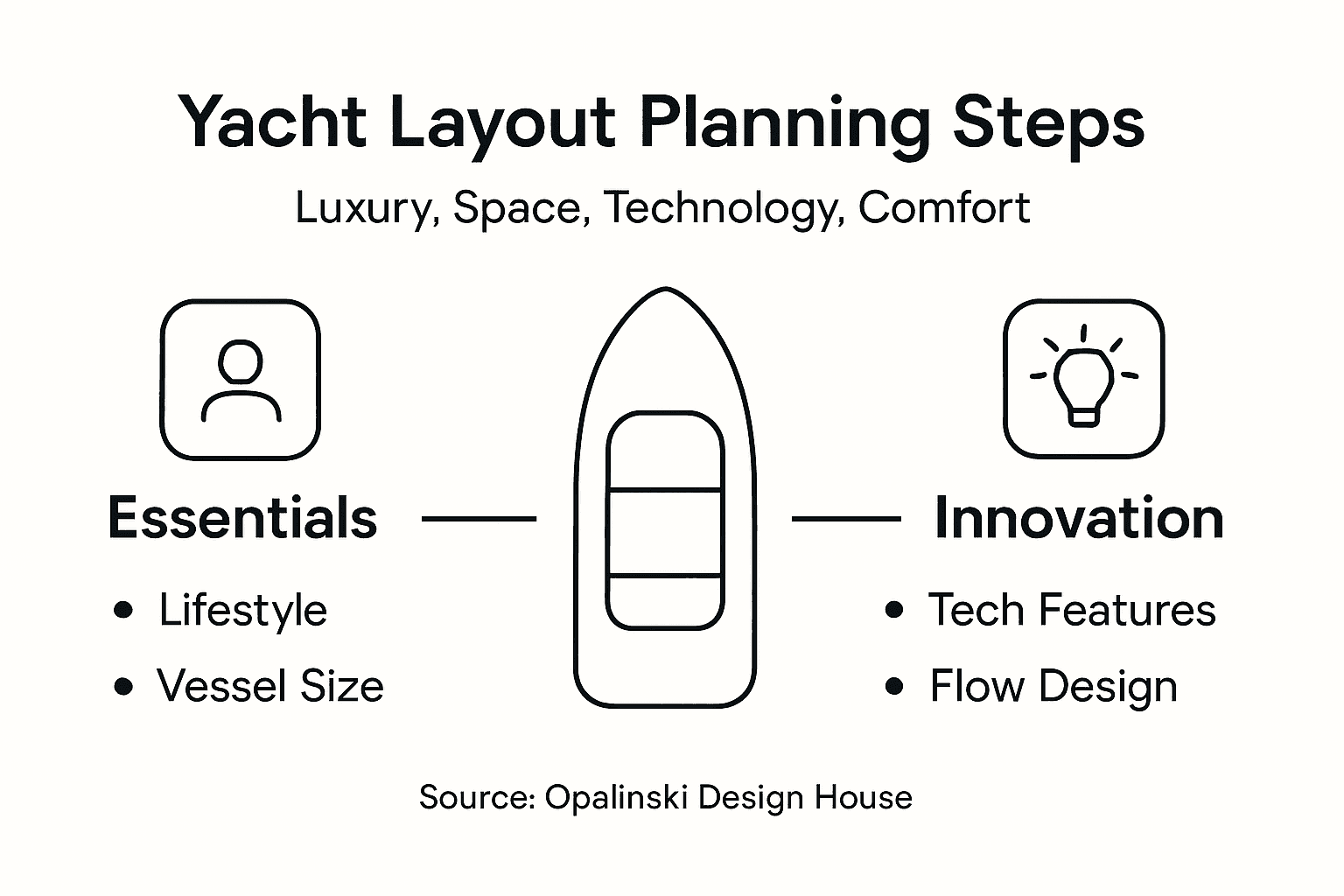
Intelligent manufacturing technologies are revolutionizing yacht design by enabling data-driven customization and real-time decision-making. This means moving beyond traditional design approaches to create truly responsive maritime environments.
Key advanced technology integration strategies include:
Smart Navigation Systems: Real-time route optimization and predictive maintenance
IoT-Enabled Climate Control: Adaptive environmental management
Cybersecurity Protocols: Protecting onboard digital infrastructure
Sustainable Energy Management: Intelligent power distribution and conservation
Building Information Modeling frameworks offer comprehensive approaches to technological integration, supporting parametric modeling and collaborative design processes. Consider these technological implementation steps:
Below is a summary of advanced yacht technology features and their primary benefits:
Tech Feature | Main Benefit | Example Application |
Smart Navigation Systems | Safer, efficient travel | Real-time route optimization |
IoT Climate Control | Optimal comfort, savings | Remote temperature adjustments |
Cybersecurity Protocols | Data and privacy safety | Protection of onboard networks |
Sustainable Energy Systems | Reduced operational costs | Solar panels, battery management |
Assess Current Technological Capabilities: Identify existing systems and potential upgrades
Define Performance Metrics: Establish clear technological expectations
Select Scalable Technologies: Choose systems that can evolve with future innovations
Plan Integrated Infrastructure: Design robust digital ecosystems
Advanced technology is not about complexity—it’s about creating intuitive, responsive environments that enhance your maritime experience.
Remember that technology should serve your lifestyle, not complicate it. Each technological feature should provide tangible benefits that improve comfort, safety, and enjoyment.
Pro tip: Partner with naval architects specializing in technological integration to ensure your yacht’s advanced features are seamlessly and intelligently implemented.
Step 5: Verify Layout with Client Walkthroughs
Validating your yacht’s design requires an immersive, collaborative approach that transforms conceptual plans into tangible experiences. Your objective is to bridge the gap between architectural drawings and real-world perception, ensuring every design detail meets your exact expectations.
Virtual reality design verification provides an unprecedented opportunity to experience your yacht’s layout before physical construction begins. This interactive process allows for precise, nuanced feedback and design refinement.
Key walkthrough strategies include:
Digital Modeling Techniques: Create immersive 3D representations
Interactive Feedback Sessions: Capture real-time client responses
Comparative Analysis: Compare multiple design iterations
Sensory Experience Mapping: Evaluate spatial flow and emotional resonance
Prepare for comprehensive client walkthroughs by:
Schedule Detailed Visualization Sessions: Block dedicated time for immersive design exploration
Prepare Comprehensive Design Scenarios: Create multiple usage context simulations
Enable Granular Customization: Allow immediate design modifications
Document Feedback Systematically: Track every client suggestion
Client walkthroughs transform abstract concepts into personalized maritime experiences.
Remember that effective walkthroughs are collaborative conversations, not one-way presentations. Your active participation ensures the final design truly reflects your vision and lifestyle requirements.
Pro tip: Request multiple walkthrough sessions using progressively refined digital models to capture evolving design preferences and insights.
Elevate Your Yacht Design with Innovation and Precision
Planning a yacht layout that flawlessly balances luxury, comfort, and advanced technology is no small feat. The article highlights challenges like ensuring optimal spatial flow, integrating cutting-edge technology, and tailoring designs to your unique lifestyle needs. If you are striving to transform spatial limitations into innovative opportunities and want a yacht that truly reflects your vision and personality, expert guidance is essential.
At Opalinski Design House, we specialize in crafting bespoke yacht designs that embrace these exact principles. From our patented fold-down bulkhead transoms to full-scale digital modeling, our team brings industry-changing innovations and a human-centered approach to every project. Discover how our expertise in luxury yacht innovation and naval architecture can take your yacht concept from idea to reality while optimizing comfort and functionality.
Ready to experience a yacht design process that values your lifestyle and delivers unparalleled craftsmanship? Explore our portfolio and contact us today at Opalinski Design House to start your personalized consultation. Take the first step toward a vessel that is more than a boat — a floating sanctuary tailored just for you.
Frequently Asked Questions
How do I define my lifestyle requirements when planning a yacht layout?
Start by considering how you intend to use your yacht. Analyze factors such as entertainment preferences, recreational activities, travel patterns, family dynamics, and any professional requirements.
What vessel size should I choose for my desired yacht layout?
Select a vessel size based on your primary usage, guest capacity, and equipment needs. For example, a medium vessel (22-40 meters) provides enhanced flexibility and multiple functional zones, making it a popular choice for varied uses.
How can I ensure comfort and functionality in my yacht design?
Focus on creating intuitive pathways and multifunctional areas in your yacht layout. Analyze traffic patterns and minimize obstructions to promote smooth navigation between spaces, enhancing overall comfort and use.
What advanced technology features should I integrate into my yacht design?
Consider incorporating smart navigation systems, IoT-enabled climate control, and sustainable energy management to enhance luxury and efficiency. Evaluate the specific technologies that can improve your onboard experience according to your unique needs.
How can client walkthroughs improve my yacht design process?
Client walkthroughs help validate and refine your yacht design by transforming conceptual plans into immersive experiences. Schedule multiple sessions to capture feedback and make real-time adjustments to ensure the final design meets all expectations.
Recommended
Comments