
How to Select Naval Architecture Solutions for Yachts
Most American yacht projects set the bar high, yet only a small percentage fully realize their vision for both luxury and sustainability. For high-net-worth owners and visionary builders, defining every requirement up front determines not just unique performance but also lasting value. With forward-thinking naval architecture now shaping the future of custom vessels, this guide reveals how meticulous planning at each design phase results in advanced solutions that truly stand apart.
Table of Contents
Quick Summary
Key Insight | Explanation |
1. Define specific project goals | Clearly outline your yacht’s intended purpose and performance metrics to guide the entire design process. |
2. Prioritize sustainability features | Focus on innovations that improve efficiency and reduce environmental impact, integrating renewable technologies where possible. |
3. Evaluate technical expertise | Thoroughly research naval architecture firms, emphasizing their innovative solutions and successful case studies. |
4. Implement rigorous quality checks | Ensure that potential design partners demonstrate high engineering standards through comprehensive evaluations and validations. |
5. Request detailed proposals | Compile a thorough brief for design studios, outlining your vision, technical preferences, and specific requirements. |
Step 1: Define project requirements and design goals
Designing a yacht requires precise strategic planning and understanding of specific project requirements. This initial phase determines the entire trajectory of your naval architecture solution, establishing clear expectations for performance, aesthetics, and technological integration.
Begin by conducting a comprehensive assessment of your yacht’s intended purpose. Are you designing a luxury cruiser for Mediterranean voyages, an expedition vessel for remote exploration, or a high performance racing yacht? Each purpose demands unique design considerations. Outline specific performance metrics like speed requirements, range capabilities, fuel efficiency, and passenger capacity. Consider environmental conditions such as typical wave heights, wind patterns, and potential operational regions which will influence hull design and structural engineering.
Document your design goals with meticulous detail. Create a structured requirements matrix that captures technical specifications alongside aesthetic preferences. This might include desired cruising speed, preferred passenger accommodations, propulsion system specifications, and sustainable technology integration. Engage with naval architects who can translate your conceptual vision into technically feasible designs. Their expertise will help refine your initial requirements and identify potential technological solutions that align with your vision.
Professional Tip: Always maintain flexibility in your initial design requirements, allowing room for innovative technological solutions that might emerge during the architectural planning process.
Here’s how common yacht design goals relate to business outcomes:
Design Goal | Functional Impact | Business Benefit |
Speed Optimization | Enables faster voyage times | Enhances market prestige |
Sustainability | Reduces operational costs | Meets client eco-demand |
Flexibility | Adapts to varied needs | Attracts diverse clients |
Technological Integration | Improves vessel performance | Demonstrates innovation leadership |
Step 2: Assess innovative design and sustainability features
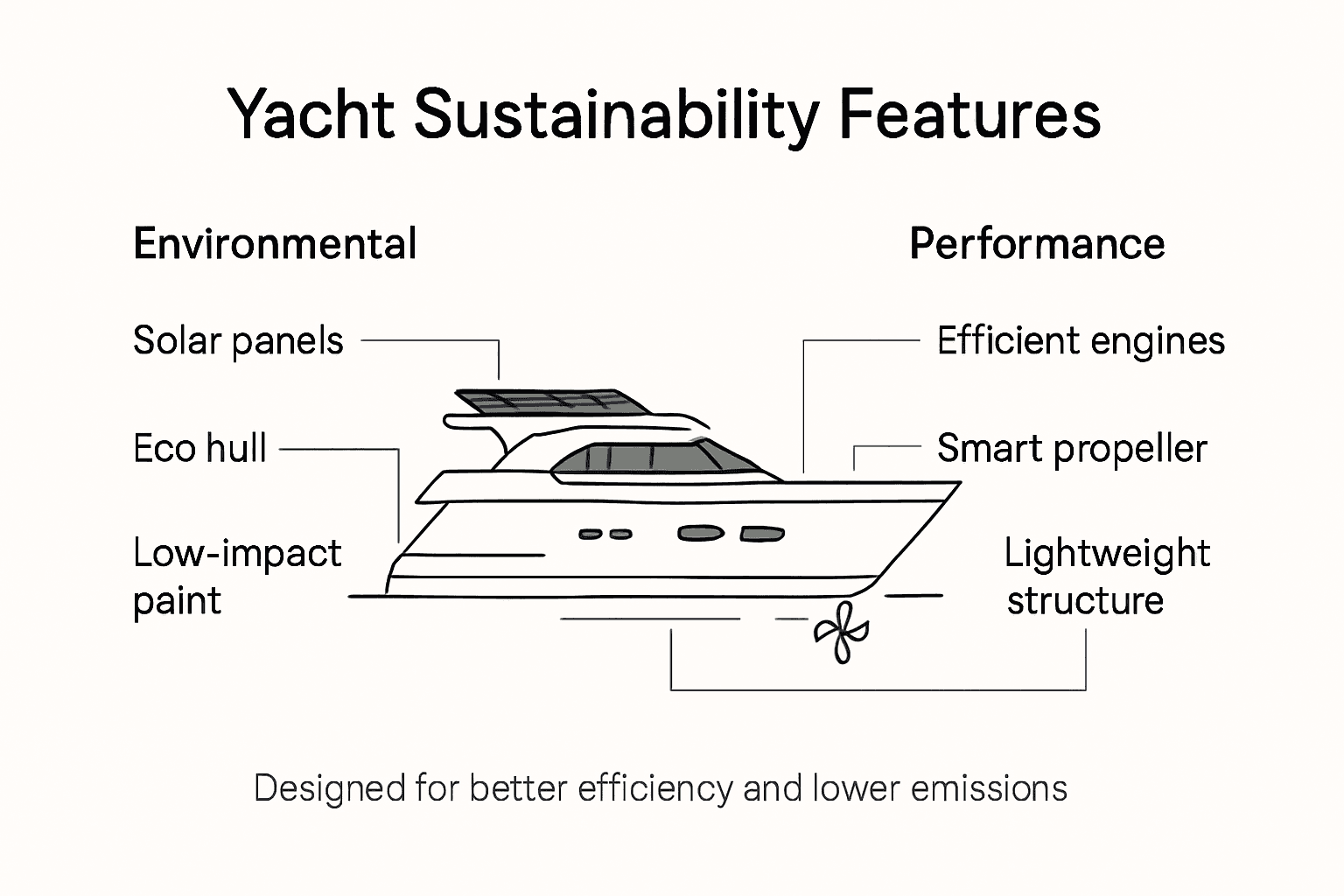
Assessing innovative design and sustainability features requires a comprehensive approach that balances technological advancement with environmental responsibility. Your goal is to identify cutting edge solutions that enhance vessel performance while minimizing ecological impact.

Begin by exploring digital technologies transforming yacht design sustainability, which are revolutionizing maritime craft development. Investigate intelligent materials and flexible design systems that can reduce vessel weight, improve energy efficiency, and create more adaptable living spaces. Focus on innovations that simultaneously address environmental, economic, and performance metrics. Analyze emerging technologies in structural engineering, fluid mechanics, and materials science that contribute to overall vessel optimization.
Prioritize design features that demonstrate measurable sustainability improvements. This includes evaluating propulsion systems, examining hull design efficiency, assessing onboard energy management technologies, and considering renewable energy integration possibilities. Comprehensive research trends indicate that modern naval architecture increasingly emphasizes optimization through advanced modeling, computational fluid dynamics, and intelligent system integration. Engage with naval architects who specialize in sustainable design to gain deeper insights into emerging technological solutions that align with your specific project requirements.
Professional Tip: Consider sustainability not just as an environmental mandate but as a strategic design opportunity that can enhance performance, reduce operational costs, and demonstrate technological leadership.
Compare major sustainability features for modern yacht design:
Feature | Environmental Benefit | Performance Impact |
Intelligent Materials | Lower carbon footprint | Increased energy efficiency |
Renewable Energy | Reduces fuel consumption | Expands operational range |
Advanced Hull Design | Minimizes water resistance | Improves speed and stability |
Smart Energy Systems | Optimizes power usage | Supports onboard automation |
Step 3: Evaluate technical expertise and patented solutions
Evaluating technical expertise and patented solutions is a critical phase in selecting the right naval architecture partner for your yacht project. Your objective is to identify design studios with proven innovation credentials and unique technological capabilities that can transform your vision into a remarkable maritime vessel.
Begin by thoroughly investigating potential naval architecture firms specialized background. Look for studios with documented histories of 7 key naval architecture best practices for yacht innovation, paying special attention to their patented design solutions and technological breakthroughs. Assess their portfolio for evidence of original engineering approaches such as advanced hull configurations, sustainable propulsion systems, or intelligent structural designs. Review case studies that demonstrate their ability to solve complex design challenges and translate conceptual ideas into functional, high performance yacht designs.
Examine the depth and breadth of each firm technical expertise by requesting comprehensive documentation of their innovative solutions. Focus on understanding their specific technological competencies like computational modeling, fluid dynamics simulation, materials engineering, and adaptive design methodologies. Consider firms that not only showcase impressive technical skills but also demonstrate a holistic approach to yacht design that integrates performance, sustainability, and aesthetic innovation. Seek out studios that can articulate how their unique technological approaches will specifically address your project requirements and elevate your yacht design beyond conventional maritime engineering standards.
Professional Tip: Request detailed technical presentations and prototyping demonstrations to gain deeper insights into a naval architecture studio true innovative capabilities.
Step 4: Verify quality and technology integration
Verifying quality and technology integration requires a meticulous approach that goes beyond surface level assessments. Your goal is to ensure that the naval architecture solutions you select meet the highest standards of engineering excellence and technological sophistication.
Quality assurance frameworks in naval architecture demand comprehensive evaluation of multiple technological dimensions. Systematically examine how potential design partners integrate hydrodynamics, structural mechanics, automation, and control systems into their design process. Look for evidence of multidisciplinary collaboration that demonstrates a holistic approach to vessel development. Pay close attention to their digital technologies and simulation capabilities which enable precise modeling and predictive performance analysis.
Implement a rigorous verification process that encompasses technical documentation, testing protocols, and regulatory compliance assessments. Business intelligence and data analytics techniques can help optimize your quality control workflow, reducing potential errors and enhancing overall project efficiency. Request detailed technical documentation that demonstrates their systematic inspection methods, technological integration strategies, and commitment to continuous improvement. Focus on understanding how their quality assurance processes translate into tangible performance benefits for your specific yacht design requirements.
Professional Tip: Request comprehensive performance simulation data and third party validation reports to gain an objective understanding of a naval architecture studio’s technological capabilities.
Step 5: Finalize selection and request a tailored proposal
Finalizing your naval architecture selection and requesting a tailored proposal marks the critical transition from conceptual exploration to concrete vessel development. Your objective is to transform your comprehensive research and evaluations into a precise, actionable design strategy that captures your unique vision.
Initiate the proposal request process by compiling a comprehensive workflow document that synthesizes all previously gathered insights. Develop a detailed brief that articulates your project requirements, performance expectations, technological preferences, and aesthetic vision with crystal clear precision. Include specific parameters such as desired vessel dimensions, performance metrics, sustainability goals, technological integration requirements, and any unique design constraints or innovative features you want incorporated.
Schedule an in depth consultation with your selected naval architecture studio to refine the proposal parameters. Prepare a comprehensive list of questions that probe their understanding of your project vision, technological capabilities, and potential innovative solutions. Request multiple design concept iterations that demonstrate their ability to translate your requirements into practical architectural solutions. Evaluate their proposed approaches not just for technical feasibility but for their creative interpretation of your project goals. Ensure the proposal includes detailed cost projections, development timelines, key milestones, and comprehensive risk assessment strategies.
Professional Tip: Request a preliminary design concept presentation that includes both 2D technical drawings and 3D visualization models to fully understand the studio potential approach to your yacht design.
Elevate Your Yacht Project with Expert Naval Architecture Solutions
Selecting the right naval architecture partner can feel overwhelming with the need to balance innovative design, sustainability, and technical expertise. If you seek a firm that not only understands your detailed project requirements but also brings patented technologies like fold-down transoms and advanced propulsion systems to life, your search ends here. At Opalinski Design House, we specialize in transforming complex yacht design goals into stunning realities through our commitment to quality, creativity, and cutting-edge innovation.
Discover how our seasoned naval architects integrate sustainable materials, technological sophistication, and bespoke styling to craft vessels that perform flawlessly while embodying luxury. Don’t settle for ordinary when your yacht can lead the industry in innovation. Visit our official website to explore our unique patented solutions and request a tailored consultation that will define the future of your yacht design. Take the first step toward a revolutionary vessel that exceeds your expectations today.
Frequently Asked Questions
What are the first steps in selecting naval architecture solutions for yachts?
Begin by defining your project requirements and design goals, focusing on the yacht’s intended purpose and performance metrics. Document your goals in a structured requirements matrix to clarify your expectations.
How do I assess innovative design and sustainability features for my yacht?
Evaluate the latest technologies and materials that enhance performance while reducing ecological impact. Prioritize features like intelligent materials and renewable energy systems, and consider consulting with specialists in sustainable design to explore emerging solutions.
What should I look for in a naval architecture firm’s technical expertise?
Research potential firms for their history and documented innovations in yacht design, focusing on patented solutions and successful case studies. Request specific documentation about their technological competencies to ensure they align with your project requirements.
How can I ensure quality and technology integration in my yacht design?
Implement a thorough verification process by evaluating the design partner’s commitment to quality assurance, including their methods for hydrodynamics and structural mechanics. Request performance simulation data and third-party validation reports to assess their technological capabilities.
What details should be included in a tailored proposal request for a naval architecture studio?
Compile a comprehensive brief detailing project requirements, performance expectations, and any unique design features you want. Schedule a consultation to clarify expectations and request design concept iterations that align with your vision.
How do I evaluate and compare different naval architecture solutions?
Review proposals based on technical feasibility, creative interpretation of your requirements, and projected timelines. Use a checklist to compare key elements such as cost estimates, design iterations, and risk assessment strategies to make informed decisions.
Recommended

Comments