
Yacht Layout Choices – How They Drive Performance
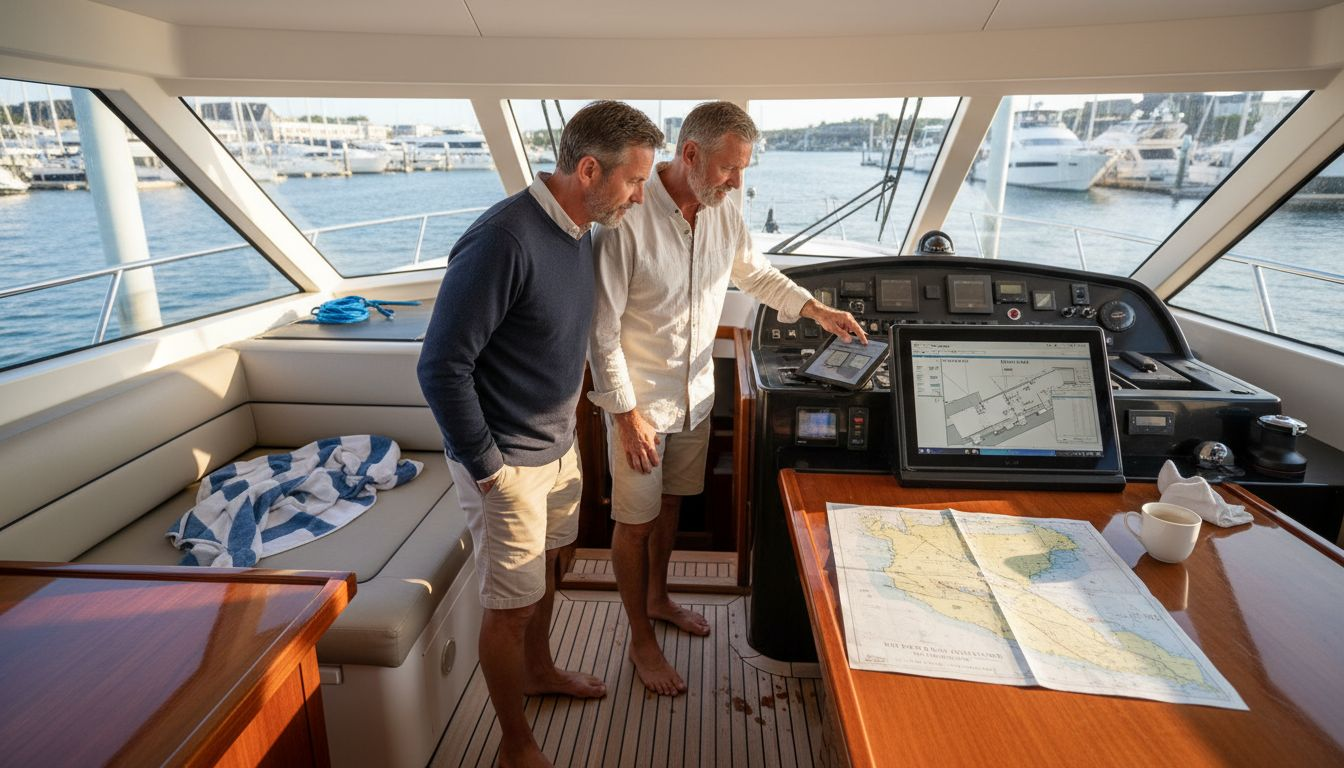
Finding the perfect balance between luxury and practicality often separates a remarkable yacht from an ordinary vessel. For discerning yacht owners and visionary shipbuilders, yacht layout is the foundation of both comfort and peak performance, shaping every onboard experience. As the world of maritime design continues to innovate, this article offers insight into how cutting-edge, bespoke layouts can transform a yacht into a true reflection of personal style and operational excellence.
Table of Contents
Key Takeaways
Point | Details |
Yacht Layout Importance | Yacht layout is essential for enhancing performance, comfort, and regulatory compliance in maritime design. |
Bespoke Designs | Custom yacht layouts reflect individual lifestyles and needs, incorporating tailored features for enhanced living experiences. |
Safety Considerations | Adhering to international safety standards is critical in yacht design, focusing on structural integrity and emergency preparedness. |
Common Pitfalls | Avoiding errors like inefficient space utilization and regulatory non-compliance is vital for successful yacht layout planning. |
Defining Yacht Layout and Its Role
Yacht layout represents a sophisticated spatial design process that transforms maritime vessels into functional and luxurious environments. More than mere architectural planning, it involves strategic organization of internal spaces to optimize performance, comfort, and operational efficiency. Yacht design requires a multidisciplinary approach that balances human activities, engineering requirements, and aesthetic considerations.
The core purpose of yacht layout extends far beyond simple room arrangement. It encompasses several critical dimensions:
Functional Optimization: Positioning equipment, cabins, and amenities for maximum efficiency
Operational Performance: Designing spaces that enhance vessel maneuverability
Human Comfort: Creating environments that support diverse onboard activities
Regulatory Compliance: Ensuring design meets maritime safety standards
Modern yacht layouts increasingly emphasize systematic spatial and functional optimization, integrating advanced technologies and sustainable design principles. This approach transforms yachts from simple transportation vessels into sophisticated living environments that reflect both technological innovation and human-centric design.
Pro tip: When planning yacht layouts, always prioritize both functional performance and experiential quality to create truly exceptional maritime spaces.
Types of Yacht Layouts and Their Functions
Yacht layouts have dramatically transformed from traditional, rigidly defined spaces to adaptive and flexible design environments. These sophisticated configurations now prioritize multifunctionality, allowing owners to customize their maritime experiences across diverse vessel types and intended uses.
The primary yacht layout categories encompass several distinct configurations:
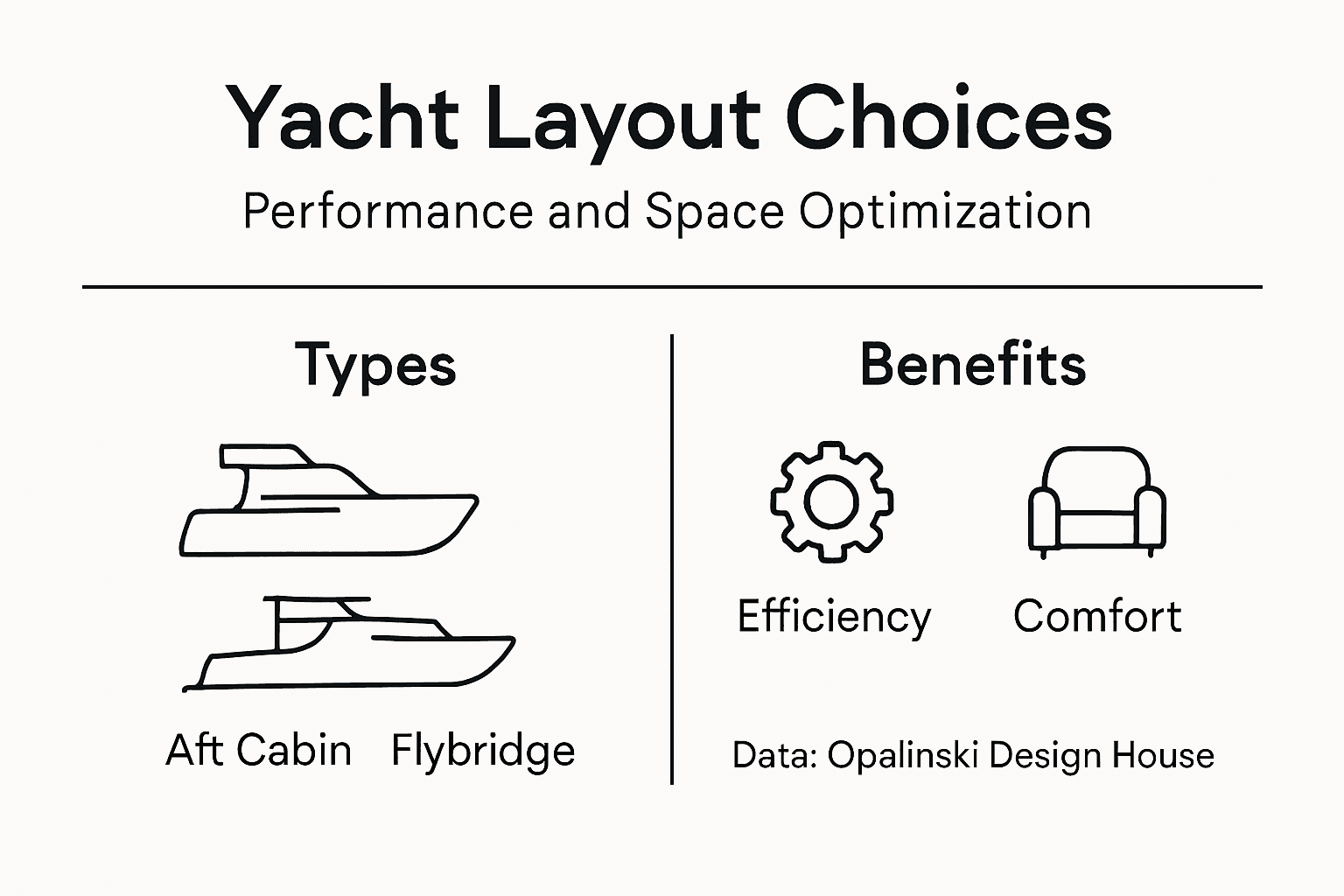
Aft Cabin Layout: Maximizes privacy with owner’s quarters positioned at the vessel’s rear
Flybridge Layout: Provides expansive upper deck spaces for social gatherings and navigation
Expedition Layout: Designed for long-range travel with enhanced storage and operational efficiency
Motorsailer Layout: Balances sailing performance with comfortable living spaces
Megayacht Layout: Offers multiple decks with extensive amenities and specialized zones
Yacht design variations reflect intricate considerations beyond simple spatial organization. Modern layouts integrate sophisticated technological systems, wellness areas, and adaptable social spaces that transform maritime vessels from mere transportation into dynamic living environments. Each layout type strategically addresses specific operational requirements, whether supporting sportfishing, comfortable cruising, or extended oceanic expeditions.
Here is a comparison of key yacht layout types and their unique advantages:
Layout Type | Distinctive Advantage | Ideal Usage Scenario |
Aft Cabin | Enhanced privacy for owners | Private retreats, family use |
Flybridge | Expansive deck for socializing | Large gatherings, navigation |
Expedition | Superior storage and range | Ocean voyages, exploration |
Motorsailer | Balanced sailing and comfort | Leisure cruising, versatility |
Megayacht | Luxury with multiple amenities | Entertainment, events |
The evolution of yacht layouts demonstrates a profound understanding of human behavioral patterns and technological innovation. Designers now create spaces that are not just functional but experientially rich, adapting to diverse maritime lifestyles and user preferences.
Pro tip: When selecting a yacht layout, carefully evaluate your intended usage, prioritizing flexibility and multifunctional design capabilities.
Bespoke Layouts for Owner Lifestyle Needs
Bespoke yacht layouts represent the pinnacle of personalized maritime design, transforming vessels into living environments that precisely reflect individual lifestyle requirements. Unlike standard configurations, these customized spaces integrate the owner’s unique preferences, operational needs, and aesthetic sensibilities into every square foot of maritime living.
Key considerations for bespoke yacht layouts include:
Personal Entertainment Zones: Tailored spaces for specific recreational activities
Wellness Integration: Dedicated areas for fitness, spa, and relaxation
Professional Workspace: Adaptable environments for remote work and communication
Family-Specific Configurations: Layouts supporting multigenerational interactions
Technological Ecosystem: Smart systems enabling seamless lifestyle management
Future yacht designs leverage AI and sustainable technologies to create truly adaptive living spaces. These innovative layouts go beyond traditional design limitations, offering dynamic environments that can transform based on immediate user needs, environmental conditions, and personal preferences.
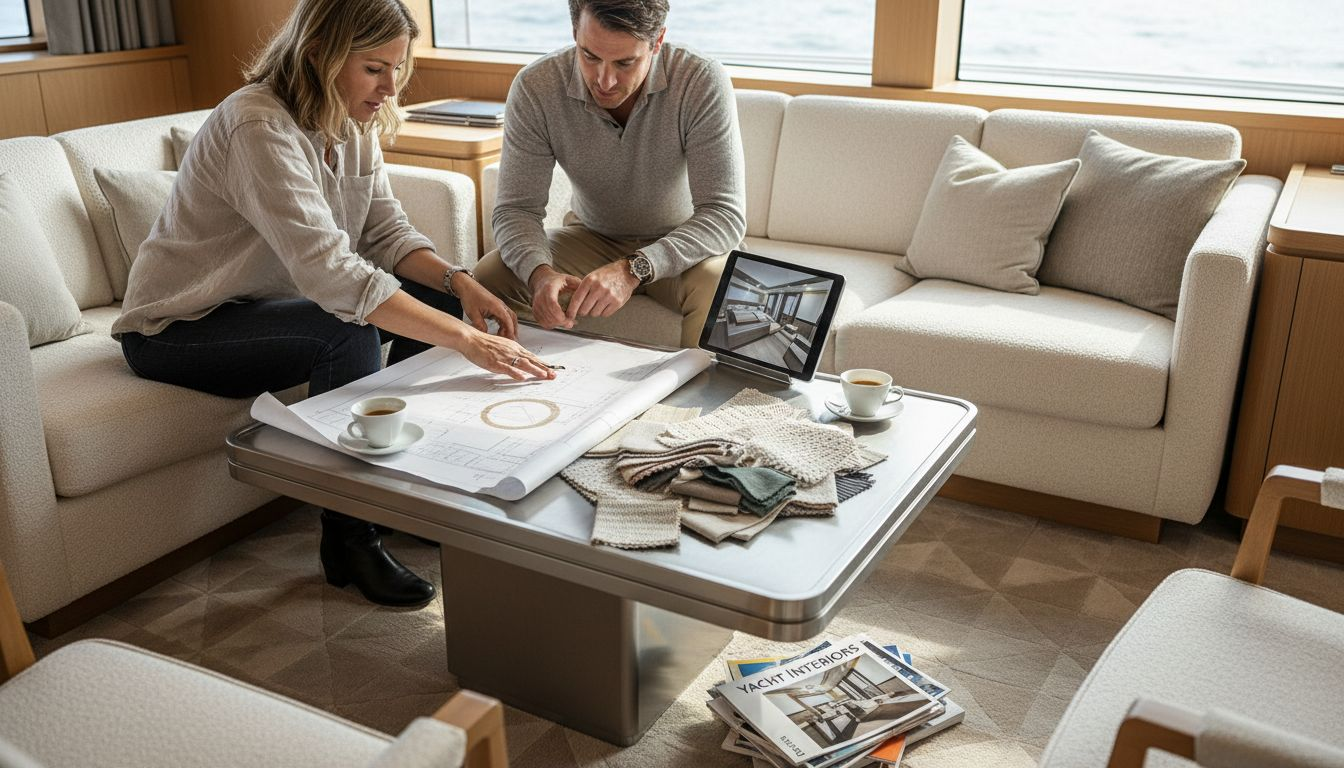
The essence of bespoke yacht design lies in understanding that each vessel is more than a mode of transportation—it’s a personalized sanctuary that reflects the owner’s identity, aspirations, and lifestyle philosophy. Advanced digital modeling and collaborative design processes now enable unprecedented levels of customization, ensuring that every yacht becomes a unique expression of its owner’s vision.
Pro tip: Invest significant time in detailed consultations with naval architects to ensure your bespoke yacht layout authentically captures your lifestyle nuances and future aspirations.
Space Optimization and Innovative Features
Yacht design has undergone a revolutionary transformation, with advanced optimization methods redefining spatial configurations. Modern naval architects now employ sophisticated techniques that maximize every square inch of maritime living spaces, creating environments that are simultaneously compact and expansive.
Key innovative space optimization strategies include:
Modular Furniture Systems: Adaptable components that serve multiple functions
Smart Storage Solutions: Hidden compartments and intelligent design elements
Convertible Living Areas: Spaces that transform based on immediate needs
Vertical Space Utilization: Maximizing volume through intelligent vertical design
Integrated Technology Zones: Seamless technology incorporation without compromising aesthetics
Digital technologies and intelligent materials are revolutionizing yacht layout concepts. These innovations enable adaptive environments that can dynamically reconfigure themselves, breaking traditional spatial constraints and offering unprecedented flexibility for owners.
The ultimate goal of these space optimization strategies extends beyond mere efficiency. They represent a holistic approach to yacht design that harmonizes technological innovation, user experience, and sustainable principles, creating living spaces that are as intelligent as they are luxurious.
Below is a summary of innovative space optimization strategies and their impact on yacht living quality:
Strategy | Enhancement Provided | Owner Benefit |
Modular Furniture | Flexible use of limited space | Easier reconfiguration |
Smart Storage | Increased usable storage areas | Reduced clutter onboard |
Convertible Spaces | Multi-use environments | Space adapts to activities |
Vertical Design | Improved overall spatial volume | More spacious interiors |
Integrated Technology | Seamless functionality | Greater convenience onboard |
Pro tip: Prioritize flexible design elements and multifunctional spaces when conceptualizing your yacht layout to maximize both comfort and operational efficiency.
Safety, Regulatory, and Technical Considerations
Navigating the complex landscape of maritime safety requires a comprehensive understanding of international regulatory frameworks and design principles. Yacht design transcends aesthetic considerations, demanding rigorous compliance with global safety standards that protect both vessel and passengers.
Critical safety and regulatory elements include:
Hull Structural Integrity: Ensuring robust design against maritime stress
Compartmentation Standards: Strategic zoning for damage containment
Evacuation Protocol Design: Clear, accessible emergency routes
Material Compliance: Using approved fire-resistant and maritime-grade materials
Stability Calculations: Precise weight distribution and balance metrics
Genetic algorithms and advanced optimization techniques now play a crucial role in developing yacht layouts that meet stringent safety requirements. These computational methods enable naval architects to simulate and validate complex design scenarios, ensuring optimal safety and performance before physical construction.
The approval process involves multiple stakeholders, including maritime administrations, classification societies, and independent risk assessment teams. Each yacht design undergoes meticulous scrutiny to verify compliance with evolving international regulations such as SOLAS (Safety of Life at Sea), which continuously update safety standards to address emerging maritime challenges.
Pro tip: Always engage specialized maritime safety consultants early in the yacht design process to proactively address potential regulatory and technical compliance issues.
Common Mistakes in Yacht Layout Planning
Yacht design demands precision, yet many designers fall into predictable traps that compromise vessel performance and functionality. Systematic design optimization remains critical to avoiding costly layout errors that can undermine an entire maritime project.
The most prevalent mistakes in yacht layout planning include:
Inefficient Space Utilization: Creating dead spaces or poorly configured areas
Regulatory Non-Compliance: Overlooking critical maritime safety standards
Poor Operational Flow: Designing spaces that obstruct functional movement
Inadequate Weight Distribution: Compromising vessel stability and performance
Neglecting Ergonomic Considerations: Designing without human factors in mind
Overreliance on traditional design approaches without leveraging modern computational techniques frequently leads to suboptimal layouts. Experienced yacht designers recognize that intuition alone cannot replace systematic design methodologies that integrate advanced simulation and optimization strategies.
Successful yacht layout planning requires a holistic approach that balances aesthetic vision, technical constraints, regulatory requirements, and operational efficiency. This demands a multidisciplinary perspective that considers naval architecture, engineering principles, safety standards, and the nuanced needs of maritime environments.
Pro tip: Invest in comprehensive computational modeling and engage multiple specialist consultants to validate your yacht layout design before final implementation.
Elevate Your Yacht Performance With Expert Layout Design
Choosing the right yacht layout is crucial to achieving optimal performance, seamless operational flow, and unmatched onboard comfort. This article highlights common challenges like inefficient space utilization and poor operational flow that can undermine your vessel’s capabilities. At Opalinski Design House, we specialize in transforming these pain points into innovative solutions with our bespoke, technology-driven yacht layouts featuring patented designs such as fold-down transoms and rotational bulkheads. Our multidisciplinary approach ensures your yacht not only meets regulatory safety standards but also delivers exceptional experiential quality.
Discover how tailored yacht layouts from Opalinski Design House can drive your vessel’s performance and reflect your lifestyle needs. Take the next step now and explore our portfolio of innovative naval architecture and interior styling that redefines luxury yachting. Contact our expert team today to start crafting your personalized, high-performance yacht layout that perfectly balances function and elegance.
Frequently Asked Questions
What is yacht layout and why is it important?
Yacht layout refers to the spatial design of a vessel, optimizing internal areas for performance, comfort, and operational efficiency. It’s crucial as it enhances the overall functionality and livability of the yacht.
What are the main types of yacht layouts available?
The primary yacht layout types include Aft Cabin, Flybridge, Expedition, Motorsailer, and Megayacht layouts. Each type has distinct advantages suited for various uses and preferences.
How do bespoke yacht layouts cater to individual lifestyle needs?
Bespoke yacht layouts are customized to reflect the owner’s unique preferences, incorporating elements like personal entertainment zones, wellness spaces, and adaptable work areas that align with their lifestyle.
What are common mistakes to avoid in yacht layout planning?
Common mistakes in yacht layout planning include inefficient space utilization, regulatory non-compliance, poor operational flow, inadequate weight distribution, and neglecting ergonomic considerations.
Recommended

Comments