
Role of Interior Architect in Yachts: Shaping Luxurious Spaces
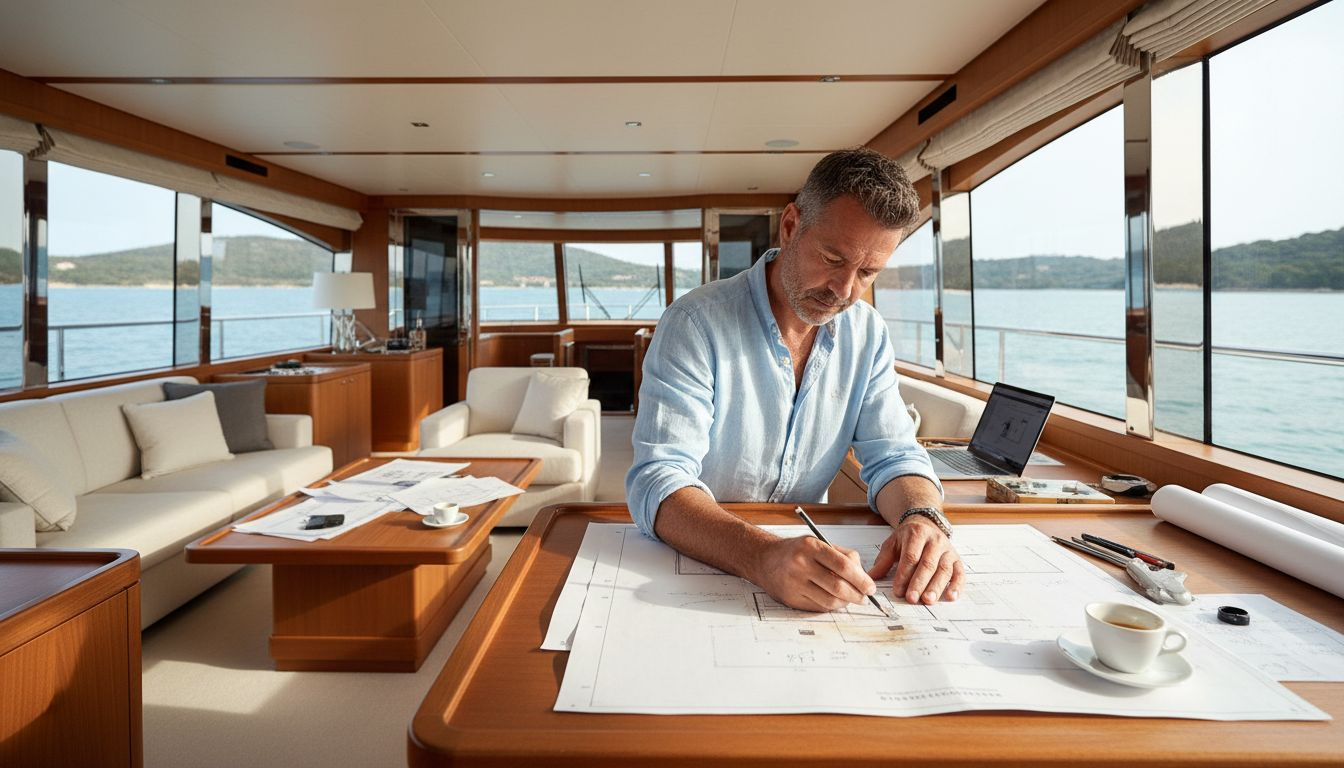
Over fifty percent of luxury vessel owners now seek out American yacht interior architects for their expertise in blending artful design with strict maritime requirements. This growing demand shows how crucial specialized design has become in shaping the comfort and safety of life at sea. Discover what sets these professionals apart and how their creative solutions elevate every aspect of yacht living.
Table of Contents
Key Takeaways
Point | Details |
Role of Yacht Interior Architect | Yacht interior architects blend aesthetics with functional engineering, requiring deep knowledge of maritime constraints and materials. |
Design Methodologies | Various design approaches, from minimalist to eco-sustainable, cater to individual owner preferences and architectural requirements. |
Technological Integration | Embracing smart technology and sustainable practices is essential for creating innovative, luxurious, and environmentally conscious yacht interiors. |
Regulatory Compliance | Adhering to maritime safety regulations is crucial, ensuring both safety and aesthetic appeal without compromising vessel functionality. |
Defining the Role of Yacht Interior Architect
A yacht interior architect represents a specialized professional who transforms maritime spaces into extraordinary living environments, blending aesthetic sophistication with functional engineering. These design experts go far beyond traditional interior design, creating immersive experiences that balance human comfort with nautical constraints. Their role requires an intricate understanding of maritime engineering, spatial dynamics, material performance, and luxury design principles.
Interior architects in yacht design must integrate multiple complex disciplines simultaneously. They analyze vessel geometry, understand weight distribution requirements, select marine-grade materials resistant to saltwater and constant motion, and craft spaces that feel both expansive and intimate. Role of Interior Styling in Luxury Yacht Design highlights how these professionals translate owner preferences into tangible, seaworthy living spaces that reflect individual personality while meeting rigorous maritime safety standards.
The yacht interior architect’s skill set demands profound technical knowledge combined with creative vision. They must consider factors like weight balance, structural integrity, ergonomic flow, and aesthetic harmony. Their designs require precise calculations for furniture placement, material selection, and spatial optimization. Unlike land-based interior designers, these professionals work within three-dimensional constraints that constantly move, experiencing dynamic environmental shifts from calm harbors to challenging ocean conditions.
Successful yacht interior architects possess a rare combination of engineering precision and artistic imagination. They transform limited square footage into luxurious, multifunctional environments that feel simultaneously compact and expansive. Their designs must withstand extreme maritime conditions while providing comfort, style, and seamless functionality.
Pro Tip: Research Marine Design Expertise: Always verify a yacht interior architect’s maritime engineering credentials and portfolio of completed vessel projects before commissioning design work.
Types of Interior Design Approaches in Yachts
Yacht interior design encompasses diverse approaches that transform maritime spaces into personalized, functional environments. Design methodologies in yacht interiors range from minimalist and contemporary to opulent and classic, each reflecting unique owner preferences and architectural constraints. Master the Yacht Interior Styling Workflow Easily demonstrates how professional designers navigate complex design strategies tailored to individual vessel requirements.
Contemporary yacht interior design approaches prioritize innovative concepts that blend technological integration with aesthetic sophistication. Emerging trends include sustainable design principles, smart automation systems, and multifunctional spatial configurations. These approaches emphasize creating adaptable environments that can seamlessly transition between relaxation, entertainment, and practical maritime functionality. Designers now incorporate advanced materials that resist marine environmental challenges while maintaining luxurious visual appeal.
Five primary interior design approaches dominate modern yacht styling:
Minimalist Modern: Clean lines, neutral color palettes, maximum space efficiency
Classic Luxury: Traditional maritime aesthetics, rich materials, ornate detailing
Techno-Organic: Blending natural elements with cutting-edge technological integrations
Eco-Sustainable: Environmentally conscious materials, energy-efficient designs
Customized Personalization: Bespoke solutions reflecting individual owner’s lifestyle and aesthetic preferences
Successful yacht interior design requires a nuanced understanding of spatial dynamics, material performance, and owner expectations. Designers must balance aesthetic vision with practical maritime engineering constraints, creating spaces that are simultaneously beautiful, functional, and resilient against challenging marine environments.
Here is a comparison of key yacht interior design approaches and their ideal use cases:
Approach | Signature Features | Best for Owners Who |
Minimalist Modern | Streamlined layouts, neutral tones | Prefer uncluttered spaces |
Classic Luxury | Rich textures, ornate details | Value tradition and heritage |
Techno-Organic | Natural forms with smart tech | Seek harmony and innovation |
Eco-Sustainable | Green materials, energy focus | Prioritize environment |
Customized Personalization | Bespoke solutions, tailored layouts | Desire unique experiences |
Pro Tip: Design Consultation Strategy: Always schedule multiple design consultations with yacht interior architects who demonstrate proven expertise in translating conceptual visions into practical, seaworthy interior solutions.
Key Skills and Collaborative Process Explained
Yacht interior architects possess a unique blend of technical expertise, creative vision, and interdisciplinary collaboration skills essential for transforming maritime spaces. These professionals must navigate complex design challenges that require deep understanding of engineering principles, aesthetic sensibilities, and client expectations. Critical design coordination processes involve intricate communication networks connecting shipyards, contractors, material suppliers, and client representatives.
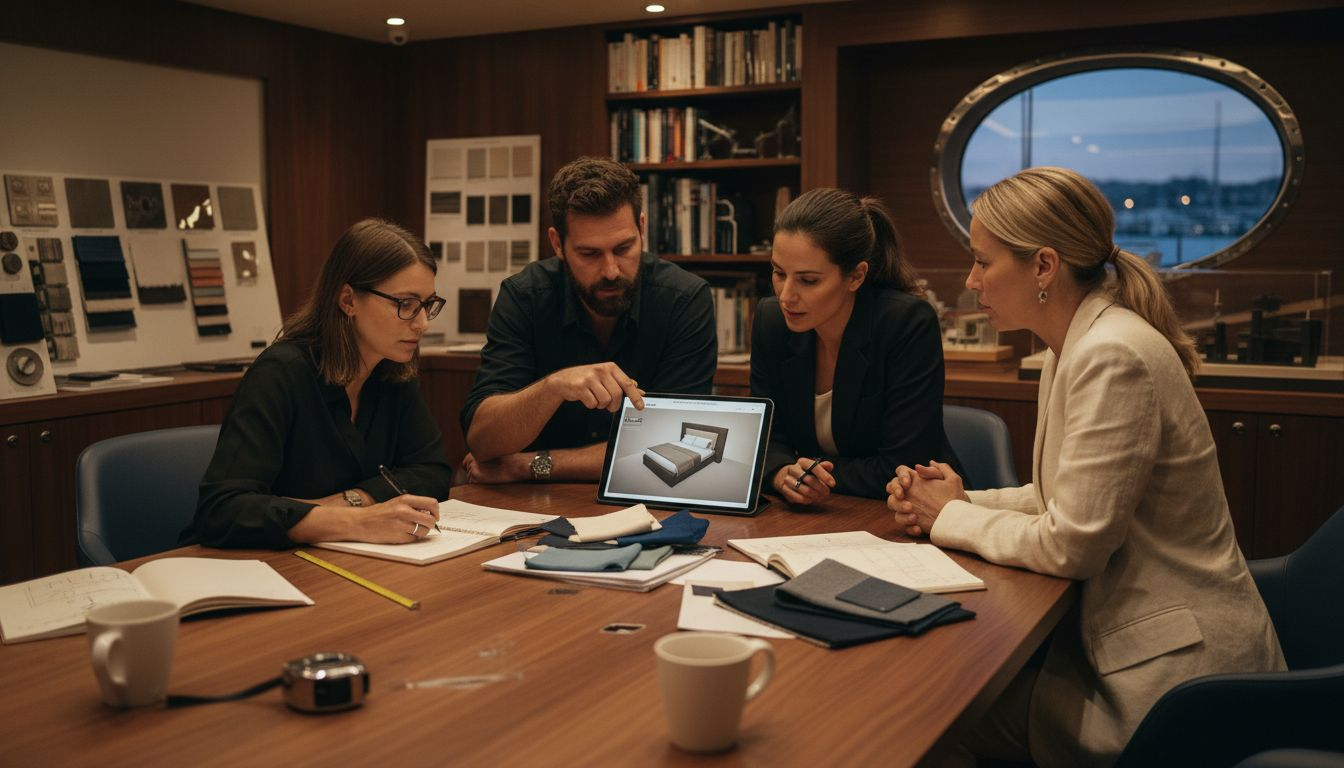
The collaborative process in yacht interior design unfolds through several strategic stages. Initially, architects conduct comprehensive consultations to understand owner preferences, lifestyle requirements, and functional needs. They then develop detailed conceptual renderings, integrating sophisticated 3D modeling technologies that allow clients to visualize potential design iterations. These initial design explorations involve rigorous technical assessments of weight distribution, material performance, and spatial optimization, ensuring that aesthetic choices align with maritime engineering constraints.
Key skills required for successful yacht interior architecture include:
Advanced 3D visualization and computer-aided design (CAD) capabilities
Extensive knowledge of marine-grade materials and their performance characteristics
Understanding of structural engineering principles
Sophisticated color theory and spatial design expertise
Project management and client communication skills
Technical comprehension of maritime safety regulations
Ability to integrate cutting-edge technological systems
The most successful yacht interior architects demonstrate remarkable adaptability, transforming complex technical limitations into opportunities for innovative design solutions. They must simultaneously serve as creative visionaries, technical engineers, and strategic project managers, balancing aesthetic aspirations with practical maritime requirements.
Pro Tip: Technical Portfolio Review: Always request comprehensive portfolios demonstrating an architect’s technical capabilities, focusing on projects that showcase both aesthetic innovation and successful engineering integration.
Integrating Technology and Sustainability Solutions
Yacht interior design has evolved dramatically, embracing technological innovation and environmental consciousness as core design principles. Modern yacht interiors represent sophisticated ecosystems where cutting-edge technology and sustainable solutions seamlessly converge. Advanced yacht interior design trends demonstrate how designers are reimagining maritime spaces through intelligent, environmentally responsible approaches.
Technological integration in yacht interiors now encompasses comprehensive smart systems that transform user experience. Automated climate control, voice-activated interfaces, and AI-driven security networks create intuitive living environments that adapt dynamically to occupant preferences. High-speed internet connectivity, immersive entertainment systems, and centralized control platforms allow owners and guests to manage entire vessel environments with unprecedented ease and sophistication.
Sustainability solutions in contemporary yacht design focus on multiple critical dimensions:
Material Innovation: Utilizing recycled composite materials
Energy Efficiency: Implementing solar integration and low-consumption systems
Waste Reduction: Designing closed-loop environmental management solutions
Ecological Material Selection: Prioritizing organic fabrics and responsibly sourced woods
Carbon Footprint Minimization: Developing designs that reduce overall environmental impact
The most forward-thinking yacht interior architects view technology and sustainability not as competing priorities, but as complementary design objectives. They understand that truly exceptional maritime environments must balance aesthetic elegance, technological sophistication, and environmental responsibility. By integrating smart systems with eco-conscious materials, these designers create spaces that are simultaneously luxurious, intelligent, and environmentally sensitive.
The following table summarizes how technology and sustainability intersect in modern yacht interior design:
Innovation Area | Technology Example | Sustainability Benefit |
Smart Automation | AI-driven climate control | Optimizes energy consumption |
Advanced Materials | Recycled composites | Reduces resource extraction |
Connectivity | High-speed integrated networks | Enables remote energy monitoring |
Environmental Systems | Closed-loop waste solutions | Minimizes ocean pollution |
Lighting Efficiency | Automated LED systems | Lowers onboard electricity use |
Pro Tip: Sustainability Assessment: Request comprehensive environmental impact studies from yacht interior architects, ensuring their design approach demonstrates measurable ecological considerations beyond surface-level green marketing.
Legal, Safety, and Regulatory Considerations
Yacht interior design represents a complex intersection of aesthetic creativity and stringent maritime safety regulations. Architects must navigate an intricate landscape of legal requirements that prioritize human safety, structural integrity, and environmental compliance. Comprehensive safety regulations for maritime interior spaces mandate meticulous attention to material selection, spatial configuration, and emergency preparedness.
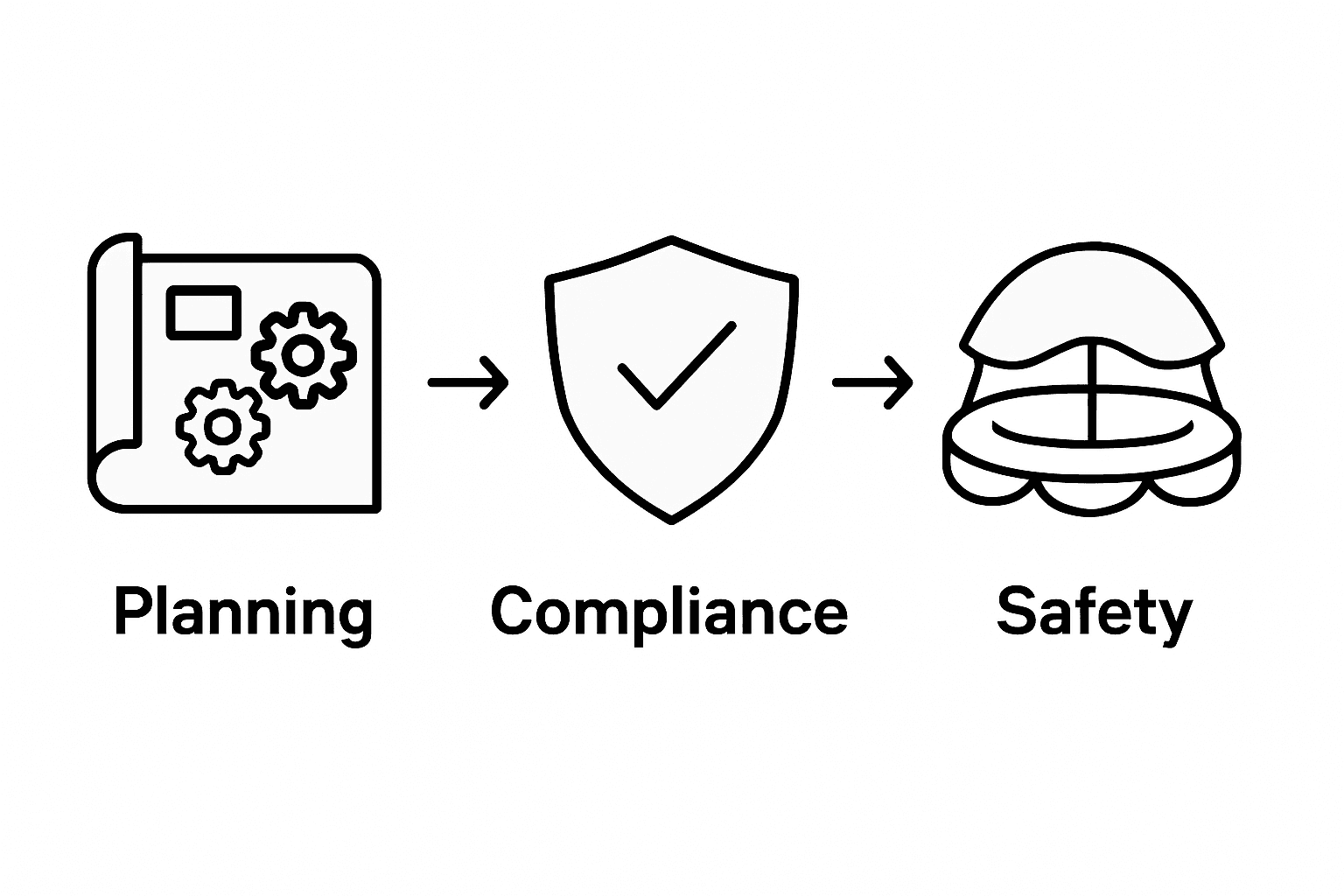
Regulatory compliance encompasses multiple critical dimensions of yacht interior architecture. Designers must ensure that every material, structural element, and spatial configuration meets international maritime safety standards. This includes selecting flame-retardant materials, designing clear emergency evacuation routes, implementing robust fire suppression systems, and creating spaces that facilitate rapid human movement during potential crisis scenarios. Compliance is not optional but a fundamental requirement that directly impacts human life and vessel seaworthiness.
Key regulatory considerations for yacht interior architects include:
Material Certification: Using exclusively approved flame-resistant materials
Emergency Circulation: Designing clear, unobstructed movement pathways
Fire Safety Systems: Integrating advanced suppression and detection technologies
Structural Integrity: Ensuring design elements do not compromise vessel stability
Environmental Compliance: Meeting international maritime ecological standards
Accessibility Design: Creating spaces accessible to diverse human capabilities
Load Distribution: Balancing interior design with vessel weight management
The most sophisticated yacht interior architects understand that safety and design are not competing priorities but interconnected design objectives. They approach regulatory compliance as an opportunity for innovative problem-solving, transforming legal requirements into elegant design solutions that enhance both aesthetic appeal and human safety. Their work requires a delicate balance between creative expression and rigorous technical precision.
Pro Tip: Regulatory Verification: Always request documented proof of international maritime safety certifications from yacht interior architects, ensuring their designs meet the most current global regulatory standards.
Common Pitfalls in Yacht Interior Architecture
Yacht interior architecture demands extraordinary precision, with numerous potential missteps that can compromise design quality and functionality. Critical design challenges in yacht interior development reveal complex pitfalls that even experienced professionals can encounter, transforming seemingly minor oversights into significant design complications.
Space optimization represents one of the most nuanced challenges in yacht interior design. Many architects struggle to balance aesthetic aspirations with practical spatial constraints, often failing to create multifunctional environments that adapt seamlessly to changing user needs. Inefficient layout planning can result in awkward circulation patterns, wasted square footage, and reduced overall vessel usability. Designers must think three-dimensionally, understanding how every centimeter contributes to the vessel’s functional and emotional experience.
Key pitfalls in yacht interior architecture include:
Inadequate Space Efficiency: Failing to maximize functional areas
Technological Obsolescence: Neglecting integrated smart systems
Material Inappropriate Selection: Using non-marine-grade materials
Poor Weight Distribution: Compromising vessel performance
Insufficient Crew Space Planning: Overlooking staff functionality
Limited Adaptability: Creating rigid, non-transformative environments
Regulatory Non-Compliance: Ignoring maritime safety standards
The most sophisticated yacht interior architects understand that successful design transcends aesthetic beauty. They approach each project as a complex engineering challenge, anticipating potential problems before they manifest. By maintaining a holistic perspective that considers technological integration, human factors, and maritime engineering principles, these professionals transform potential pitfalls into opportunities for innovative design solutions.
Pro Tip: Design Verification Strategy: Always conduct comprehensive computational simulations and scaled mockups to identify potential design limitations before final implementation.
Elevate Your Yacht Living Experience with Expert Interior Architecture
Creating luxurious, functional, and seaworthy interior spaces requires a deep understanding of maritime constraints combined with creative vision. If the challenge of balancing design elegance with technical demands like weight distribution, marine-grade materials, and spatial efficiency resonates with you, then expert guidance is essential. At Opalinski Design House, we specialize in turning these complex requirements into breathtaking, customized yacht interiors that align perfectly with your lifestyle and safety standards.
Discover how our innovative yacht design solutions, including patented features like fold-down transoms, can transform your vessel into a masterpiece of comfort, technology, and sustainability. Don’t settle for ordinary when you can partner with leaders in luxury yacht innovation. Explore our comprehensive design approach at Opalinski Design House and learn how we translate your vision into a sophisticated, marine-ready reality. Contact us today for a personalized consultation and take the first step toward redefining your yacht’s interior architecture with confidence.
Frequently Asked Questions
What is the role of a yacht interior architect?
A yacht interior architect specializes in creating luxurious and functional living spaces on yachts, integrating aesthetic sophistication with maritime engineering principles.
What skills are essential for a yacht interior architect?
Essential skills include advanced 3D visualization capabilities, knowledge of marine-grade materials, understanding structural engineering principles, and expertise in project management and maritime safety regulations.
How do yacht interior architects ensure designs meet safety regulations?
They ensure compliance by selecting flame-retardant materials, designing clear emergency routes, and integrating advanced fire safety systems, all while considering the structural integrity of the vessel.
What are some common design approaches utilized in yacht interiors?
Common approaches include minimalist modern, classic luxury, techno-organic, eco-sustainable, and customized personalization, each tailored to reflect individual owner preferences and functional needs.
Recommended
Comments