
Complete Guide to Interior Design Trends Yachts 2025
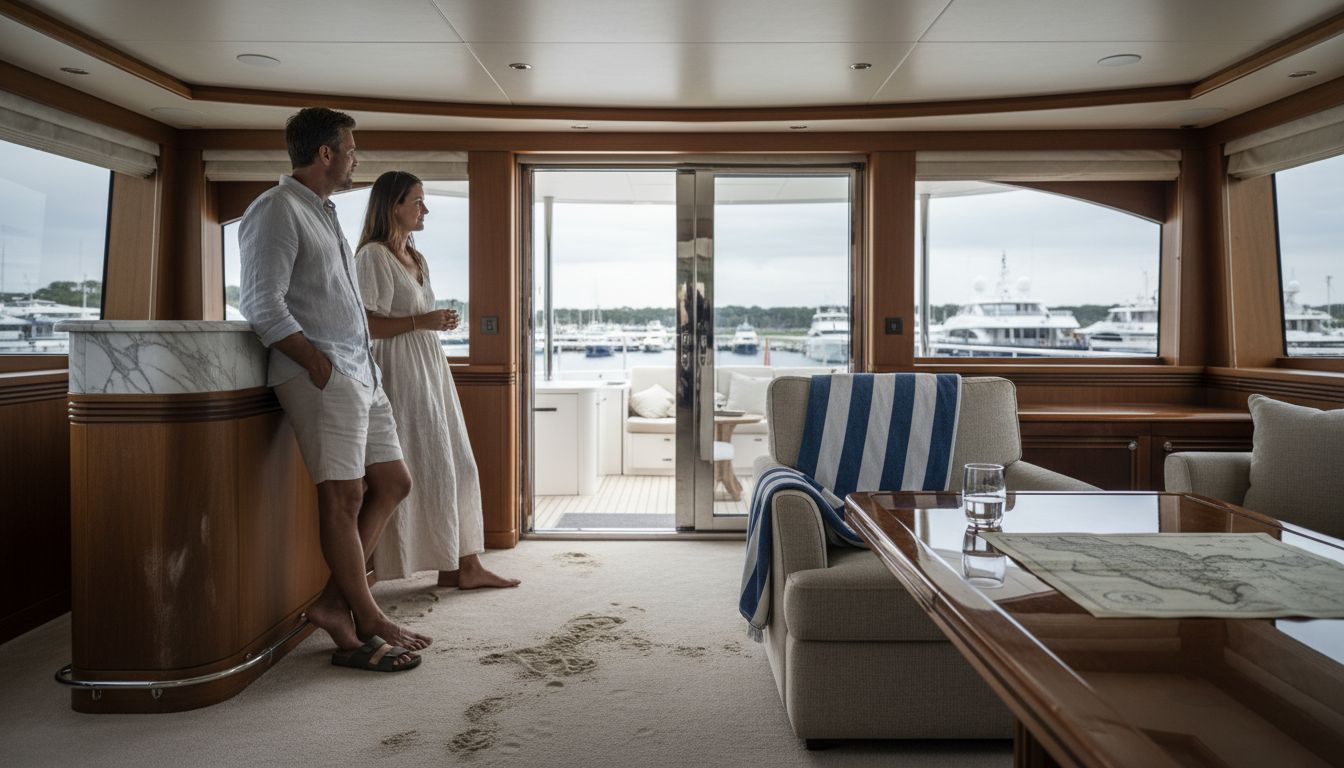
More American yacht owners are driving change as nearly 90 percent now demand interiors crafted with sustainability and smart technology in mind. This dramatic shift matters as luxury is being redefined by environmental responsibility, custom features, and digital integration. Explore how the world of yacht design in 2025 combines cutting-edge innovation, eco-conscious materials, and bold personalization—setting new benchmarks for comfort and style at sea.
Table of Contents
Key Takeaways
Point | Details |
Personalization and Sustainability | Yacht interiors in 2025 focus on reflecting individual lifestyles through sustainable materials and advanced technologies. |
Technological Integration | Smart systems will create responsive, immersive environments, adapting to owner preferences for enhanced comfort and convenience. |
Customization and Modularity | Modular design allows for dynamic spatial configurations, facilitating personalized living spaces that evolve with owner needs. |
Compliance and Risk Management | Understanding regulatory challenges and environmental standards is crucial for successful yacht design in this evolving landscape. |
Defining Yacht Interior Design Trends 2025
The yacht interior design landscape for 2025 represents a profound evolution where personalization, sustainability, and technological innovation converge to redefine luxury maritime experiences. Yacht owners are increasingly seeking interiors that transcend traditional aesthetics, demanding spaces that authentically reflect their individual lifestyle and values.
Key emerging trends in yacht interior design center around three fundamental pillars: intelligent technology integration, sustainable material selection, and adaptive spatial configurations. Smart technology now allows vessel interiors to dynamically respond to occupant preferences, with automation systems controlling everything from ambient lighting to temperature zones. Owners want seamless technological experiences that feel intuitive and elegant, eliminating clunky interfaces and maximizing comfort.
Sustainability has transformed from a peripheral consideration to a core design philosophy. Yacht designers are now sourcing materials with transparent environmental credentials, incorporating recycled composites, responsibly harvested woods, and low-emission finishes. The goal is creating luxurious spaces that minimize ecological impact without compromising aesthetic sophistication. Advanced materials like carbon-neutral textiles and regenerative architectural elements are becoming standard expectations for discerning yacht owners who view their vessels as reflections of environmental consciousness.
The ultimate 2025 yacht interior will blend cutting-edge technology, environmental responsibility, and deeply personalized design languages. Each vessel becomes a bespoke statement - part technological marvel, part sustainable sanctuary, and entirely tailored to its owner’s unique vision.
Sustainable Materials and Eco-Friendly Innovations
The yacht design industry is experiencing a radical transformation through innovative approaches to sustainability, where materials and design strategies are increasingly inspired by natural ecological principles. Biomimicry has emerged as a groundbreaking design philosophy, enabling naval architects and interior designers to develop materials and systems that mimic nature’s most sophisticated engineering strategies.
Advanced sustainable materials represent the cutting edge of yacht interior design for 2025. These next-generation solutions include carbon-negative composites, regenerative textiles, and bio-based synthetics that dramatically reduce environmental impact while maintaining exceptional aesthetic and functional performance. Designers are now exploring materials like algae-derived foams, recycled ocean plastics transformed into high-performance surfaces, and responsibly sourced natural fibers that offer both durability and minimal ecological footprint.

Technological innovations are enabling unprecedented levels of material customization and performance. Smart textiles that can regulate temperature, self-clean, and adapt to environmental conditions are becoming standard in luxury yacht interiors. These materials not only reduce energy consumption but also provide enhanced comfort and longevity. By integrating advanced sensors and responsive technologies, yacht interiors can now dynamically adjust to optimize resource efficiency and occupant experience.
The most progressive yacht designers are viewing sustainability not as a constraint but as an opportunity for unprecedented creativity. By embracing circular design principles, they are creating interiors that are not just less harmful, but actively regenerative - spaces that contribute positively to environmental restoration while delivering uncompromising luxury and technological sophistication.
Technological Integration and Smart Features
The 2025 yacht interior represents a sophisticated ecosystem of interconnected intelligent systems, transforming maritime spaces into responsive, adaptive environments that anticipate and fulfill owner expectations. Smart technology has evolved beyond simple automation, emerging as an intricate network of sensor-driven, artificially intelligent systems that create immersive, personalized experiences.
Advanced technological integration now encompasses multiple critical domains of yacht functionality. Cutting-edge systems deliver comprehensive environmental management, including intelligent climate control that adapts to individual room occupancy, humidity levels, and personal temperature preferences. Integrated security networks utilize biometric recognition, advanced thermal imaging, and predictive analytics to ensure unprecedented levels of safety and privacy. Connectivity solutions enable seamless communication and entertainment experiences, with high-bandwidth satellite networks providing global internet access, holographic communication interfaces, and immersive augmented reality entertainment platforms.
Navigation and operational technologies have also undergone remarkable transformation. Quantum computing-enabled navigation systems provide real-time predictive route optimization, accounting for complex maritime conditions including weather patterns, ocean currents, and potential ecological considerations. Artificial intelligence algorithms continuously analyze vessel performance, suggesting energy-efficient routing and proactively identifying potential maintenance requirements before they become critical issues. Augmented reality interfaces allow captains and crew to access complex operational data through intuitive, gesture-controlled holographic displays that overlay critical information directly onto physical vessel spaces.
Ultimately, the most revolutionary aspect of yacht technological integration is its ability to create deeply personalized experiences. Machine learning algorithms now study owner preferences, automatically adjusting lighting, temperature, music, and ambient conditions to create perfectly tailored environments. These intelligent systems represent more than technological upgrades - they are sophisticated companions that transform yacht interiors into living, breathing spaces that understand and respond to human needs with unprecedented precision and elegance.
Luxury Materials, Craftsmanship, and Detailing
Luxury yacht interior design in 2025 represents the pinnacle of artisanal craftsmanship, where each vessel becomes a testament to extraordinary human skill and precision. The award-winning yacht Raven exemplifies this commitment to exceptional interior design, showcasing how meticulous attention to detail transforms maritime spaces into breathtaking artistic expressions.
Bespoke craftsmanship has evolved beyond traditional woodworking and metalcraft, incorporating advanced techniques that blend human expertise with cutting-edge technological precision. Master artisans now utilize computer-aided design and micro-precision manufacturing tools to create intricate interior elements that were previously impossible. Rare materials like sustainably sourced exotic woods, hand-worked maritime-grade metals, and innovative composite materials are carefully selected and transformed through multilayered production processes that combine traditional techniques with modern engineering.
The selection and integration of materials represent a complex choreography of aesthetic sensibility and functional performance. Designers are pushing boundaries by creating surfaces that not only look extraordinary but also possess advanced technological properties. Textured glass that changes opacity based on ambient light, self-healing composite panels, and metamaterials that adapt to environmental conditions are becoming standard in high-end yacht interiors. Each material is carefully chosen to create a harmonious sensory experience that balances visual elegance, tactile sophistication, and practical durability.
Ultimately, luxury yacht interiors in 2025 are more than physical spaces - they are narrative environments that tell stories of individual taste, technological innovation, and human creativity. Every curve, texture, and detail is meticulously considered, transforming vessels from mere transportation into floating masterpieces that reflect the most refined expressions of design, technology, and personal vision.
Customization, Space Efficiency, and Layouts
Yacht design in 2025 has revolutionized spatial concepts, transforming vessels from traditional maritime transportation into adaptable, personalized living environments. Modular design has become the cornerstone of contemporary yacht interior planning, allowing owners unprecedented flexibility in creating spaces that dynamically respond to their changing lifestyle and functional requirements.
Modern yacht interiors now blur the boundaries between architectural design and maritime engineering, featuring innovative spatial solutions that maximize every square inch of available area. Designers are implementing transformative technologies like retractable walls, multi-purpose furniture systems, and adaptive spatial configurations that can dramatically reshape interior environments within minutes. Foldable balconies, sliding glass partitions, and hydraulic deck extensions create seamless transitions between interior and exterior spaces, effectively expanding the perceived living area and providing owners with unprecedented spatial versatility.
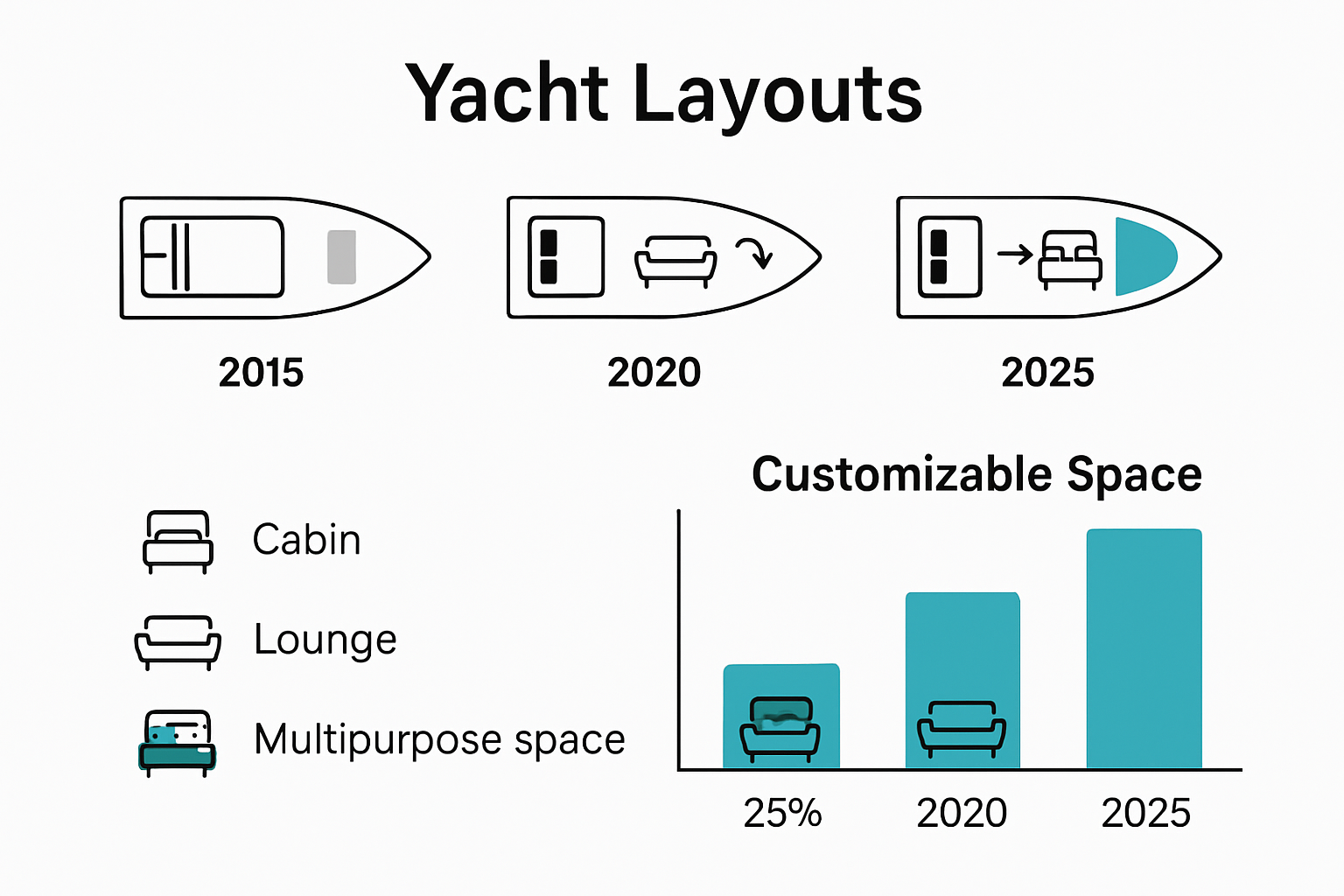
Customization has evolved from simple aesthetic choices to comprehensive lifestyle engineering. Advanced computational design tools now enable yacht owners to collaborate directly with naval architects in creating truly bespoke environments. Artificial intelligence-driven design platforms can simulate multiple layout configurations, analyzing ergonomics, light flow, movement patterns, and functional efficiency with microscopic precision. These technologies allow for hyper-personalized spaces that not only reflect individual aesthetic preferences but also optimize human interaction, comfort, and psychological well-being.
Ultimately, the 2025 yacht interior represents a paradigm shift from static architectural spaces to dynamic, intelligent environments. Each vessel becomes a living, breathing ecosystem that can transform, adapt, and reconfigure itself in response to its occupants’ immediate needs and long-term aspirations. The boundaries between design, technology, and human experience have dissolved, creating maritime spaces that are simultaneously intimate sanctuaries and sophisticated technological platforms.
Risks, Pitfalls, and Compliance Considerations
Integrating advanced technologies into yacht design introduces complex decision-making challenges that extend far beyond aesthetic and functional considerations. Compliance management has become a multifaceted discipline requiring unprecedented levels of technical expertise, legal understanding, and strategic foresight to navigate the intricate regulatory landscape of maritime design and construction.
Optimization of yacht technologies demands sophisticated multidisciplinary approaches that balance technical innovation with stringent international maritime regulations. Designers and naval architects must now contend with a complex web of environmental standards, safety protocols, and technological compatibility requirements. Critical risk areas include electromagnetic interference from advanced systems, cybersecurity vulnerabilities in interconnected networks, structural integrity under extreme maritime conditions, and potential environmental impact of new materials and propulsion technologies.
Legal and regulatory compliance represents a significant challenge in 2025 yacht design. International maritime organizations have implemented increasingly rigorous standards governing vessel construction, emissions, waste management, and technological integration. Yacht designers must now demonstrate comprehensive environmental certifications, prove the sustainability of materials, and provide detailed lifecycle assessments for every technological component. This requires developing robust documentation processes, maintaining transparent supply chain records, and continuously updating design protocols to meet evolving global regulatory frameworks.
Ultimately, successful yacht design in 2025 requires a holistic approach that seamlessly integrates technological innovation, regulatory compliance, and proactive risk management. Designers must become part technologist, part legal expert, and part environmental strategist, creating vessels that are not just sophisticated maritime platforms but also responsible, future-forward expressions of human engineering and environmental stewardship.
Elevate Your Yacht Interior with Next-Level Innovation and Sustainability
Navigating the complex demands of 2025 yacht interior design means embracing personalization, cutting-edge technology, and eco-friendly materials. If you are seeking to overcome challenges like integrating smart systems seamlessly or choosing sustainable yet luxurious materials that reflect your values, you deserve a partner with proven expertise in these exact innovations. At Opalinski Design House, we pioneer bespoke yacht interiors where advanced technology meets responsible craftsmanship, including patented features like fold-down transoms that enhance space efficiency without sacrificing style.
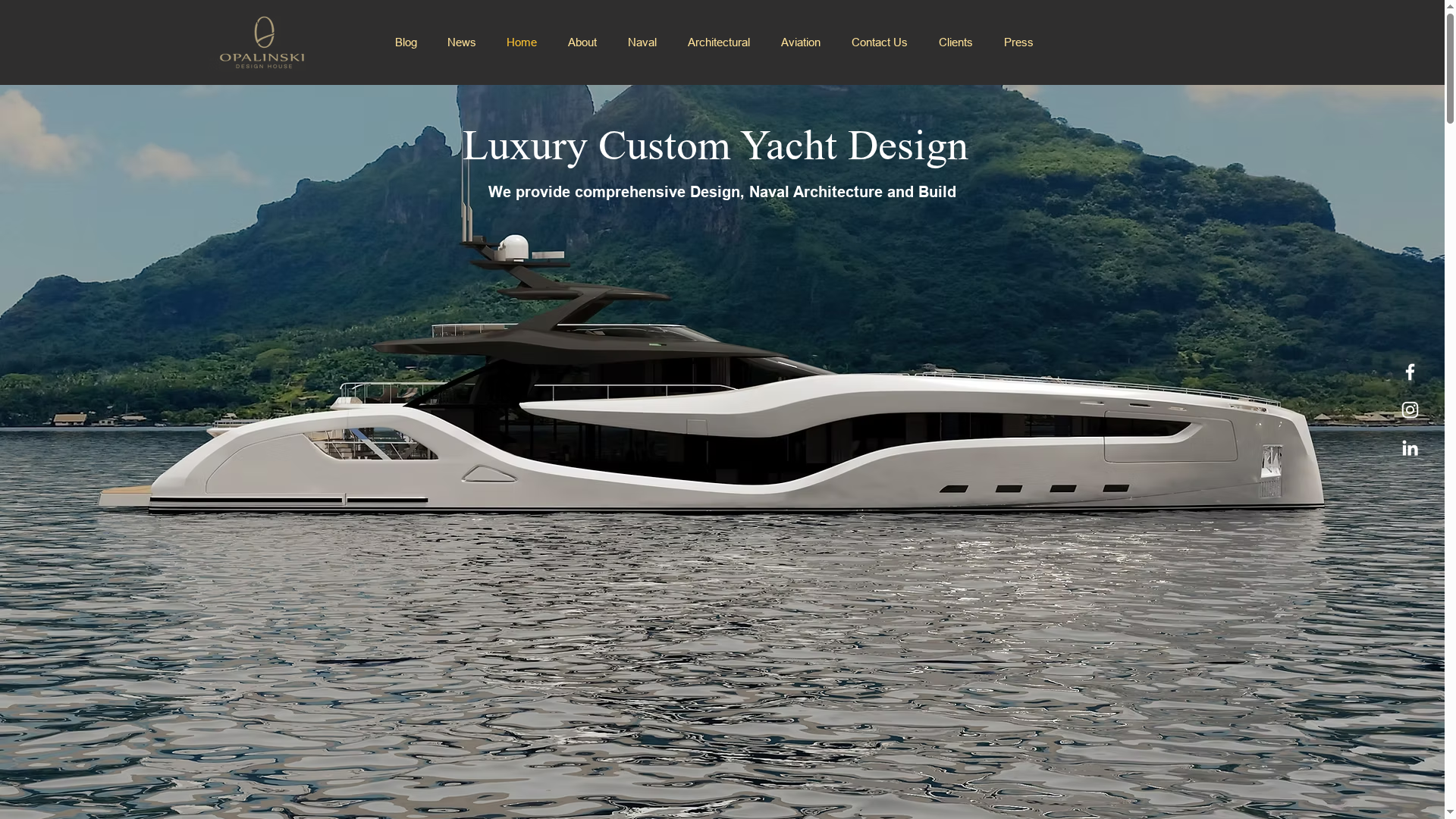
Discover how our expert naval architecture and tailored interior styling can transform your vision into an intelligent, sustainable sanctuary on the water. Visit Opalinski Design House to explore our portfolio and learn more about how we incorporate environmental responsibility alongside bold technological solutions. Take the first step toward a truly revolutionary yacht interior by contacting us for your personalized design consultation today. Your next-level yacht awaits.
Frequently Asked Questions
What are the key interior design trends for yachts in 2025?
The key trends include intelligent technology integration, sustainable material selection, and adaptive spatial configurations that allow for personalized luxury experiences.
How is sustainability being incorporated into yacht interior design?
Sustainability is achieved by using materials with transparent environmental credentials, such as recycled composites, responsibly harvested woods, and low-emission finishes, which aim to minimize ecological impact without sacrificing luxury.
What role does technology play in the yacht interiors of 2025?
Technology enhances yacht interiors through smart automation systems for climate control, security, and entertainment, creating responsive environments that adapt to owner’s preferences, optimizing comfort and functionality.
How can yacht owners customize their interior spaces?
Customization is facilitated through advanced design tools and modular layouts that allow owners to collaborate with designers, creating bespoke environments that reflect their lifestyle and aesthetic preferences.
Recommended
Comments