
Why Invest in Innovative Yacht Design: Lasting Value and Luxury
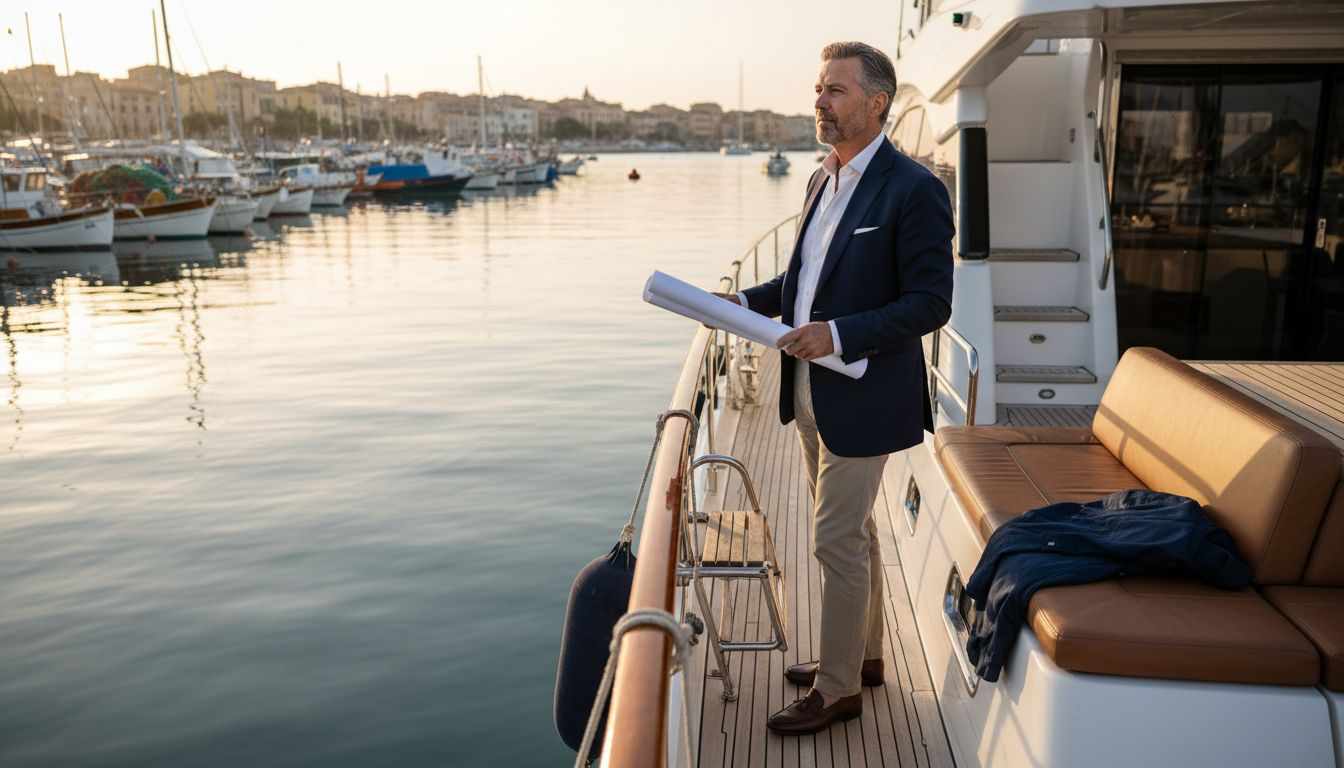
Most American yacht owners now demand far more than just sleek lines and luxurious finishes. Bold advancements in design are transforming vessels into high-tech, eco-conscious marvels that set new standards in both comfort and performance. With the industry seeing over 40 percent growth in sustainable technology adoption, today’s innovative yacht designs promise measurable gains in efficiency and evolving functionality, challenging every idea of what modern maritime engineering can achieve.
Table of Contents
Key Takeaways
Point | Details |
Innovative Design Integration | Modern yacht design combines advanced technologies with sustainable practices to enhance performance and environmental responsibility. |
Adaptive Spaces | Creating multifunctional areas within yachts allows for greater versatility and improved user experience on the water. |
Technological Advancements | Incorporating smart navigation and sustainable propulsion systems optimizes efficiency and reduces overall costs. |
Investment Considerations | Focus on vessels with upgradable technologies and sustainability features to mitigate risks and enhance long-term value. |
Defining Innovative Yacht Design and Purpose
Innovative yacht design represents far more than aesthetic elegance - it embodies a complex fusion of engineering precision, technological advancement, and strategic performance optimization. Developing efficient design tools has become critical in creating vessels that transcend traditional maritime engineering boundaries.
At its core, innovative yacht design integrates multiple disciplines: naval architecture, advanced materials science, hydrodynamic engineering, and sustainable technology. Modern yacht designers are no longer simply crafting beautiful watercraft but developing sophisticated platforms that balance performance, efficiency, and environmental consciousness. The process involves intricate computational modeling, advanced simulation techniques, and a deep understanding of maritime dynamics.
The purpose of innovative yacht design extends beyond visual appeal. Technological integration is paramount, with contemporary designs focusing on reducing environmental impact, enhancing energy efficiency, and creating multifunctional spaces that adapt to diverse maritime conditions. Novel approaches bridging naval architecture and traditional shipbuilding are revolutionizing how we conceptualize maritime vessels, emphasizing sustainability and intelligent design principles.
Pro Tip - Design Strategy: When exploring yacht design, prioritize functional innovation over pure aesthetics, seeking solutions that provide meaningful performance improvements and sustainable technological advancements.
Key Features Shaping Modern Yacht Trends
Modern yacht design has evolved dramatically, embracing innovative approaches that transform maritime experiences beyond traditional vessel construction. Personalized experiences and customization have become paramount in contemporary yacht design, with owners seeking unique vessels that reflect individual style and functional requirements.
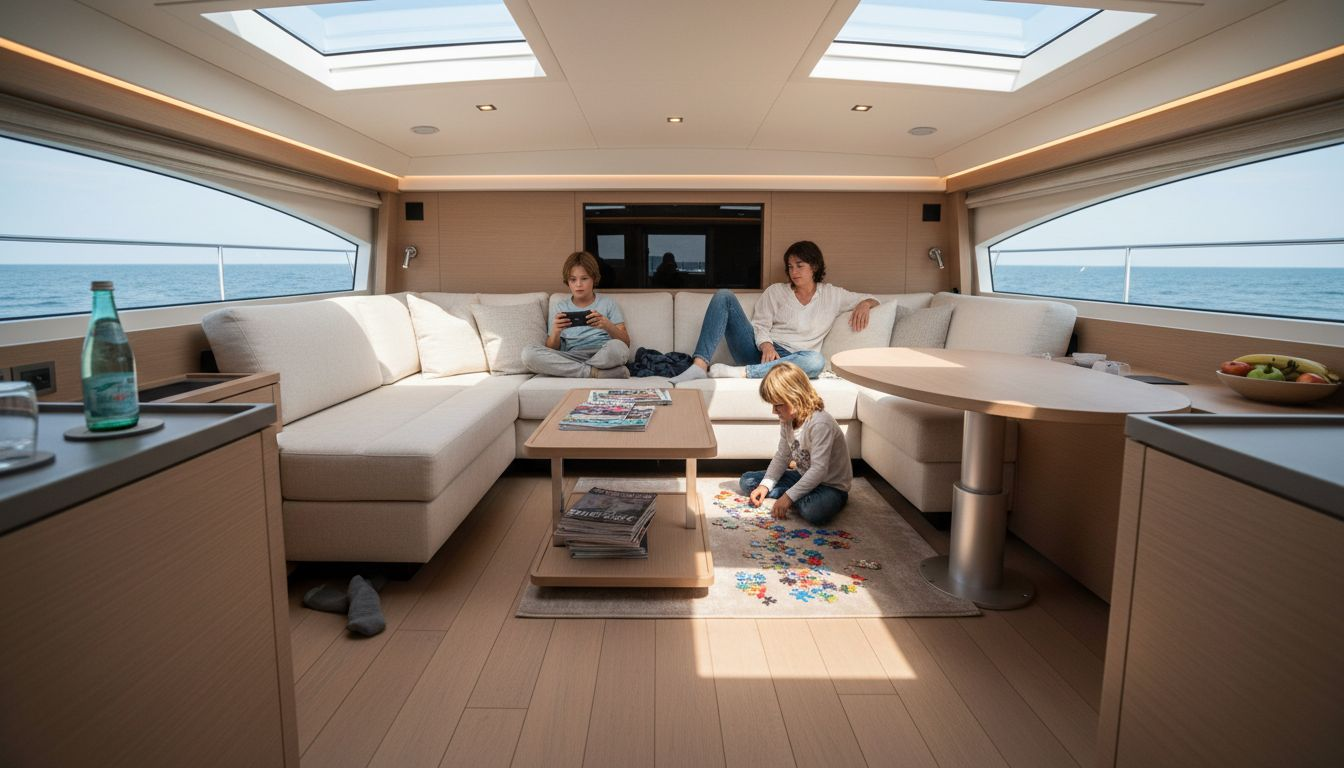
Key trends in modern yacht design focus on several transformative elements. Adaptive spaces are now central to design philosophy, with designers creating multifunctional areas that can be reconfigured based on specific needs. Expanding living spaces with open-plan interiors and foldable balconies represent a significant shift towards more flexible and dynamic maritime environments. These innovations prioritize comfort, functionality, and seamless integration between indoor and outdoor experiences.
Technological advancements are driving substantial changes in yacht design. Sustainable materials, energy-efficient systems, and smart technology integration are becoming standard features. Designers are now incorporating advanced propulsion systems, lightweight composite materials, and innovative hull designs that reduce environmental impact while enhancing performance. The modern yacht is no longer just a luxury vessel but a sophisticated platform for technological and environmental innovation.
Pro Tip - Design Selection: When evaluating yacht designs, prioritize versatility and technological adaptability, ensuring your vessel can evolve with emerging maritime technologies and personal lifestyle changes.
Types of Yacht Innovations and Technologies
The landscape of yacht design is experiencing a technological revolution, with cutting-edge innovations transforming maritime engineering. Generative AI applications are fundamentally reshaping ship design processes, introducing machine learning algorithms that optimize complex hull configurations and push the boundaries of traditional naval architecture.
Computational design technologies have emerged as a game-changing force in yacht innovation. Advanced modeling techniques now allow designers to create intricate vessel blueprints with unprecedented precision. Deep convolutional generative networks like ShipHullGAN represent a breakthrough in parametric modeling, enabling the generation of diverse and sophisticated hull designs that were previously impossible to conceptualize.
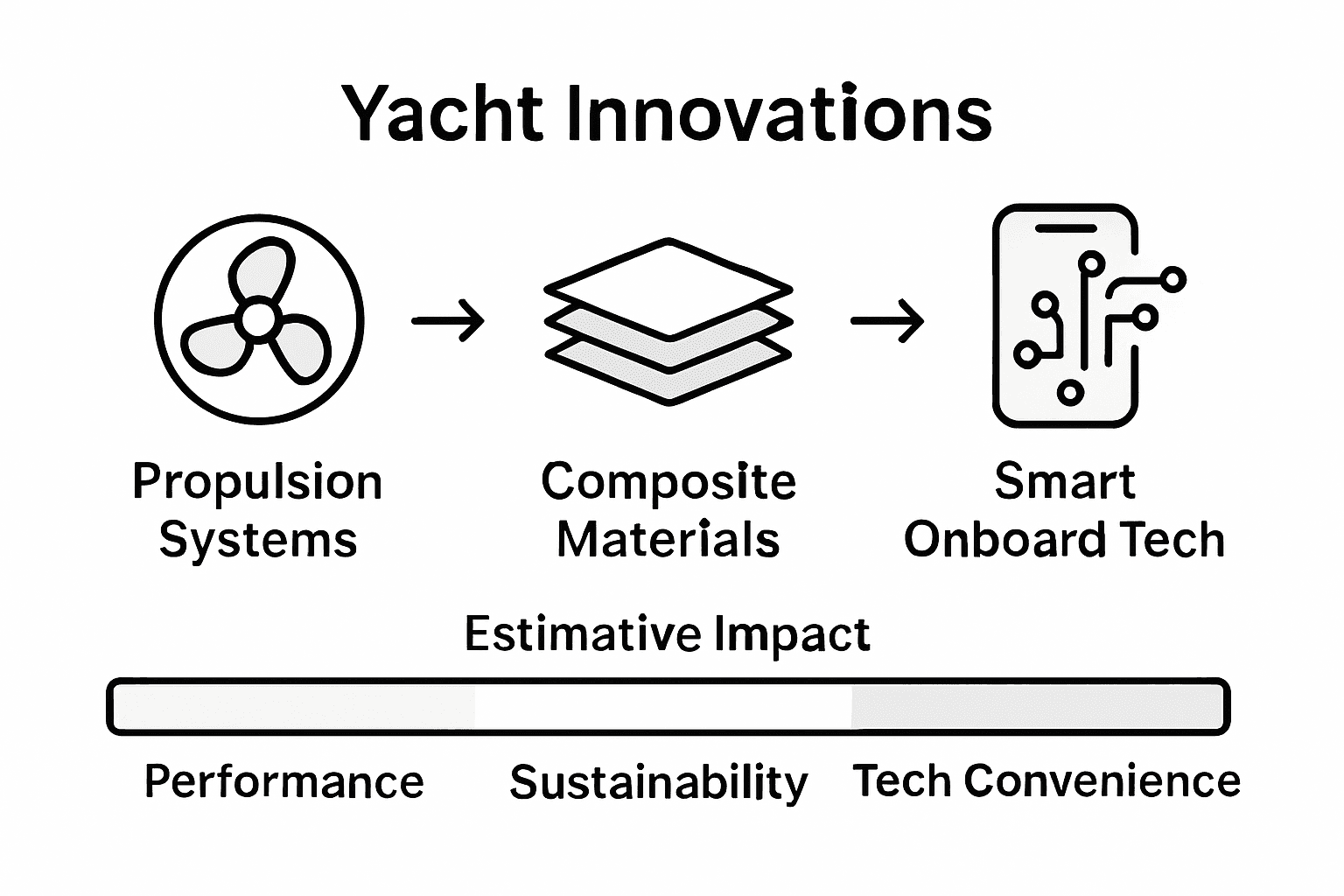
Modern yacht technologies span multiple innovative domains. Sustainable propulsion systems, advanced composite materials, and intelligent navigation technologies are transforming vessel capabilities. Designers are integrating lightweight carbon fiber structures, hybrid electric-hydrogen propulsion systems, and AI-driven navigation algorithms that enhance efficiency, reduce environmental impact, and provide superior performance across maritime environments.
Pro Tip - Technology Selection: When exploring yacht innovations, prioritize technologies that offer scalable performance improvements and demonstrate genuine long-term value across multiple operational scenarios.
Here’s how major yacht innovations impact both function and ownership value:
Innovation Type | Main Function | Business Impact |
Computational Design | Optimizes hull shape and structure | Increases efficiency, reduces costs |
Sustainable Propulsion Systems | Minimizes fuel consumption, emissions | Lowers operating expenses, boosts resale |
Advanced Composite Materials | Reduces overall vessel weight | Improves speed and energy efficiency |
Smart Navigation Technology | Automates route planning, safety | Enhances reliability, cuts labor needs |
Adaptive Space Design | Offers multifunctional onboard areas | Diversifies usability, elevates appeal |
Real-World Value: Performance and Resale Impact
Investment in innovative yacht design directly translates to tangible performance and financial advantages for owners. Advanced hull materials and parametric design techniques are revolutionizing vessel efficiency, creating substantial improvements in fuel consumption, speed, and overall maritime performance that dramatically enhance long-term asset value.
Technological sophistication plays a critical role in determining a yacht’s resale potential. Modern buyers increasingly prioritize vessels with cutting-edge design features, intelligent systems, and sustainable technologies. Yachts incorporating advanced computational modeling, lightweight composite materials, and energy-efficient propulsion systems command premium prices in the secondary market, representing not just a mode of transportation but a forward-thinking technological investment.
Performance metrics extend beyond traditional measurements, encompassing environmental sustainability, technological integration, and adaptive design capabilities. Innovative yachts that demonstrate reduced carbon footprints, enhanced maneuverability, and intelligent navigation systems create compelling value propositions. These technological advances translate directly into improved operational efficiency, reduced maintenance costs, and increased attractiveness to discerning future buyers who view yacht ownership as a sophisticated technological experience.
Pro Tip - Value Assessment: Evaluate potential yacht investments by calculating total cost of ownership, focusing on technological features that provide long-term performance advantages and maintain market relevance.
Investment Risks, Costs, and Return Potential
Navigating the financial landscape of yacht ownership requires a comprehensive understanding of potential risks and strategic investment considerations. Detailed conceptual design and stability analysis play a crucial role in evaluating the long-term viability and economic potential of maritime investments, extending far beyond initial purchase price.
Financial complexity characterizes yacht ownership, with multifaceted cost structures that include initial acquisition, ongoing maintenance, operational expenses, and potential depreciation. Sophisticated investors recognize that innovative yacht designs can mitigate traditional financial risks by incorporating advanced technologies that reduce long-term operational costs. Energy-efficient propulsion systems, lightweight composite materials, and intelligent navigation technologies can significantly decrease fuel consumption, maintenance expenses, and overall lifecycle expenditures.
Risk mitigation strategies in yacht investment involve careful assessment of technological obsolescence, market trends, and potential resale value. Yachts designed with modular systems, upgradable technologies, and adaptable configurations provide greater financial flexibility. Investors should prioritize vessels that demonstrate not just aesthetic appeal, but also technological resilience, potential for future modifications, and alignment with emerging maritime sustainability standards.
The following table summarizes key investment risks and strategies for yacht ownership:
Investment Risk | Example Cause | Mitigation Strategy |
Technological Obsolescence | Rapid tech advances | Choose modular, upgradable systems |
High Maintenance Costs | Outdated systems, materials | Invest in efficient, durable designs |
Depreciation | Market and design trends | Focus on sustainable, forward-looking features |
Regulatory Shifts | Emission, safety standards | Select vessels with adaptable tech |
Pro Tip - Investment Strategy: Conduct thorough due diligence by calculating total ownership costs, including potential technological upgrades, maintenance expenses, and projected market value depreciation before finalizing your yacht investment.
Elevate Your Yacht Investment with Proven Innovative Design
The article highlights critical challenges yacht owners face such as balancing sustainable technology, adaptive functionality, and long-term value when investing in innovative yacht design. You want a vessel that not only offers cutting-edge performance with features like fold-down transoms but also maintains strong resale potential through advanced materials and adaptable configurations. At Opalinski Design House, we specialize in transforming these goals into reality by combining patented innovations, like our industry-first fold-down bulkhead transom and rotational transoms for large vessels, with bespoke naval architecture and interior styling.
Experience firsthand how our commitment to sustainability, technological resilience, and personalized design solutions can significantly reduce operational costs while enhancing luxury and functionality. Explore our portfolio to see how innovation drives lasting value in every vessel we craft.
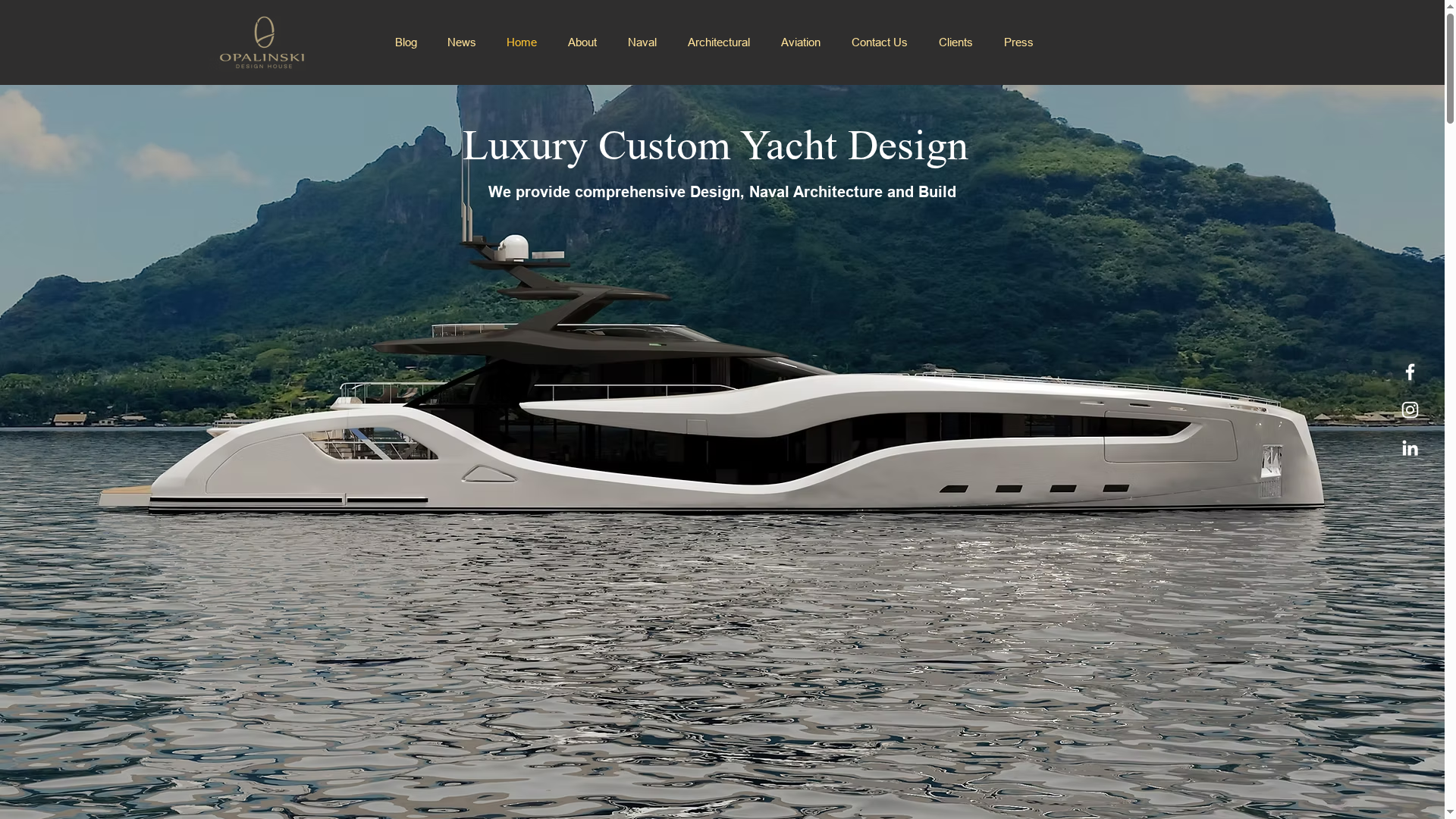
Take the first step toward owning a truly future-proof yacht that embodies smarter investment and timeless luxury. Contact Opalinski Design House today to discuss your customized project and secure a design that stands out for performance, sustainability, and elegance. Visit Opalinski Design House now for more information and start your journey toward the ultimate yacht experience.
Frequently Asked Questions
What are the benefits of investing in innovative yacht design?
Investing in innovative yacht design provides tangible benefits such as improved performance, reduced environmental impact, and enhanced resale value. Technologically advanced yachts often feature superior efficiency and functionality, making them a smart financial investment.
How does technological integration in yacht design affect long-term ownership costs?
Technological integration can significantly lower long-term ownership costs by incorporating energy-efficient systems and lightweight materials that reduce fuel consumption and maintenance expenses. This leads to enhanced operational efficiency and a decrease in overall lifecycle costs.
What should I consider when evaluating a yacht’s resale potential?
When evaluating a yacht’s resale potential, consider factors such as technological sophistication, energy-efficient features, and overall design quality. Yachts with advanced innovations and sustainable technologies tend to command higher prices and attract discerning buyers who value these aspects.
How can I mitigate investment risks associated with yacht ownership?
To mitigate investment risks, choose yachts with modular and upgradable technologies, focus on sustainable designs, and consider potential regulatory changes. Conducting thorough due diligence and assessing total ownership costs can also help ensure a sound investment.
Recommended

Comments