
Role of Collaboration in Yacht Design Success
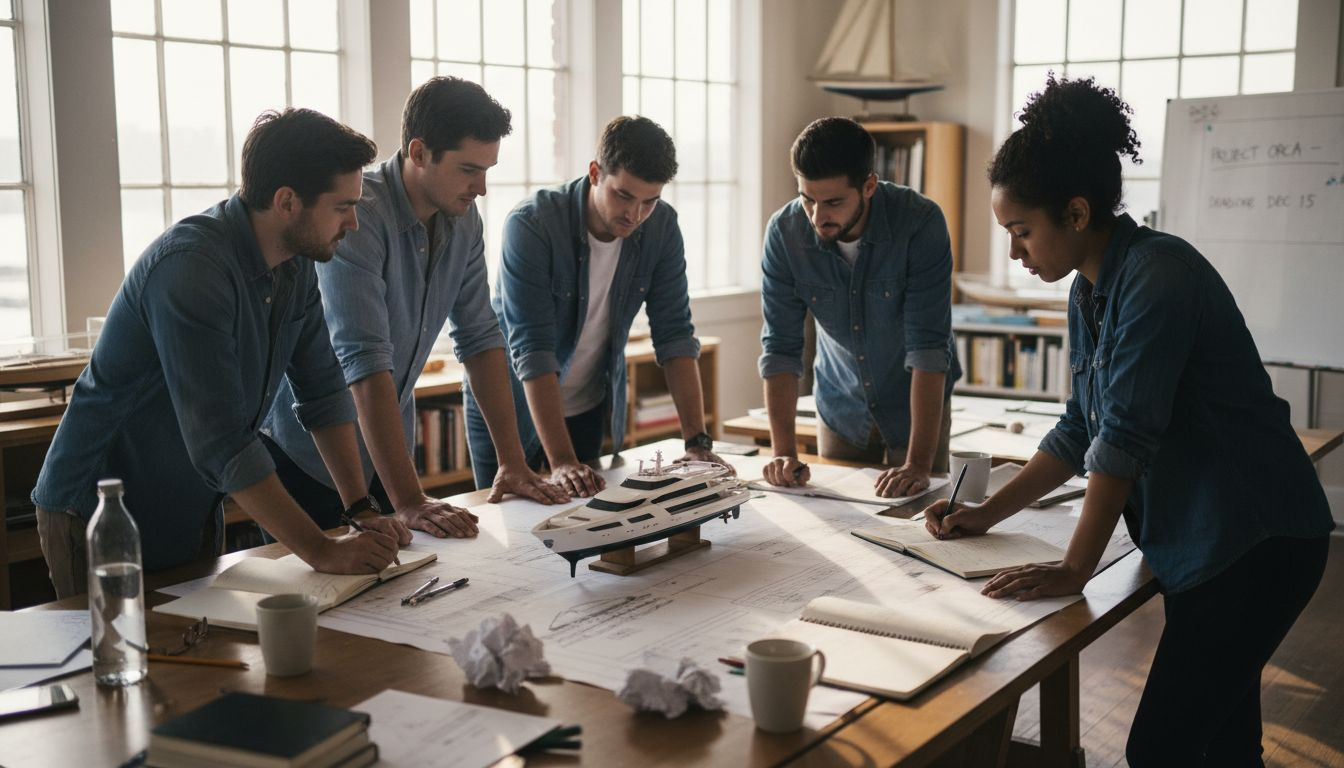
Most high-net-worth yacht owners and shipbuilders face increasing pressure to combine bespoke luxury with advanced sustainability, yet more than 60 percent of projects struggle without integrated collaboration. As the demand for seamless partnerships grows, especially among American and European clients, traditional methods often fall short of delivering fully customized, future-ready vessels. This guide explores how new collaboration strategies in yacht design are reshaping what is possible, blending industry innovation with individual vision.
Table of Contents
Key Takeaways
Point | Details |
Collaboration Enhances Innovation | Integrated methodologies and real-time communication foster creativity, enabling breakthrough designs in yacht development. |
Interdisciplinary Expertise is Essential | Successful yacht design relies on a diverse team, including naval architects, engineers, and designers, to address complex challenges collectively. |
Sustainability Must be Central | Collaboration allows for a holistic approach to sustainability, integrating environmental considerations into the core of yacht design processes. |
Effective Communication is Key | Robust communication infrastructures ensure transparency and alignment among team members, reducing conflicts and enhancing project coherence. |
Defining Collaboration in Yacht Design
Yacht design represents a sophisticated and intricate process that transcends traditional disciplinary boundaries, requiring seamless integration of diverse professional expertise. Cross-disciplinary collaboration has become essential in transforming complex design challenges into innovative maritime solutions.
At its core, collaboration in yacht design involves synchronizing multiple professional domains: naval architecture, engineering, aesthetic design, and technological innovation. These interconnected disciplines must work in concert to create vessels that are not merely functional watercraft, but floating representations of advanced engineering and artistic vision. Unlike traditional segmented workflows, modern yacht design demands integrated methodologies that enable real-time communication, shared digital platforms, and coordinated decision-making processes.
Integrated design approaches now emphasize flexible modeling techniques and comprehensive information sharing among all project stakeholders. This collaborative framework allows designers, engineers, and architects to simultaneously address complex challenges such as performance optimization, sustainability requirements, and luxury aesthetic standards. By breaking down traditional professional silos, yacht design teams can generate more holistic, innovative solutions that meet increasingly sophisticated market demands.
The table below compares traditional and modern integrated approaches in yacht design projects:
Aspect | Traditional Approach | Integrated Collaboration |
Workflow Structure | Linear, sequential | Simultaneous, multi-domain |
Communication | Periodic, document-based | Real-time, digital platforms |
Innovation Potential | Incremental changes | Breakthrough solutions |
Risk Management | Siloed responsibility | Shared accountability |
Sustainability Focus | Add-on consideration | Core design principle |
Pro tip: Establish clear communication protocols and utilize collaborative digital platforms to streamline information exchange and maintain project coherence across diverse design disciplines.
Key Stakeholders and Their Contributions
Yacht design demands intricate coordination among multiple specialized professionals who each bring unique skills and perspectives to the complex process of vessel creation. Interdisciplinary collaboration represents the foundational framework through which these diverse experts transform conceptual designs into remarkable maritime experiences.
The primary stakeholders in yacht design include naval architects, who provide critical structural expertise and ensure the vessel’s technical integrity. Industrial designers focus on aesthetic elements, crafting visual narratives that transform technical constraints into elegant forms. Marine engineers contribute essential technical knowledge about propulsion systems, mechanical components, and performance optimization. Builders translate design concepts into physical reality, managing the intricate construction process with precision and technical skill.
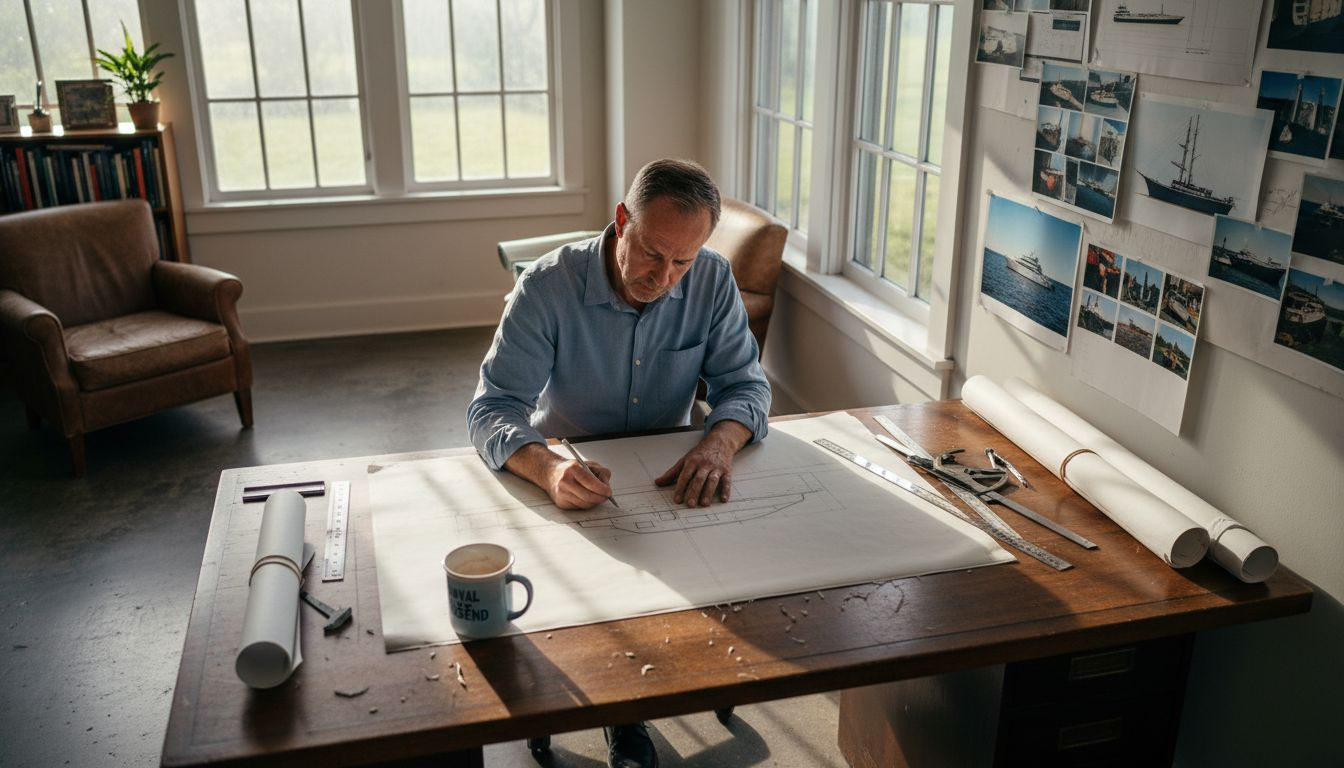
Client involvement represents another crucial dimension of collaborative yacht design. High-net-worth yacht owners are not passive recipients but active participants, bringing specific functional requirements, personal aesthetic preferences, and performance expectations. Their input drives customization, ensuring each vessel becomes a unique reflection of individual vision and technological innovation. Successful yacht design teams create adaptive communication channels that allow seamless integration of client perspectives throughout the development process, balancing technical feasibility with personal aspirations.
Here is a summary of the primary stakeholders in yacht design and their key contributions:
Stakeholder | Core Expertise | Primary Contribution | Unique Value Added |
Naval Architect | Structural Engineering | Ensures vessel safety | Aligns technical with legal codes |
Industrial Designer | Visual & Spatial Design | Crafts interior/exterior form | Enhances luxury and style |
Marine Engineer | Systems & Propulsion | Optimizes operational systems | Integrates green technologies |
Builder | Construction Techniques | Realizes physical yacht | Ensures build quality |
Client | Individual Preferences | Guides requirements | Drives personalization |
Pro tip: Establish regular interdisciplinary workshops and digital collaboration platforms to foster transparent communication and ensure all stakeholders can contribute their specialized knowledge effectively.
How Collaboration Fosters Innovation
Collaborative design practices represent a transformative approach to yacht design, breaking down traditional barriers between specialized disciplines and creating an environment where creativity and technical expertise converge. By integrating diverse perspectives, design teams can generate solutions that transcend the limitations of individual expertise, enabling breakthrough innovations that redefine maritime engineering and aesthetic possibilities.
The innovation process in yacht design relies heavily on iterative prototyping and continuous knowledge exchange. Design teams now utilize advanced digital platforms that allow simultaneous modeling, real-time feedback, and rapid concept development. These collaborative tools enable marine architects, industrial designers, and engineers to simulate complex scenarios, test performance parameters, and refine designs with unprecedented speed and precision. Such integrated approaches allow for concurrent optimization of multiple design elements, from hull hydrodynamics to interior spatial configurations.
Integrated collaboration methodologies fundamentally transform how innovation emerges in yacht design. By creating shared ownership of design challenges, teams can explore unconventional solutions that would be impossible in more siloed working environments. This approach encourages cross-pollination of ideas, where an engineer’s technical insight might inspire a designer’s aesthetic breakthrough, or a client’s functional requirement might prompt a novel technological solution. The result is a holistic design process that views each yacht as a complex, interconnected system rather than a collection of isolated components.
Pro tip: Implement digital collaboration platforms with comprehensive version tracking and real-time annotation capabilities to maximize knowledge sharing and maintain transparent communication across design teams.
Collaboration’s Role in Sustainability
Collaborative design processes have become instrumental in driving sustainability forward in yacht design, transforming environmental considerations from peripheral concerns to central design imperatives. By bringing together experts from multiple disciplines, yacht design teams can holistically address complex sustainability challenges that extend far beyond traditional engineering constraints.
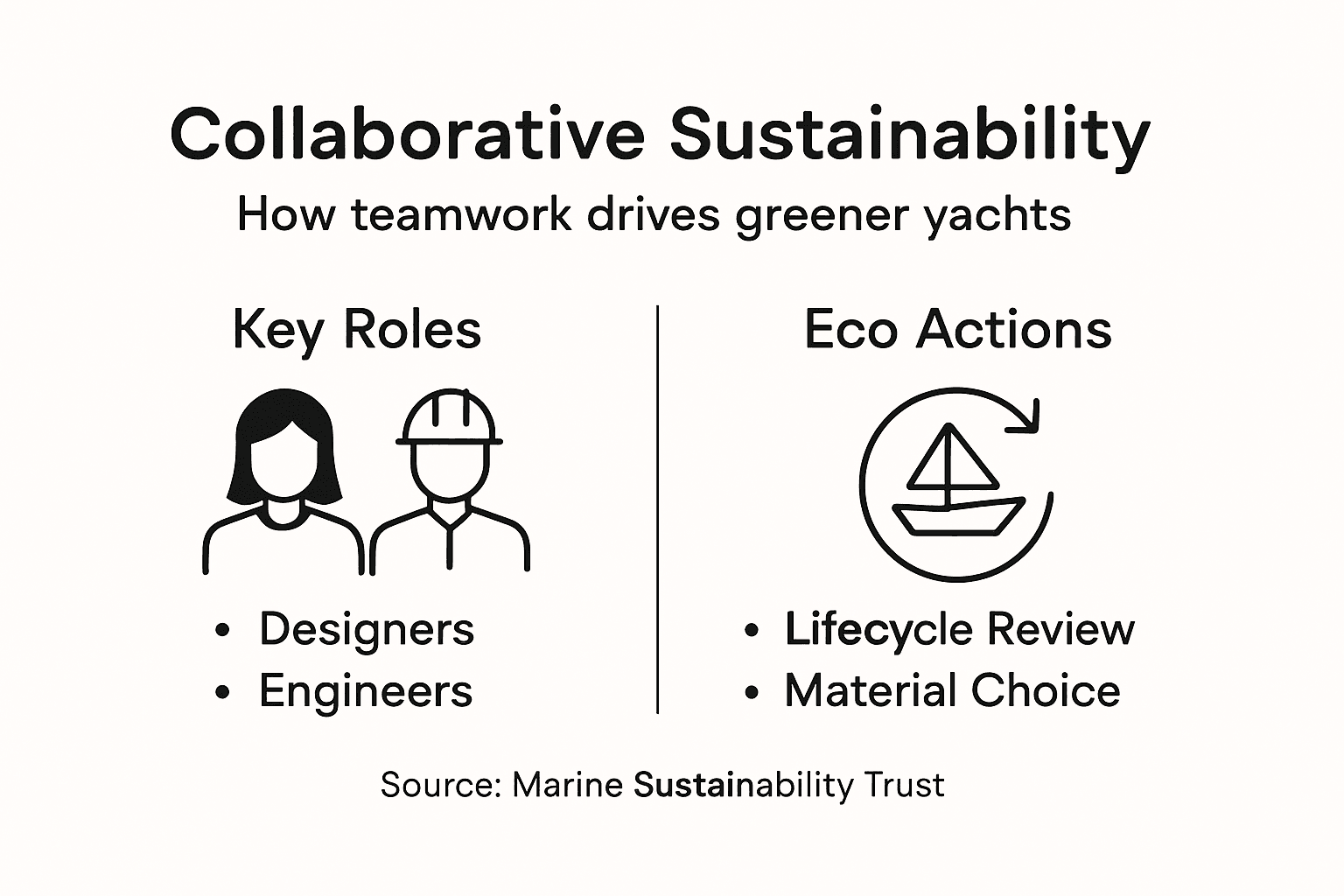
The collaborative approach enables comprehensive lifecycle assessment of yacht design, integrating environmental considerations at every stage of development. Marine engineers, materials scientists, and environmental experts now work together to evaluate carbon footprint, explore renewable energy integration, and develop innovative solutions for reducing ecological impact. This might involve selecting advanced composite materials with lower environmental footprints, designing more energy-efficient propulsion systems, or implementing waste reduction strategies that minimize marine ecosystem disruption.
Sustainability in yacht design increasingly requires interdisciplinary problem-solving that goes beyond technical specifications. Collaborative teams now consider broader environmental implications, such as the yacht’s long-term ecological impact, potential for future retrofitting, and alignment with emerging international environmental regulations. By creating shared accountability and leveraging diverse expertise, design teams can develop vessels that not only meet current sustainability standards but anticipate future environmental requirements, positioning yacht owners at the forefront of responsible maritime innovation.
Pro tip: Establish cross-functional sustainability working groups that include environmental experts, engineers, and designers to create comprehensive green design strategies from project inception.
Managing Risks and Protecting Interests
Collaborative project management in yacht design requires sophisticated risk mitigation strategies that protect both intellectual property and financial investments. The complex nature of yacht development demands robust governance frameworks that balance innovation with legal and financial safeguards, ensuring all stakeholders can contribute confidently without compromising their professional interests.
Risk management begins with establishing clear contractual boundaries that define intellectual property rights, contribution attribution, and potential liability scenarios. Design teams must develop comprehensive agreements that specify ownership of design innovations, outline confidentiality protocols, and create transparent mechanisms for resolving potential conflicts. This includes detailed documentation of each stakeholder’s specific contributions, potential performance metrics, and predefined dispute resolution processes that minimize potential legal complications.
Interdisciplinary trust mechanisms play a critical role in mitigating collaborative risks. By creating equitable information sharing platforms and establishing mutual accountability standards, yacht design teams can develop environments of transparency and mutual respect. These approaches help prevent potential intellectual property disputes, ensure fair credit distribution, and maintain the collaborative spirit essential to breakthrough maritime design innovations. Advanced digital collaboration tools now provide granular tracking of design contributions, allowing precise documentation of each team member’s unique input.
Pro tip: Develop comprehensive collaboration agreements that include detailed intellectual property clauses, contribution tracking mechanisms, and transparent conflict resolution protocols before initiating any design project.
Best Practices for Effective Partnerships
Participatory design methods have revolutionized collaborative yacht design, transforming traditional hierarchical approaches into dynamic, inclusive processes that leverage collective expertise. Successful partnerships now require a fundamental shift from competitive to collaborative mindsets, where diverse professional backgrounds are viewed as strategic assets rather than potential sources of conflict.
Effective partnerships demand robust communication infrastructures that facilitate transparent, real-time information exchange. This involves implementing advanced digital platforms that support simultaneous document sharing, version tracking, and collaborative modeling. Integrated project management tools enable design teams to maintain synchronous workflows, ensuring that naval architects, industrial designers, engineers, and client representatives can contribute and receive feedback instantaneously.
Building effective partnerships requires establishing clear expectations, defining explicit roles, and creating mechanisms for mutual accountability. Successful teams develop comprehensive engagement protocols that outline individual responsibilities, decision-making frameworks, and performance metrics. These guidelines help prevent misunderstandings, minimize potential conflicts, and create an environment of trust and professional respect. By prioritizing transparent communication and shared ownership of design challenges, yacht design teams can transform potential interdisciplinary friction into a powerful source of innovation.
Pro tip: Create a standardized onboarding document for collaborative projects that explicitly outlines communication protocols, shared goals, and individual team member expectations.
Elevate Your Yacht Design Success Through Expert Collaboration
The article highlights that collaboration in yacht design is essential for overcoming complex challenges such as integrating structural engineering, aesthetics, sustainability, and client personalization. The key pain points include breaking down professional silos, ensuring real-time communication, managing intellectual property risks, and fostering innovation across multiple disciplines. At Opalinski Design House, we understand that seamless interdisciplinary collaboration drives breakthrough maritime solutions and luxury craftsmanship.
Discover how our proven expertise in naval architecture and innovative yacht design solutions can transform your vision into reality. Our patented technologies like the fold-down transoms are a direct result of deep collaboration between engineers, designers, and shipbuilders, ensuring performance, style, and sustainability are balanced flawlessly.
Ready to turn your yacht project into a masterpiece that reflects cutting-edge design and personalized service? Explore our portfolio and innovative design approach at Opalinski Design House. Learn more about how our bespoke solutions meet the highest standards for luxury yachting by visiting our homepage and reach out now to begin your collaborative journey toward a revolutionary vessel.
Frequently Asked Questions
What is the importance of collaboration in yacht design?
Collaboration in yacht design is essential as it integrates various professional fields, allowing for innovative solutions and more effective problem-solving, ultimately leading to successful vessel outcomes.
How do different stakeholders contribute to yacht design collaboration?
Stakeholders like naval architects, industrial designers, marine engineers, builders, and clients each bring unique expertise, ensuring a balance between technical feasibility and aesthetic appeal, which enriches the design process.
What are some best practices for effective collaboration in yacht design?
Establishing clear communication protocols, utilizing collaborative digital platforms, and defining roles and responsibilities are key best practices that enhance teamwork and innovation in yacht design projects.
How does collaborative design enhance sustainability in yacht building?
Collaborative design processes allow diverse experts to assess sustainability challenges throughout the yacht’s lifecycle, leading to innovative solutions that minimize environmental impact while meeting regulatory requirements.
Recommended

Comments