
Yacht Styling Terminology: Essential Terms Decoded
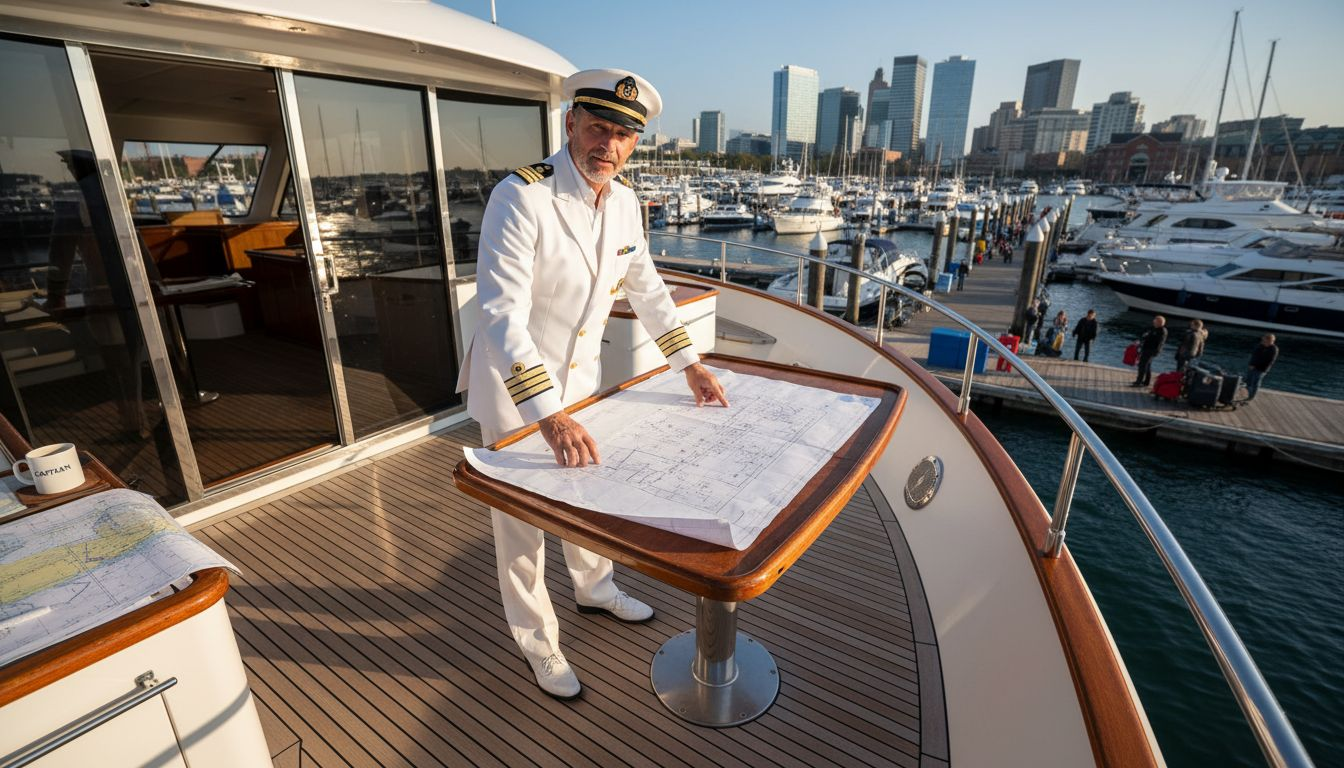
Misunderstandings in yacht design cost some American owners millions each year when expectations and technical details get lost in translation. Whether commissioning a custom build in the Mediterranean or refitting in the Caribbean, knowing precise styling terminology bridges creative vision and engineering reality. This guide unpacks the vocabulary every discerning yacht owner and luxury designer needs to communicate confidently and achieve flawless, world-class results.
Table of Contents
Key Takeaways
Point | Details |
Understanding Yacht Terminology | Familiarize yourself with both aesthetic and technical terms in yacht design to communicate effectively with professionals. |
Emphasizing Sustainability | Contemporary yacht design prioritizes sustainable practices and materials, reflecting growing environmental consciousness. |
Importance of Clear Communication | Establish a shared vocabulary among all stakeholders to avoid miscommunication and project delays in yacht design. |
Integration of Innovation | Innovative yacht design combines technology with aesthetic refinement, creating multifunctional and adaptive living spaces. |
What Yacht Styling Terminology Means
Yacht styling terminology represents an intricate language bridging aesthetic creativity and technical precision within marine design. This specialized vocabulary communicates the complex nuances of vessel design, capturing both visual elegance and functional engineering requirements. Yacht design emerges as an interdisciplinary field that synthesizes engineering principles, architectural vision, and design innovation.
At its core, yacht styling terminology encompasses interconnected categories that describe a vessel’s visual and structural characteristics. These terms range from aesthetic descriptors like hull profile and deck lines to technical specifications involving materials, spatial configurations, and performance capabilities. Designers and naval architects use this precise language to articulate intricate design concepts, ensuring clear communication between shipbuilders, owners, and engineering teams.
The evolution of yacht styling terminology reflects broader industry transformations, particularly around sustainability, technological integration, and changing maritime lifestyle expectations. Modern terminology now includes concepts addressing environmental considerations, adaptive spaces, and advanced technological features that extend beyond traditional maritime design parameters. These linguistic shifts mirror the yacht industry’s progression toward more dynamic, multifunctional vessel concepts that balance luxury, performance, and responsible design practices.
Pro tip: When discussing yacht design, familiarize yourself with both aesthetic and technical terminology to communicate more effectively with design professionals and understand the nuanced language of maritime innovation.
Key Exterior Styling Terms and Features
Yacht exterior styling represents a sophisticated visual language that combines aesthetic beauty with technical precision. Modern yacht styling emphasizes minimalist curves and innovative design solutions that transform vessels from mere transportation into floating architectural statements. This complex discipline involves carefully engineered visual elements that balance performance, luxury, and technological innovation.
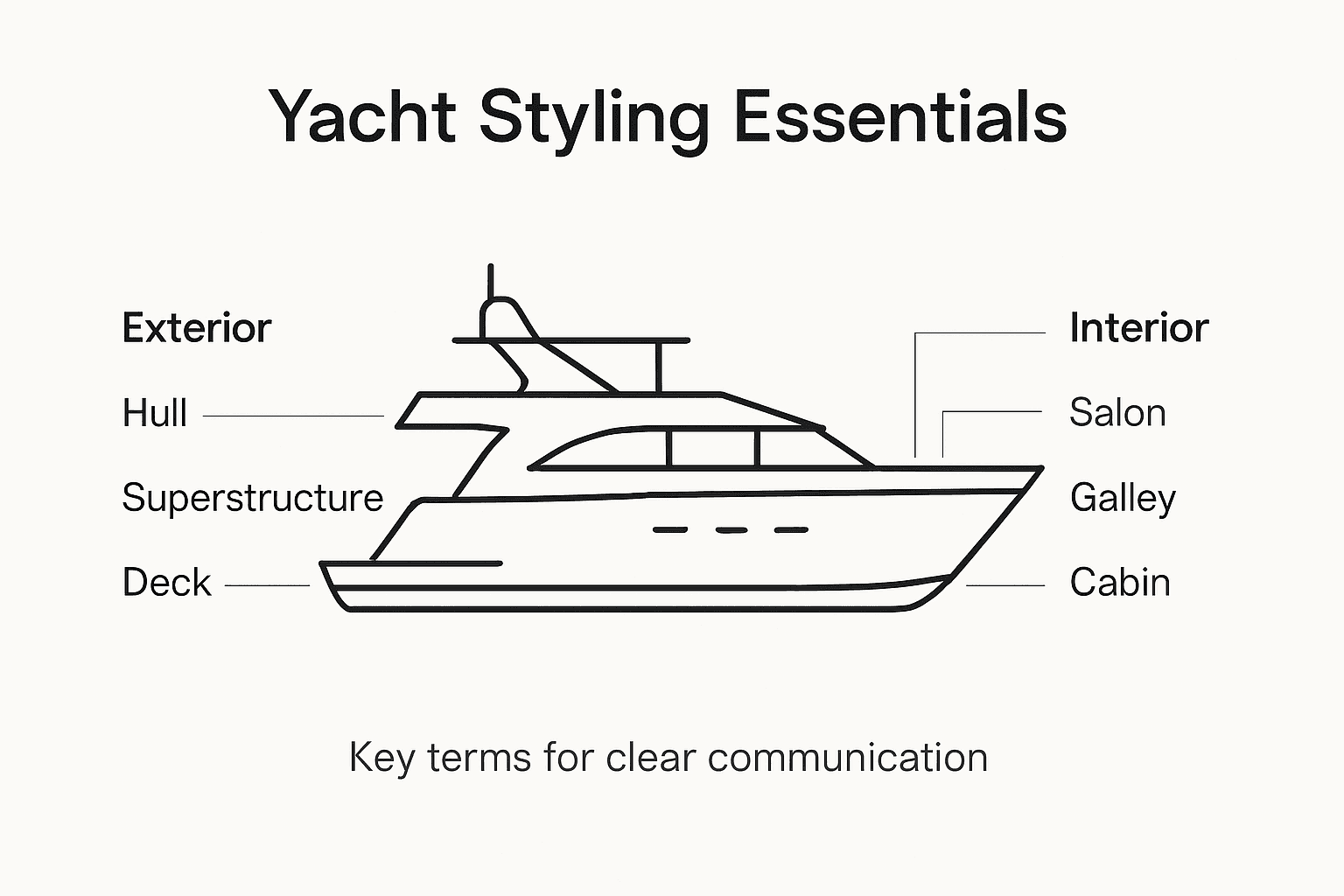
Critical exterior styling terminology encompasses several key technical and aesthetic components. Structural terms like beam (vessel width), bow (front section), and aft (rear area) provide fundamental descriptive framework. Additional nuanced terms include hull profile, which describes the vessel’s lateral silhouette, and deck configuration, referring to the strategic layout and arrangement of exterior spaces. Designers utilize these precise descriptors to communicate intricate design concepts that blend visual appeal with functional engineering requirements.
Contemporary yacht exterior styling increasingly integrates sustainability and technological advancement into design vocabulary. Features like extended beach clubs, panoramic glass installations, and hydrodynamic hull lines represent a new design language that prioritizes environmental consciousness and adaptive living spaces. These design elements reflect a broader industry shift toward vessels that are not just transportation platforms, but dynamic, multifunctional environments that respond to changing maritime lifestyle expectations.
Pro tip: When evaluating yacht exterior design, look beyond aesthetic beauty and consider how design elements contribute to performance, efficiency, and adaptable living spaces.
Explaining Interior Yacht Styling Vocabulary
Interior yacht styling vocabulary represents a sophisticated language that translates architectural vision into functional living spaces. Motor yacht interior terminology reflects an intricate blend of aesthetics, construction methods, and material selection, transforming vessels into personalized floating environments that balance luxury and practicality. This specialized lexicon enables designers to communicate complex spatial concepts and design intentions with precision and nuance.
Key interior styling terminology encompasses a range of specialized terms describing spatial organization and design elements. Functional zones like salon, galley, and stateroom represent critical vocabulary that defines living spaces. Styling descriptors such as ergonomic layout, modular furnishings, and integrated design systems further articulate the sophisticated approach to yacht interior design. These terms not only describe physical spaces but also communicate the philosophy of creating seamless, adaptable environments that respond to contemporary maritime lifestyle expectations.
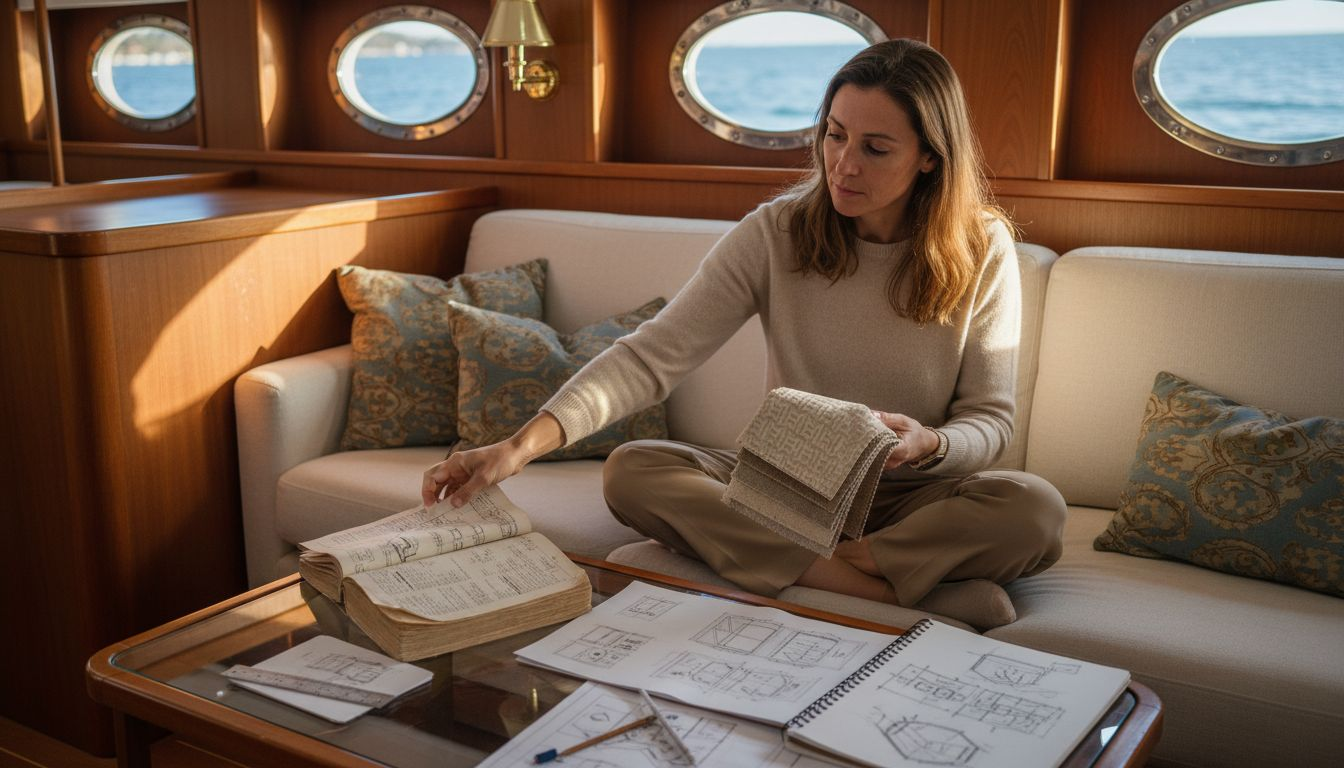
For super and mega yachts exceeding 24 meters, interior styling vocabulary becomes increasingly complex and nuanced. Design terminology increasingly emphasizes the integration of technical requirements with luxury aesthetic standards, reflecting an approach that views interior spaces as dynamic, multifunctional environments. Contemporary yacht interior styling moves beyond traditional maritime design, incorporating residential architectural principles, advanced material technologies, and adaptive spatial configurations that challenge conventional maritime design boundaries.
Pro tip: When exploring yacht interior styling, focus on understanding how terminology reflects the intersection of functional engineering and aesthetic innovation.
Here’s a summary of core yacht styling terms and their roles:
Term | Area of Application | Function in Design |
Hull Profile | Exterior | Defines vessel shape, affects performance |
Deck Configuration | Exterior | Determines space arrangement, usability |
Beam | Exterior | Impacts stability and interior volume |
Salon | Interior | Main social space, enhances comfort |
Modular Furnishings | Interior | Enables flexible, adaptable living spaces |
Ergonomic Layout | Interior | Improves practical comfort and usability |
Innovative Yacht Design and Styling Concepts
Innovative yacht design represents a dynamic intersection of technological advancement, aesthetic vision, and environmental consciousness. Contemporary yacht styling combines elegance and function through advanced design practices that transform vessels from traditional transportation platforms into sophisticated living environments. This approach transcends conventional maritime design, integrating cutting-edge materials, sustainable technologies, and adaptive spatial configurations that reflect owners’ evolving lifestyle expectations.
Design innovation in yacht styling manifests through several transformative concepts. Key developments include seamless glass integrations that blur boundaries between interior and exterior spaces, minimalist structural lines that enhance visual elegance, and flexible deck configurations that allow multifunctional usage. These design strategies represent a sophisticated approach to maritime architecture, where form follows function while maintaining an unprecedented level of aesthetic refinement and technological sophistication.
The future of yacht design increasingly emphasizes sustainability, technological integration, and personalized spatial experiences. Advanced materials and design technologies enable the creation of vessels that are not merely transportation mechanisms, but dynamic, responsive environments that adapt to changing environmental conditions and user requirements. Innovations such as fold-out balconies, adaptive living spaces, and environmentally conscious engineering demonstrate how yacht design has evolved from traditional maritime engineering to a holistic approach that considers aesthetic, functional, and ecological dimensions simultaneously.
Pro tip: When exploring yacht design innovations, consider how technological advancements and design philosophies can create more adaptable, sustainable, and personalized maritime experiences.
The following table compares traditional and innovative yacht design concepts:
Aspect | Traditional Yacht Design | Innovative Yacht Design |
Materials | Fiberglass, wood | Advanced composites, eco-tech |
Space Usage | Fixed layouts | Adaptive, multifunctional |
Aesthetics | Classic lines, ornate | Minimalist, streamlined |
Sustainability | Minimal focus | Key design priority |
Avoiding Miscommunication in Yacht Design
Yacht design communication requires a precise, standardized vocabulary to bridge complex technical and creative requirements. Effective communication in yacht design relies on a comprehensive understanding of specialized terminology that encompasses everything from technical specifications to aesthetic nuances. Miscommunication can result in costly design errors, project delays, and fundamental misunderstandings that compromise the entire vessel’s functionality and vision.
Critical communication strategies involve establishing a shared technical language that addresses multiple project dimensions. This includes precise definitions for structural components like hull configurations, deck layouts, and interior spaces. Key stakeholders such as naval architects, designers, engineers, and clients must develop a consistent vocabulary that transcends potential language and cultural barriers. Terms related to hull geometry, rigging specifications, and material tolerances require extremely precise definitions to ensure accurate interpretation across international design teams.
International yacht design projects particularly demand rigorous communication protocols. Establishing a common professional vocabulary helps minimize risks of misinterpretation among diverse teams working across different technical and cultural backgrounds. This involves not just understanding technical terminology, but also developing communication frameworks that accommodate variations in engineering standards, design philosophies, and technical expectations. Successful yacht design requires a collaborative approach that prioritizes clarity, precision, and mutual understanding.
Pro tip: Create a project-specific glossary that defines all critical technical terms to ensure every team member shares an identical understanding of key design concepts.
Unlock the Language of Luxury Yacht Design with Opalinski Design House
Understanding yacht styling terminology with precision is essential to bridging the gap between your vision and the technical reality of luxury yacht creation. Whether you want to master terms like hull profile, modular furnishings, or ergonomic layout, the challenge is clear: how do you transform complex design language into a tailored, innovative vessel that meets your unique lifestyle and sustainability goals
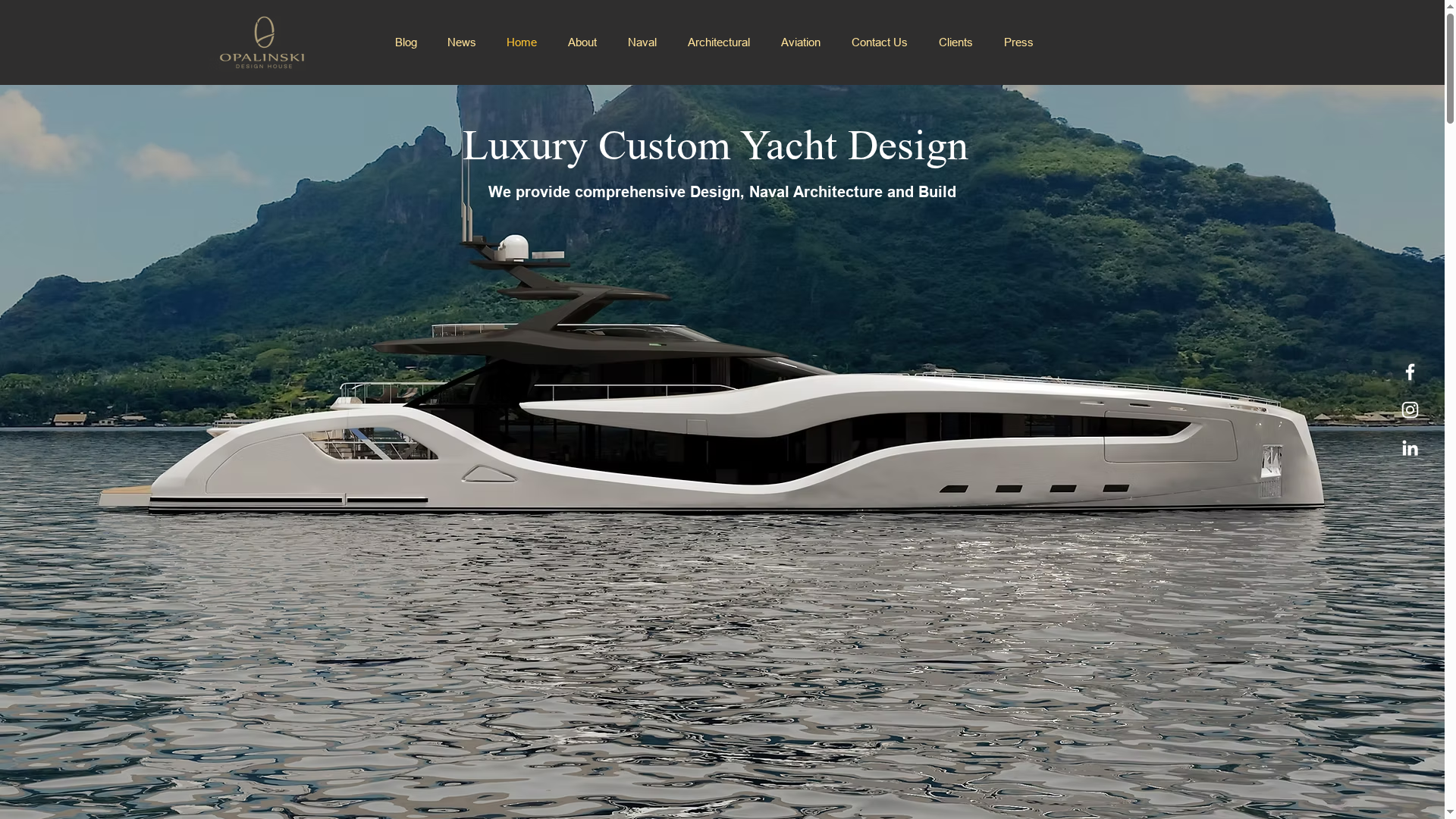
Experience the power of expert communication and cutting-edge yacht design by partnering with Opalinski Design House. With our patented solutions such as the fold-down bulkhead transom and rotational transom technology, we push the boundaries of yacht styling and functionality. Don’t let miscommunication slow your project down — take the first step toward a bespoke, adaptive, and sophisticated yacht by contacting us now to explore how our innovative naval architecture and personalized interior styling can bring your maritime dreams to life.
Frequently Asked Questions
What is yacht styling terminology?
Yacht styling terminology refers to the specialized language used in marine design that combines aesthetic creativity and technical precision, encompassing both visual and structural characteristics of a vessel.
Why is it important to understand yacht styling terms?
Understanding yacht styling terms is crucial for effective communication between designers, builders, and owners, ensuring that complex design concepts are articulated clearly and accurately to avoid miscommunication.
How has yacht styling terminology evolved over time?
Yacht styling terminology has evolved to reflect changes in the industry, including advancements in sustainability, technology integration, and shifts in maritime lifestyle expectations, incorporating new concepts that emphasize environmental considerations and multifunctional design.
What are some key exterior and interior terms in yacht styling?
Key exterior terms include hull profile, deck configuration, and beam. Interior terms encompass salon, galley, and stateroom, as well as ergonomic layout and modular furnishings that define living spaces.
Recommended
Comments